Wind-shaping strategy
In windy sites, allow young plants to flex in the breeze without staking so they develop a strong, tapered trunk, then selectively thin only crossing or rubbing branches once the main framework is established.

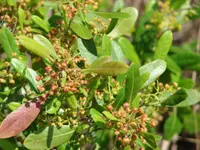
Florida hopbush (Dodonaea viscosa) is an evergreen shrub or small tree valued for its dense, upright form and fine, narrow leaves. It often shows bronze or reddish new growth, giving year-round color and structure in landscapes.
This species is native to warm, dry regions including Florida, the Caribbean, and many tropical and subtropical areas worldwide. It tolerates coastal conditions, wind, and poor soils, which makes it a reliable choice for hedges and screening.
Because it is drought tolerant once established and accepts a range of soils, many gardeners find it relatively simple to care for Florida hopbush, provided it has good light and drainage.

Care Difficulty
Easy Care

Light Preference
Full Sun

Water Requirements
Low Water

Temperature Preference
Warm Climate

Hardiness Zone
8–11

Soil Texture
Sandy, Loamy, Rocky

Soil pH
Slightly acidic (6.5–7.0), Slightly alkaline (7.0–7.5)

Soil Drainage
Well-drained

Fertilization
Minimal (feed rarely)
Scan your plant to receive care tips personalized for your specific plant
Available on iOS and Android
Dodonaea viscosa grows best with abundant sun but tolerates some shade in hot climates.
This shrub prefers deep, infrequent watering once established, supported by sharply draining soil.
This species is adapted to warm climates and copes well with heat when soil drainage is good.
This shrub handles a wide humidity range but prefers moderately dry air similar to typical outdoor conditions.
This species thrives in lean, well-drained soil and copes well with poor, sandy sites.
This species can be grown in containers, especially in warmer climates or where space is limited.
Dodonaea viscosa grows in poor soils but benefits from light, controlled feeding in containers or lean garden beds.
Dodonaea viscosa responds well to thoughtful pruning that maintains a dense, tidy form.
This shrub is more often transplanted in the landscape than kept long term in containers.
Dodonaea viscosa is commonly propagated from both seeds and semi-hardwood cuttings.
This species is generally frost-tender and benefits from basic winter protection in colder regions.

Plant Health Check
Not sure what's wrong with your plant? Check your plant's health inside the app.
This species thrives on exposed coasts because its leathery leaves and deep root system help it tolerate both high soil salinity and extended dry periods.
It is widely used in restoration and landscaping as a first-line windbreak and erosion-control shrub, stabilizing sandy or degraded soils where many other plants fail.
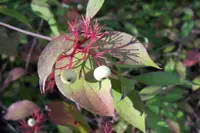
Its papery, often reddish 3-winged capsules are adapted for wind dispersal and can form dense clusters that are an easy way to identify the plant.

This species has one of the broadest natural distributions of any shrub, occurring natively or naturally across tropical and warm-temperate regions on multiple continents and many oceanic islands, from the Americas to Africa, southern Asia, and Australasia.
This species is evergreen in mild climates, holding foliage year-round and providing continuous screening. In colder areas, light frost may cause partial leaf drop, but plants usually re-leaf in spring if roots remain undamaged.
Keep your plants happy and healthy with plant identification, disease detection, and easy care guidance.