Oversized pot choice
Use a wide, heavy pot rather than a tall one so the large tuber sits securely and the canopy does not topple as leaves reach full size.

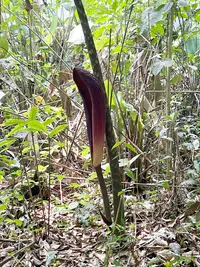
Dracontium gigas is a large aroid, related to plants like Amorphophallus, grown mainly by collectors who appreciate unusual foliage and dramatic growth. It produces a single, tall, mottled pseudostem topped with a wide, umbrella-like leaf that gives it a striking, tropical look.
This species is native to tropical Central and South America, where it grows in warm, humid forest habitats with rich, well-drained soil. It is considered challenging because it needs steady warmth, high humidity, and a pronounced rest period, so planning how to care for Dracontium gigas is important before acquiring it.

Care Difficulty
Hard Care

Light Preference
Partial Shade

Water Requirements
Keep Soil Moist

Temperature Preference
Tropical / Frost Sensitive

Hardiness Zone
Unknown

Soil Texture
Loamy, Peaty, Organic-rich

Soil pH
Acidic (5.5–6.5)

Soil Drainage
Moist but well-drained

Fertilization
Light (every 4–6 weeks)
Scan your plant to receive care tips personalized for your specific plant
Available on iOS and Android
This species prefers bright, filtered light that mimics a forest understory.
Watering should keep the tuber’s soil evenly moist during active growth but never saturated.
This aroid thrives in warm, consistently humid, frost-free conditions.
This species relies on consistently high humidity to maintain healthy foliage and growth.
This aroid prefers loose, airy, organic-rich soil that drains quickly yet retains some moisture around its tuberous roots.
This species is suitable for container growing when the pot is chosen to support its large foliage and underground tuber.
This aroid benefits from modest, targeted feeding during active growth while the tuber is in leaf.
This species needs minimal structural pruning, with most attention focused on sanitation and safety around the large leaf and inflorescence.
Container-grown plants and young tubers benefit from periodic repotting to maintain healthy root and tuber development.
New plants are typically produced from tuber division, with seed propagation reserved for patient, experienced growers.
This tropical aroid is not frost hardy and requires clear winter management focused on protecting the dormant tuber.

Plant Health Check
Not sure what's wrong with your plant? Check your plant's health inside the app.
This species produces the largest leaf in the genus, with a single umbrella-like blade held on a tall, mottled petiole that can reach over human height in ideal conditions in its native range in western Ecuador.
It survives unfavorable seasons through a large underground tuber that stores water and carbohydrates, allowing the plant to die back above ground and then resprout when conditions improve.
Before the leaf appears, it produces a tall inflorescence with a strong carrion-like odor that attracts flies and other scavenging insects as pollinators, a common strategy in the arum family Araceae.

Dracontium gigas was formally described only in the late 20th century from limited populations in western Ecuador, and its apparent rarity and habitat loss have led botanists to regard it as a species of conservation concern in its native lowland forests.
Growth is slow to moderate. From a healthy tuber, it may take several seasons to form a large leaf and substantial size. Warm temperatures, steady moisture, and regular feeding during the active season noticeably improve growth rate.
Keep your plants happy and healthy with plant identification, disease detection, and easy care guidance.