Echeveria longissima Care

Echeveria longissima

About Echeveria longissima

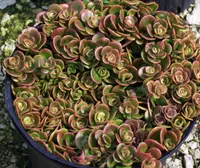
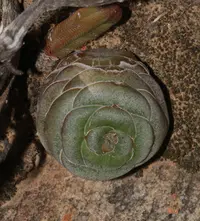
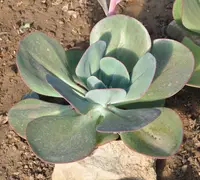
Echeveria longissima is a compact rosette-forming succulent from Mexico, valued for its neat symmetry and densely packed, spoon-shaped leaves. The foliage is usually blue-green with fine margins that can blush pink or red in strong light.

This species stays relatively small and forms clusters over time, making it suitable for pots, rock gardens, and windowsills. Its fleshy leaves store water, which increases drought tolerance and makes it forgiving of occasional missed waterings.

In general, it prefers bright light, low to moderate watering, and sharply draining, gritty soil. These traits make it straightforward for those learning how to care for Echeveria longissima.

Main Plant Requirements

Care Difficulty

Easy Care

Light Preference

Full Sun

Water Requirements

Low Water

Temperature Preference

Tropical / Frost Sensitive

Hardiness Zone

10–11

Soil Texture

Sandy, Loamy, Rocky

Soil pH

Slightly acidic (6.5–7.0), Neutral (7.0)

Soil Drainage

Well-drained

Fertilization

Minimal (feed rarely)

Get Personalized Care Plan

Scan your plant to receive care tips personalized for your specific plant

Available on iOS and Android

How to Care for the Echeveria longissima

This compact rosette succulent needs strong light to keep its leaves dense and colorful.

  • Provide 6–8 hours of direct sun outdoors, ideally with gentle morning sun and light or partial shade during the hottest afternoon hours.
  • Echeveria longissima tolerates light shade, but extended low light causes stretched, pale growth and weaker leaves.
  • In hot summers, protect from intense midday sun to avoid leaf scorch; in winter, move containers to the brightest possible spot to compensate for shorter days.

This drought-tolerant succulent prefers deep but infrequent watering that allows the soil to dry between soakings.

  • Water only when the top 3–5 cm of soil are completely dry; frequency may range from every 5–10 days in summer to every 2–4 weeks in cooler seasons.
  • Use a fast-draining, gritty mix and ensure excess water drains quickly to prevent root rot, especially important for Echeveria longissima.
  • Watch for signs: mushy, yellowing leaves indicate overwatering, while wrinkled, soft but not mushy leaves suggest the plant is too dry and ready for a thorough soak.

This species prefers mild, dry conditions and does poorly in prolonged cold or extreme heat.

  • Aim for 65–80°F (18–27°C) during active growth, with good airflow to reduce fungal problems in humid climates.
  • Protect from frost; growth slows below 50°F (10°C) and tissue damage often occurs near 32°F (0°C), especially in wet conditions.
  • In hot spells above 90°F (32°C), provide afternoon shade and avoid overwatering, as combined heat and excess moisture can quickly stress the roots and foliage.

This species prefers dry, airy conditions and does not need added humidity.

  • Aim for 30–50% relative humidity, similar to most heated or air-conditioned homes.
  • Dry indoor air is usually tolerated; excess humidity increases the risk of rot and fungal spots on leaves.
  • If air is very humid, increase air movement with a fan and avoid crowding plants to let foliage dry quickly.

Use a very fast-draining, mineral-rich mix to prevent root and crown rot.

  • Choose a gritty, sandy mix with large particles that feels coarse rather than dense or spongy.
  • Combine roughly 50–70% inorganic material (perlite, pumice, coarse sand, small gravel) with 30–50% cactus potting mix for structure and nutrients.
  • Keep soil slightly acidic to neutral, around pH 6.0–7.0, which supports nutrient availability without stressing roots.
  • Avoid peat-heavy, water-retentive, or compacted mixes; add extra perlite or pumice if water does not drain through within a few seconds.

This species is very suitable for container growing.

  • Select a shallow but wide pot to match the shallow root system and keep the rosette centered and stable.
  • Use unglazed terracotta if extra evaporation is needed in cool or humid climates to prevent prolonged wetness around roots.
  • Elevate the pot slightly on feet or a stand so drainage holes remain clear and water does not pool under the container.

This compact succulent benefits from light, controlled feeding rather than rich soil or heavy fertilizer inputs.

  • Use a diluted balanced liquid fertilizer (around 10-10-10 or 20-20-20 at 1/4 strength) during active growth in spring–summer.
  • Apply every 4–6 weeks only when the plant receives strong light and is producing new leaves.
  • Avoid compost-heavy mixes; instead, use a gritty, low-organic succulent soil to prevent root rot.
  • Stop feeding in fall and winter, when growth slows, to avoid soft, weak tissue.

Pruning Echeveria longissima focuses on cleanliness and rosette shape rather than heavy reshaping.

  • Best time is spring or early summer, when plants are actively growing and recover faster.
  • Remove dead, dried, or damaged leaves at the base using clean fingers or small sterilized scissors.
  • Trim spent flower stalks at the base after blooming to tidy appearance and redirect energy to the rosette.
  • Thin crowded offsets only if needed to improve air flow or to create propagation material.

This species prefers infrequent repotting, with attention to drainage and gentle handling of fleshy roots.

  • Check for roots circling the pot, emerging from drainage holes, or noticeably slowed growth as signals to repot.
  • Plan repotting for spring, every 2–3 years, when new growth begins and stress recovery is better.
  • Select a pot only 2–3 cm wider, with large drainage holes and a fast-draining succulent mix.
  • Minimize root disturbance, keep the crown above the soil line, then withhold water for 3–5 days to allow any damaged roots to callus.

This plant is commonly multiplied from offsets and leaf cuttings under warm, bright, and dry-leaning conditions.

  • Take healthy offsets or firm leaves in late spring–summer, allowing cut surfaces to dry and callus for 1–3 days.
  • Set leaf bases or offsets on or in a gritty, barely moist succulent mix under bright, indirect light.
  • Maintain warm temperatures (68–80°F) and avoid overwatering; light misting or minimal bottom watering is sufficient.
  • Seeds can be sown on the surface of a well-drained mix in warmth, but this method is slower and less predictable.

Cold and excess moisture in winter are the main risks, especially for plants grown in containers outdoors.

  • Treat Echeveria longissima as frost-sensitive; aim to keep above about 35–40°F, especially in wet climates.
  • Move potted plants indoors or under cover before frosts, providing as much light as possible.
  • Keep soil almost dry in winter, watering sparingly only when leaves begin to wrinkle slightly.
  • For in-ground plants in mild climates, ensure excellent drainage and use a light gravel mulch around the crown to keep leaves off wet soil.

Care Tips

Rosette spacing

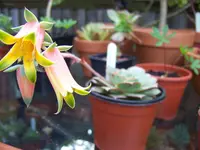
Leave at least 5–8 cm between rosettes in the pot or tray so air can move around the leaves and reduce fungal spotting and mealybug hiding places when caring for Echeveria longissima.

Offset management

Remove offsets with a clean, sharp knife once they have a few roots, then let the cut surfaces dry 2–3 days before replanting to prevent rot and to keep the mother rosette compact.

Targeted grooming

Regularly pluck away dried lower leaves by gently wiggling them side to side, which improves air circulation at the crown and makes it easier to spot early pest or rot issues.

Cold rain protection

In climates with cool, wet winters, place container plants under a simple transparent cover or eave so the rosettes stay dry in cold rain, which greatly lowers the risk of fungal rot.

Summer light acclimation

When moving plants from indoors or shade to stronger outdoor sun, increase light exposure over 7–10 days to avoid leaf scorch and encourage compact, colorful rosettes.

Common Pests and Diseases

Mealybugs

This pest appears as small white cottony clusters in leaf axils and at the base of tightly packed rosettes, where waxy leaves make access difficult. Symptoms include stunted growth, sticky honeydew, and sooty mold developing on older infestations.

Solution

Isolate the plant, then use a cotton swab dipped in 70% isopropyl alcohol to dab visible insects, repeating weekly until no new clusters appear; for dense rosettes common in Echeveria longissima care instructions, use a soft brush to work alcohol carefully between leaves. Improve light and airflow, avoid overfertilizing, and if needed apply a light horticultural soap or neem oil spray, making sure excess solution does not pool in the rosette center.

Echeveria aphid

These insects are small soft-bodied sap feeders that often hide deep in the rosette, especially on new inner leaves and flower stalks. Symptoms include curled or distorted new growth, sticky honeydew, and attraction of ants around the pot.

Solution

Rinse the rosette under a gentle but firm stream of water, angling the plant so water drains out of the center, then repeat every few days until populations drop. For persistent colonies on flower stalks, remove and discard heavily infested stalks and apply a dilute insecticidal soap or neem oil spray to remaining growth in the early morning, ensuring the plant dries quickly in bright, indirect light.

Agave / aloe mite

This pest is a microscopic eriophyid mite that causes unusual, tight distortions and blister-like or corky patches on leaves, especially near the center of the rosette. Symptoms include lumpy, irregular growth that does not match normal mechanical damage or sun stress patterns.

Solution

Remove and discard all visibly distorted rosettes and surrounding offsets, bagging material securely to prevent spread, as mites live deep in plant tissue and are difficult to eradicate. Disinfect tools with 70% alcohol between cuts, isolate any suspect plants, and avoid reusing contaminated pots or soil; if only mild early symptoms are present, growers often choose to cull the plant to protect the rest of a collection.

Edema

This disorder occurs when roots absorb water faster than the leaves can release it, which often happens after sudden heavy watering in cool, humid conditions. Symptoms include small corky or translucent blisters on the lower leaf surfaces that later turn tan or brown but do not spread like a fungal spot disease.

Solution

Allow the soil to dry more thoroughly between waterings, especially in cool weather, and use a fast-draining succulent mix to prevent water from sitting around the roots. Provide stronger light and better airflow, and water in the morning so moisture can move through the plant during warmer hours, as existing marks will remain but new leaves can develop normally.

Powdery mildew

This disease shows as a fine white or gray powdery film on leaves, often starting on shaded or crowded areas of the rosette. Symptoms include dull, patchy foliage and reduced vigor, especially in plants kept in high humidity with poor air movement.

Solution

Increase light and airflow around the plant, spacing rosettes so leaves do not touch, and avoid overhead watering that leaves foliage damp for long periods. Gently wipe affected leaves with a soft cloth and apply a sulfur-based or potassium bicarbonate fungicide labeled for ornamentals, using light, infrequent applications and keeping the plant in a bright, dry position until new growth appears clean.

Interesting Facts

Distinctly narrow leaves

This species forms compact rosettes with unusually narrow, pointed leaves compared with many other Echeveria, giving it a finer, more delicate outline while still maintaining typical succulent water storage tissue.

Variable wild forms

In habitat in central Mexico, populations show noticeable variation in rosette size, leaf shape, and color intensity, reflecting local microclimates and genetic diversity within the species.

Cool-tolerant succulent

Unlike many warmth-loving succulents, this species naturally experiences relatively cool, dry conditions at higher elevations in Mexico and can tolerate short periods of lower temperatures better than many lowland Echeveria, which influences practical Echeveria longissima care instructions in temperate regions.

FAQs about Echeveria longissima

Lack of flowers often comes from insufficient light, very rich soil, or no cool, dry rest in winter. Provide bright conditions, avoid heavy feeding, and allow a slightly cooler, drier period to encourage bud formation.

Grow Healthy Plants with Botan Care

Keep your plants happy and healthy with plant identification, disease detection, and easy care guidance.

Botan plant care app — identify plants on mobile

Explore More Plants