Edge Containment
Install a shallow plastic or metal edging strip 5–8 cm deep around beds or paths to keep this mat-forming sedum from spreading into lawns or neighboring plantings.

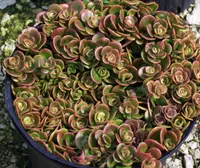
Chinese stonecrop (Sedum tetractinum 'Coral Reef') is a low-growing, mat-forming succulent often used as a groundcover or trailing plant in containers. It belongs to the stonecrop group, known for fleshy leaves that store water.
This cultivar typically shows rounded leaves that can shift from bright green to coppery or reddish tones in strong light or cooler weather, creating a colorful carpet effect. It spreads steadily but stays relatively low, which makes it suitable for edging, rock gardens, and mixed planters.
Sedum tetractinum 'Coral Reef' is generally considered easy to grow, as it tolerates some drought, lean soils, and short dry spells. Good light, well-drained soil, and moderate watering are usually enough to care for Chinese Stonecrop.

Care Difficulty
Easy Care

Light Preference
Full Sun

Water Requirements
Low Water

Temperature Preference
Cold Hardy

Hardiness Zone
4–9

Soil Texture
Sandy, Loamy, Rocky

Soil pH
Acidic (5.5–6.5), Slightly acidic (6.5–7.0)

Soil Drainage
Well-drained

Fertilization
Minimal (feed rarely)
Scan your plant to receive care tips personalized for your specific plant
Available on iOS and Android
Sedum tetractinum 'Coral Reef' thrives in bright conditions with several hours of direct sun each day.
This sedum prefers infrequent, deep watering and dries quickly due to its succulent leaves.
This hardy sedum tolerates a wide temperature range but grows best in mild conditions.
Humidity is rarely a concern for this drought-tolerant succulent.
Sedum tetractinum 'Coral Reef' needs lean, sharply drained soil to avoid root rot.
This species is well suited to container growing on patios, balconies, and sunny steps.
This succulent groundcover grows well in lean soil and needs only light feeding for best performance.
Pruning keeps Sedum tetractinum 'Coral Reef' dense, tidy, and within bounds.
This sedum is usually grown as a groundcover but adapts well to shallow containers and rock gardens.
New plants are commonly produced from vegetative pieces rather than seed.
This hardy sedum usually survives typical winters with minimal intervention in the ground.

Plant Health Check
Not sure what's wrong with your plant? Check your plant's health inside the app.
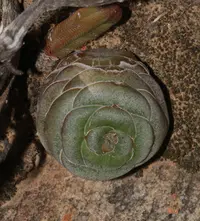
This low-growing sedum develops distinct copper, orange, and red tones along its round leaves when exposed to full sun or mild drought stress, while remaining greener in partial shade or more even moisture.
Its very small, rounded leaves are arranged in tight opposite pairs on creeping stems, creating a dense, scale-like mat that can root at nodes and gradually knit together into a living groundcover carpet.
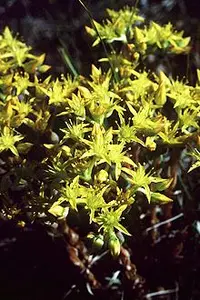
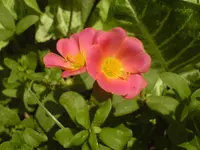
The star-shaped yellow flowers produced in early to mid-summer are rich in nectar and are known to attract bees and other small pollinating insects in rock gardens and container plantings.

This cultivar originates from the species Sedum tetractinum, which is native to parts of China, and it was specifically selected in cultivation for its distinctive coral to copper foliage color that appears under strong light, which sets it apart visually from the typical green wild-type form.
This species spreads by creeping stems and rooting at the nodes, forming a dense mat over time. It is usually manageable, but in ideal conditions can edge into nearby areas, so use edging or periodic trimming if space is limited.
Keep your plants happy and healthy with plant identification, disease detection, and easy care guidance.