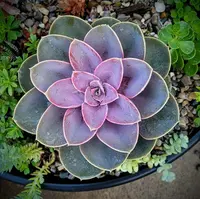



Echeveria (Echeveria 'Perle von Nurnberg') Light Needs

Echeveria grows best in full sun to very bright light, with several hours of direct sun.

Light Preference

Full Sun

Echeveria 'Perle von Nurnberg' Light Requirements

Echeveria 'Perle von Nurnberg' is a cultivated succulent from a genus adapted to bright, open habitats in dry, high-light climates. In these settings, plants often receive strong sun with some natural protection from rocks, slope, or nearby vegetation during the harshest hours.

That background explains its compact rosette growth under high light and its tendency to stretch in shade. Preferred light is full sun to very bright partial sun.

  • Ideal exposure:

    Echeveria 'Perle von Nurnberg' needs about 6–8 hours of bright light daily, ideally full sun or partial sun, including 3–5 hours of direct sun.

  • Direct sun:

    Gentle morning sun and mild late-day sun are well tolerated, especially after gradual acclimation.

  • Harsh afternoon sun:

    Strong summer afternoon sun through glass can scorch leaves if the plant was previously grown in softer light.

  • Lower light:

    Bright indirect light alone is usually tolerated for short periods, but long-term shade causes stretched, loose growth.

Indoors, place it where the rosette receives the strongest bright light available.

NPoor
North-facing window:

A north-facing window is usually too dim and often leads to stretched, open growth.

ESuitable
East-facing window:

An east-facing window is suitable when it gives direct morning sun and bright light for the rest of the day.

SBest
South-facing window:

A south-facing window is best when the plant sits within 1–2 ft of the glass and is acclimated to stronger sun.

WConditional
West-facing window:

A west-facing window is conditional because hot afternoon sun may need a sheer curtain or slight setback in summer.

If the rosette starts leaning or stretching, move it closer to the brightest suitable window.

Too much light usually shows after a sudden increase in direct sun.

Bleached patches:

Pale cream or white areas may appear on upper leaves after sudden exposure to strong sun.

Papery scars:

Scorched spots can dry into tan, papery marks that do not turn green again.

One-sided damage:

Burn marks often appear on the side facing the hottest window or afternoon sun.

Color shift:

The rosette may deepen in color under strong light, but patchy bleaching suggests stress rather than healthy coloring.

Move the plant out of harsh afternoon sun or filter the light with a sheer curtain. Reintroduce stronger sun in short steps.

Echeveria 'Perle von Nurnberg' shows low-light stress mainly through changes in shape and color.

  • Stretched center:

    The central growth may lengthen upward instead of staying tight and compact.

  • Wide spacing:

    Leaves may sit farther apart, making the rosette look loose or flattened.

  • Faded color:

    Purple and pink tones may become duller when light is too weak.

  • Small new leaves:

    New growth may be smaller and less firm during the active growing season.

Move the plant to a brighter position, increasing direct sun gradually over several days. A sudden jump from shade to full sun can cause damage.

If ideal sun is limited, choose the brightest available spot and give the plant several hours of gentle direct sun rather than all-day dim light.

Rotate the pot every 1–2 weeks so the rosette stays even and does not lean toward the light source.

A shelf across the room from a window is a poor setup because the light usually drops too far for compact growth.

Get Personalized Care Plan

Scan your plant to receive care tips personalized for your specific plant

FAQ

Echeveria light requirements are high. This plant does best with 6–8 hours of bright light daily, including several hours of direct sun when it has been acclimated.

Everything About Echeveria

More Plant Light Guides

Get the Botan App

Discover how to care for your plants with Botan.

Botan app identifying a plant with a phone camera
Best Fertilizer for Vegetable Gardens – What to Use for Each Plant

11 min read · 20 Jul 2026

Best Fertilizer for Vegetable Gardens – What to Use for Each Plant

Here, you’ll find the right fertilizer formula for vegetables in your garden. Learn how to adjust feeding correctly throughout the growing cycle, spot nutrient deficiencies by their symptoms, and keep your plants healthy and prolific.

Plant Recommendations
Best Fertilizer for Vegetable Gardens – What to Use for Each Plant
Is Sugar Water Good for Plants?

4 min read · 14 Sept 2026

Is Sugar Water Good for Plants?

Sugar water may sound like an easy boost, but most rooted plants do not need extra sucrose. This guide explains how green tissues produce carbohydrates, when a sweetened solution can be useful, and why too much can cause problems.

Plant Care
Is Sugar Water Good for Plants?
How to Group Plants in Landscaping: A Practical Layout Guide

8 min read · 31 Aug 2026

How to Group Plants in Landscaping: A Practical Layout Guide

Good plant grouping can mean the difference between a well-planned garden and one that looks sloppy. This guide explores layers, spacing, cluster shapes, and the plants that thrive when you group them.

Plant Care
How to Group Plants in Landscaping: A Practical Layout Guide