wild cucumber Care (Echinocystis lobata)

Also known as: prickly cucumber
wild cucumber

About wild cucumber

Wild cucumber, Echinocystis lobata, is a fast-growing annual vine native to North America. It climbs by tendrils and can quickly cover fences, shrubs, or small trees.

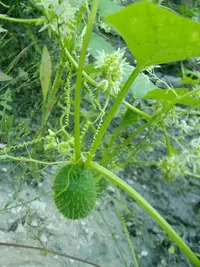
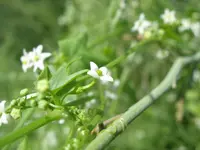
The plant has soft, lobed leaves and produces airy clusters of white flowers, followed by spiny but usually dry, hollow fruits. It prefers sunny, moist sites and easily self-sows, so it can spread where conditions suit it.

In gardens it is often grown as a temporary screen or for a naturalistic look. Those who want to care for wild cucumber should allow space for its vigorous growth and monitor unwanted seedlings.

Main Plant Requirements

Care Difficulty

Easy Care

Light Preference

Full Sun

Water Requirements

Moderate Water

Temperature Preference

Cold Hardy

Hardiness Zone

3–8

Soil Texture

Sandy, Loamy, Silty

Soil pH

Slightly acidic (6.5–7.0), Neutral (7.0)

Soil Drainage

Moist but well-drained

Fertilization

Minimal (feed rarely)

Get Personalized Care Plan

Scan your plant to receive care tips personalized for your specific plant

Available on iOS and Android

How to Care for the wild cucumber

This fast-growing annual vine prefers bright, open conditions that support vigorous flowering and fruiting.

  • Provide 6–8 hours of sun daily, ideally with morning sun and light afternoon shade, especially in hotter regions.
  • Wild cucumber tolerates light or dappled shade but may produce fewer flowers and fruits when sun drops below about 4 hours per day.
  • Avoid exposing young plants to intense, all-day midsummer sun without soil moisture; leaf scorch and wilting indicate excessive heat and radiation.

This vine prefers steadily moist, well-drained soil rather than extremes of dryness or saturation.

  • Water when the top 3–5 cm of soil feels dry, applying enough to moisten the root zone without leaving standing water.
  • During hot, dry spells, monitor soil every 1–2 days; limp, dull leaves signal thirst, while yellowing, soft stems suggest overwatering or poor drainage.
  • On sandy or sloped sites, use mulch 3–5 cm deep to slow evaporation and keep Echinocystis lobata roots more evenly supplied with moisture.

This species grows as a warm-season annual and stops thriving once conditions become too cold.

  • Optimal growth occurs around 68–82°F (20–28°C), which supports rapid vine extension and flowering.
  • Plants tolerate short heat spikes up to about 90–95°F (32–35°C) if soil moisture is maintained, but prolonged heat with dry soil causes wilting and reduced flowering.
  • Growth slows markedly below 55°F (13°C); light frost around 30–32°F (-1–0°C) can blacken foliage, and hard freezes quickly kill the vine.

This fast-growing vine tolerates a wide humidity range and rarely needs special humidity management outdoors.

Echinocystis lobata prefers light, well-drained, moderately fertile soil that does not stay waterlogged.

  • Use a loose loamy or sandy loam soil with plenty of organic matter to support rapid vine growth.
  • Aim for slightly acidic to neutral pH around 6.0–7.2, which suits most garden loams and composts.
  • Improve drainage and aeration by mixing in coarse sand or perlite along with compost before planting.
  • Avoid compacted clay, boggy sites, or spots where water stands after rain, as these favor root rot and weak growth.

This species can be grown in large outdoor containers if its vigorous climbing habit is carefully managed.

  • Choose a deep, heavy container to anchor the vine and prevent tipping once the foliage and fruits add weight.
  • Provide a sturdy trellis or nearby fence directly from the pot so the tendrils can climb without pulling the container over.
  • Use a fast-draining potting mix and keep the container slightly elevated so excess water can leave freely through the drainage holes.

Echinocystis lobata is a vigorous annual vine that usually needs little feeding in average garden soil.

  • In poor or very sandy soil, apply a light dressing of mature compost before sowing or planting.
  • If growth seems weak, use a balanced liquid NPK fertilizer at 1/2 strength every 4–6 weeks in the growing season.
  • Skip feeding from late fall through winter, as the plant completes its life cycle and dies back.
  • For container-grown wild cucumber, use a slow-release balanced fertilizer at planting, avoiding heavy doses that cause lush, weak growth.

Pruning for Echinocystis lobata focuses on controlling spread and maintaining tidy growth during the season.

  • Best timing is late spring through summer, trimming back wandering or overcrowded vines as needed.
  • Remove dead, damaged, or pest-infested stems with clean, sharp pruners to limit disease entry.
  • Shortening excessively long shoots helps direct energy into denser foliage and more flowers along the trellis.
  • Cut back unwanted side shoots at their base to prevent the vine from smothering nearby plants or structures.

This fast-growing annual vine is usually direct-sown, but young plants transplant well when handled carefully.

  • Transplant seedlings outdoors after frost danger passes and soil has warmed, when they have 2–3 true leaves.
  • If container-grown, shift up once when roots circle the pot or growth stalls, choosing a slightly larger container.
  • Move plants with a firm root ball, disturbing roots as little as possible and watering thoroughly after planting.
  • Provide a trellis or support at or just after transplanting to prevent root stress from later repositioning.

This species is mainly propagated by seeds, which germinate readily under suitable conditions.

  • Collect seeds from mature, dried fruits and store cool and dry until sowing in spring.
  • For best results, sow seeds outdoors in early spring, lightly covering them in well-drained soil.
  • Cold stratification, a brief chilled period, can improve germination where winters are mild.
  • Keep soil evenly moist and in full sun to light shade to support strong seedling establishment.

As a frost-tender annual, this vine dies back after hard frost and usually needs no special winter care.

  • In cold climates, remove dead vines after frost to reduce overwintering pests and self-seeding.
  • Mulch the area lightly if reseeding is unwanted, then remove or cultivate seedlings in spring.
  • Container plants can be discarded after frost and the potting mix refreshed for the next season.

Care Tips

Early trellis setup

Install a sturdy trellis, fence, or netting before rapid vine growth starts so tendrils can attach cleanly and you avoid damaging stems by forcing them onto support later.

Directing fast growth

Check vines every 2–3 days during peak growth and gently unwrap or redirect any shoots that tangle on themselves or neighboring plants to maintain airflow and prevent mildew pockets.

Volunteer seed control

Collect the dry, spiny fruits before they fully split and drop seeds, or place a mesh bag over a few fruits you want to save, to reduce unwanted self-seeding and keep the planting more controlled when growing wild cucumber.

Season-end sanitation

At the end of the season, remove and dispose of all dead vines and fallen fruits rather than composting them on-site to lower overwintering sites for pests and reduce the seed bank in the soil.

Edge and structure protection

Use vine clips or soft plant ties where stems meet wire, rough wood, or sharp fence edges to prevent wind-driven rubbing that can cut into soft stems and interrupt water flow to the rest of the vine.

Common Pests and Diseases

Powdery mildew

This disease often appears on dense or shaded vines in late summer, forming white, powdery patches on leaves and stems. Symptoms include yellowing, distortion, and premature leaf drop, which can reduce vigor and seed production.

Solution

Remove and discard heavily infected leaves to reduce spore load, and avoid overhead watering so foliage dries quickly. Improve air circulation by thinning vines and nearby vegetation, and if needed apply a sulfur or potassium bicarbonate fungicide labeled for cucurbits, following label directions carefully as part of Echinocystis lobata care.

Downy mildew

This disease develops in cool, moist weather and causes yellow angular spots on upper leaf surfaces with gray to purplish fuzzy growth underneath. Symptoms include rapid leaf decline and a scorched appearance across whole sections of the vine.

Solution

Promptly remove and destroy infected leaves to slow spread and avoid watering late in the day so foliage does not remain wet overnight. Increase spacing and airflow, and in high-pressure areas use a copper- or phosphonate-based fungicide labeled for downy mildew on cucurbits, applied preventively when conditions favor disease.

Cucumber beetles

These insects feed on leaves, flowers, and young stems, leaving shot holes and ragged edges, and may transmit bacterial diseases from other cucurbit hosts. This pest is especially damaging to young seedlings and flowering vines.

Solution

Hand-pick beetles in the early morning, shake them into soapy water, and use lightweight row covers to protect young vines until flowering. Reduce nearby weedy cucurbit hosts, and where populations are heavy, use yellow sticky traps or a targeted pyrethrin or spinosad product, applied in the evening to limit impact on pollinators.

Aphids

These insects cluster on tender shoot tips, undersides of leaves, and flower stalks, sucking sap and causing curling, yellowing, and sticky honeydew that can attract sooty mold. This pest often builds up quickly on lush, fast-growing vines.

Solution

Wash colonies off with a strong but controlled stream of water, focusing on shoot tips and leaf undersides, and repeat every few days as needed. Encourage natural enemies like lady beetles by avoiding broad-spectrum insecticides, and if infestations persist apply insecticidal soap or horticultural oil, coating all infested surfaces thoroughly.

Interesting Facts

Climbing with tendrils

This annual vine climbs by producing slender, branched tendrils that coil tightly around nearby supports, allowing it to rapidly cover shrubs, fences, or other vegetation in a single growing season.

Inflated spiny fruits

The plant produces distinctive pale green, bladder-like fruits covered in soft spines; as they mature, the walls dry and split, revealing a fibrous inner network and several large brown seeds.

Specialized seed dispersal

Mature fruits open at the base and release buoyant, lens-shaped seeds that are carried short distances by wind or water, helping the species spread along riverbanks and disturbed moist habitats.

Botan icon

Did you know?

In parts of its introduced range, this species can form dense tangles over riparian vegetation, where the heavy seasonal growth may shade and mechanically weigh down shrubs and young trees, altering local plant community structure.

FAQs about wild cucumber

This species can spread quickly by seed and long vines, especially in disturbed or moist sites. It may smother nearby vegetation, so monitor seedlings, remove unwanted vines early, and prevent mature fruits from dropping seeds if space is limited.

Grow Healthy Plants with Botan Care

Keep your plants happy and healthy with plant identification, disease detection, and easy care guidance.

Botan plant care app — identify plants on mobile

Explore More Plants