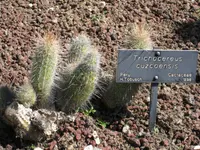




Best Soil for San Pedro cactus (Echinopsis cuzcoensis)

For Echinopsis cuzcoensis, loose mineral-rich soil with fast drainage and a slightly acidic to neutral pH supports healthier roots.

Soil Texture

Sandy, Loamy, Rocky

Soil pH

Slightly acidic (6.5–7.0), Neutral (7.0)

Soil Drainage

Well-drained

Echinopsis cuzcoensis Soil Guide

Native to the Andes of Peru, Echinopsis cuzcoensis grows in lean, open ground where water moves through quickly and roots get plenty of air. That habitat points to a sandy, loamy, rocky substrate rather than dense or highly moisture-retentive soil.

The best soil for San Pedro cactus is well drained, lightly textured, and more mineral than rich. Its roots are adapted to brief moisture followed by drying, so good aeration matters as much as drainage. Slightly acidic to neutral soil suits steady root function without holding excess water.

A simple homemade mix gives Echinopsis cuzcoensis the balance of airflow and light moisture retention it needs in a container.

100% total mix = 20 scoops
15%
small gravel or lava rock3 scoops
20%
pumice or perlite4 scoops
30%
coarse sand6 scoops
35%
cactus potting soil7 scoops

The finished blend should feel gritty, loose, and quick to drain, with enough body to hold roots in place without staying heavy.

A good target is about 6.5–7.0 pH. This keeps the soil slightly acidic to neutral, which suits San Pedro cactus and supports steady access to key nutrients in the root zone.

Outside that range, some nutrients become harder for the plant to absorb even when they are present in the mix. A near-neutral pH is usually well tolerated and works well for long-term container growth.

This cactus is more vulnerable to stagnant root conditions than to lean soil. Check the root zone when growth slows or the base starts to look stressed.

Compacted mix:

Dense soil that stays heavy can limit air around the roots, so loosen the medium at the next soil change and use a more open texture.

Slow drainage:

If water lingers in the pot or the mix dries very unevenly, improve drainage by replacing the substrate with a faster-flowing blend.

Salt buildup:

A crust on the soil surface or pot rim can point to mineral accumulation, so remove the top layer and refresh with clean mix.

Decomposed organic matter:

Older San Pedro cactus soil may shrink, darken, and hold moisture too long, so replace it when the structure no longer feels coarse and airy.

Right Plant. Right Soil.

Botan helps match the right soil approach to this plant so texture, drainage, and root conditions are easier to judge.

FAQ

Yes. Drainage holes let excess water leave the container and help the root zone stay oxygenated, which is important for a gritty cactus mix that should dry evenly rather than stay saturated.

More Plant Soil Guides

Scan for Soil Problems

Use Botan’s photo-based assessment to check whether soil may be part of the problem and what to examine more closely next.

Botan app helping with soil and plant care
Best Water for Plants – How to Choose the Right Type

7 min read · 13 Aug 2026

Best Water for Plants – How to Choose the Right Type

Rainwater, filtered, distilled, and tap water affect plants differently. Learn which types support healthy growth and which cause slow damage. Match each to your plants and discover how to easily improve tap water quality.

Plant Care
Best Water for Plants – How to Choose the Right Type
20 Funny Plant Names That Make You Laugh

8 min read · 16 Oct 2026

20 Funny Plant Names That Make You Laugh

Some plants carry names that sound like jokes. This guide explains the origins of 20 funny plant names. You will also see which of these plants you can grow at home.

Plant Recommendations
20 Funny Plant Names That Make You Laugh
Dill Companion Plants – What to Grow Next to Dill

9 min read · 17 Jul 2026

Dill Companion Plants – What to Grow Next to Dill

Dill is an easy-to-grow plant that gets along well with many vegetables. This guide describes 15 plants that can be planted alongside it, a few to avoid, and mistakes that can quietly sabotage the entire process.

Plant Recommendations
Dill Companion Plants – What to Grow Next to Dill