Encourage Basal Clumps
Shear spent stems back to 5–8 cm above the crown after the first main flush of flowers to encourage dense basal growth and a second, tidier bloom period when growing Engelmann's daisy.

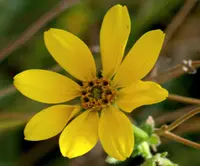
Engelmann's daisy (Engelmannia peristenia) is a hardy, long-lived perennial wildflower native to the central and southern United States. It often grows in prairies, open fields, and along roadsides, forming clumps of upright stems.
Plants typically reach a medium height, with deeply lobed, rough-textured leaves and bright yellow, daisy-like flower heads held above the foliage. The blooms attract bees, butterflies, and other pollinators through much of the warm season.
This species tolerates heat, drought, and poor, rocky soils, which makes it suitable for low-maintenance gardens and restoration plantings. Understanding how to care for Engelmann's daisy mainly involves providing full sun, good drainage, and avoiding overly rich or wet soil.
Engelmannia peristenia is often used in native plant landscapes, meadow plantings, and erosion control due to its strong root system and reliable performance.

Care Difficulty
Easy Care

Light Preference
Full Sun

Water Requirements
Low Water

Temperature Preference
Cold Hardy

Hardiness Zone
4–9

Soil Texture
Sandy, Loamy, Rocky

Soil pH
Slightly acidic (6.5–7.0), Neutral (7.0)

Soil Drainage
Well-drained

Fertilization
Minimal (feed rarely)
Scan your plant to receive care tips personalized for your specific plant
Available on iOS and Android
This drought-tolerant prairie perennial thrives in open, bright conditions with consistent direct sun.
This species is adapted to dry, rocky prairies and prefers infrequent, deep watering rather than frequent light moisture.
This hardy North American perennial tolerates a wide range of outdoor temperatures once established.
This species is adapted to dry prairie climates, so humidity is rarely a concern in typical homes or gardens.
This prairie perennial thrives in lean, well-drained soils that never stay waterlogged.
This species can be grown in containers, but performance is best when root depth and drainage closely match its prairie habitat.
This native perennial usually thrives in lean soils and needs only light, targeted feeding to maintain growth and flowering.
Pruning Engelmannia peristenia is simple and focuses on keeping plants tidy and flowering well.
This prairie perennial is more often transplanted in the garden than repotted, since it prefers open ground with good drainage.
Engelmannia peristenia is usually propagated from seed, with division as a secondary method for established clumps.
This species is generally cold hardy in much of the US and needs minimal winter care once established in the ground.

Plant Health Check
Not sure what's wrong with your plant? Check your plant's health inside the app.
This prairie perennial continues active growth and flowering through hot, dry summers when many other forbs decline, thanks to its deep, fibrous root system and drought-adapted foliage.
It forms a low rosette of deeply lobed leaves that hug the ground, which helps conserve soil moisture, reduce erosion, and shade out competing seedlings in its native grassland habitat.
The bright yellow flower heads provide nectar and pollen for native bees and butterflies, while birds and small mammals consume the mature seeds, making it an important component of central U.S. prairie food webs.

Engelmannia peristenia often appears early and persists on degraded rangelands and roadsides in its native range, so land managers sometimes treat it as an indicator that a disturbed prairie still retains enough native character to respond well to restoration efforts.
This species spreads moderately by seed and short rhizomes, forming clumps over time. It is not usually considered aggressive in well-managed gardens. Deadheading spent flowers and removing unwanted seedlings helps keep its spread controlled.
Keep your plants happy and healthy with plant identification, disease detection, and easy care guidance.