

Secure Mounting Surface
Attach fruiting brackets only to stable, well-seasoned hardwood or a fixed display panel, since shifting or decaying substrates can crack the tough flesh and shorten display life.

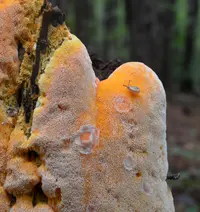
Salmon bracket, Erastia salmonicolor, is a bracket fungus that forms thick, shelf-like clusters on dead or dying wood. It is often found on conifers and sometimes hardwoods. The fruiting bodies show a distinctive salmon to pinkish color with pale margins and a smooth to slightly lumpy surface. Older brackets may fade or develop a more uneven texture. This species occurs mainly in temperate forests, especially in cooler, moist regions where fallen logs and stumps are common. It is not typically grown in gardens, but understanding how to care for salmon bracket helps when managing woodland or naturalized areas where it appears naturally.

Care Difficulty
Moderate Care

Light Preference
Partial Shade

Water Requirements
Moderate Water

Temperature Preference
Warm Climate

Hardiness Zone
Unknown

Soil Texture
Loamy

Soil pH
Slightly acidic (6.5–7.0)

Soil Drainage
Well-drained

Fertilization
Minimal (feed rarely)
Scan your plant to receive care tips personalized for your specific plant
Available on iOS and Android
This fungus prefers bright, cool woodland light rather than harsh, open exposure when growing on host trees.
Moist but not waterlogged conditions around the host wood support stable development of this bracket fungus.
This species favors cool to mild woodland climates with moderate seasonal variation rather than temperature extremes.
This bracket fungus shows moderate sensitivity to humidity and benefits from consistently moist air around developing fruiting bodies.
Erastia salmonicolor does not grow in soil but on decaying wood, so conditions should mimic a consistently moist, well-aerated woody substrate.
This species is not well suited to conventional container growing since it naturally colonizes outdoor wood rather than soil-filled pots.
This wood-decaying fungus usually grows on established trees and does not need routine feeding in cultivation.
Pruning is generally not applied to Erastia salmonicolor because it is a bracket fungus on living or dead wood.
Transplanting focuses on moving colonized wood rather than the fungus itself, which remains embedded in its host.
Propagation of Erastia salmonicolor is mainly by spores colonizing suitable host wood and is not typically managed in home settings.
This bracket fungus is cold hardy in temperate climates and normally requires no special winter care.

Plant Health Check
Not sure what's wrong with your plant? Check your plant's health inside the app.
This species is a parasitic fungus that mainly attacks living conifers such as spruce and fir, causing a white rot of the heartwood while the tree is still standing.
Mature fruiting bodies often develop a characteristic salmon to pinkish-orange coloration on the pore surface and flesh, which is one of the key field characters for reliable identification.
The fungus produces enzymes that break down both lignin and cellulose in wood, leaving a pale, fibrous residue and significantly altering the mechanical strength of the host trunk.

Erastia salmonicolor was originally described in the 19th century under a different genus and has been reclassified as molecular studies clarified its placement within the Polyporales, reflecting how DNA analysis reshaped understanding of many wood-decay fungi.
Yellowing often comes from water imbalance, poor drainage, or nutrient deficiency. Check for soggy substrate, compacted medium, or a lack of nitrogen. Adjust irrigation, improve aeration, and consider a balanced fungal nutrient supplement if growth is actively managed.
Keep your plants happy and healthy with plant identification, disease detection, and easy care guidance.

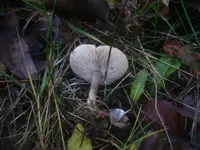
Common Cavalier
Melanoleuca polioleuca
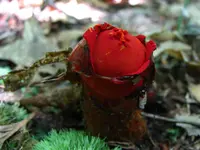
stalked puffball-in-aspic
Calostoma cinnabarinum
Mycena citrinomarginata
Mycena citrinomarginata
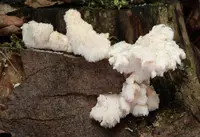
Tiered tooth fungus
Hericium cirrhatum
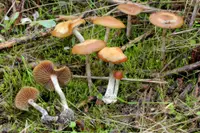
wavy cap
Psilocybe cyanescens
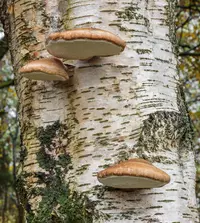
birch polypore
Fomitopsis betulina
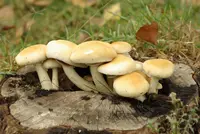
Poplar Fieldcap
Cyclocybe cylindracea
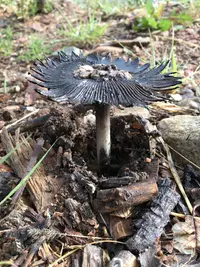
Star-capped Coprinus
Coprinus calyptratus