Common Cavalier Care (Melanoleuca polioleuca)

Common Cavalier

About Common Cavalier

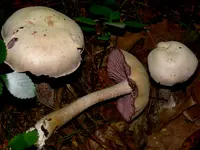
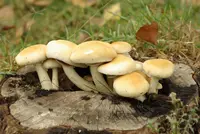
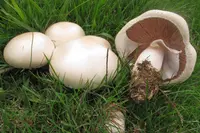
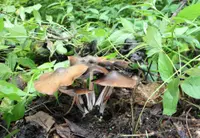
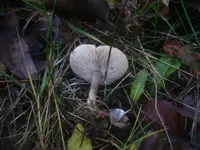
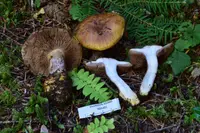
Common cavalier, Melanoleuca polioleuca, is a small to medium-sized woodland mushroom rather than a typical house or garden plant. It usually forms pale to gray-brown caps with slender stems, appearing in groups on soil rich in leaf litter or grass.

This species is native to parts of Europe and reported in other temperate regions, where it fruits mainly in cool, moist seasons. It is not commonly cultivated, so attempts to care for Common Cavalier focus on replicating its natural habitat conditions with undisturbed soil and consistent moisture.

Main Plant Requirements

Care Difficulty

Moderate Care

Light Preference

Partial Shade

Water Requirements

Moderate Water

Temperature Preference

Warm Climate

Hardiness Zone

Unknown

Soil Texture

Loamy

Soil pH

Slightly acidic (6.5–7.0)

Soil Drainage

Well-drained

Fertilization

Minimal (feed rarely)

Get Personalized Care Plan

Scan your plant to receive care tips personalized for your specific plant

Available on iOS and Android

How to Care for the Common Cavalier

This fungus prefers cool, evenly lit woodland or grassland sites rather than strong, direct sun exposure.

  • Provide bright shade or dappled light under trees, with only brief direct morning sun if any, avoiding harsh midday and afternoon sun that can dry the substrate too fast.
  • Aim for 2–4 hours of gentle, low-angle light and the rest of the day in open shade, which supports more stable moisture for fruiting bodies.
  • When caring for Common Cavalier outdoors, protect sites from complete darkness under dense shrubs or deep forest canopy, which reduces fruiting and weakens mycelial vigor.

Melanoleuca polioleuca depends on consistently moist, not waterlogged, soil or leaf litter to form healthy fruiting bodies.

  • Allow the top 2–3 cm of forest soil or mulch to start drying before adding water, then moisten evenly so the substrate feels damp but not squishy underfoot.
  • Increase moisture inputs during dry, warm spells and reduce them in cool, rainy seasons, always using local rainfall as the main guide rather than a fixed schedule.
  • Watch for signs of overwatering such as standing puddles, sour or anaerobic smells, and persistent slime algae on the surface, which indicate poor drainage and low oxygen.

This species fruits best in cool to mild conditions and shows reduced activity in temperature extremes.

  • Optimal fruiting usually occurs around 50–65°F (10–18°C), especially in moist autumn or spring weather with stable humidity and gentle air movement.
  • It tolerates brief drops close to 32°F (0°C) in soil but fresh fruiting bodies are easily damaged by hard frost, so peak displays follow frost-free, moist periods.
  • Sustained heat above 77–82°F (25–28°C) tends to halt fruiting and dry the substrate, so shaded, cooler microsites help moderate summer temperature swings.

Humidity plays a minor role for this woodland fungus, which tolerates typical outdoor ranges.

This fungus develops best in moist, well-structured ground rich in decaying organic matter.

  • Aim for a loose, humus-rich loam with fine leaf litter or wood debris that stays evenly moist but not waterlogged.
  • Ensure steady drainage by avoiding compacted clay; incorporate leaf mold or composted bark to improve structure and pore space.
  • Maintain slightly acidic to neutral conditions around pH 5.5–7.0, typical of many woodland and lawn soils.
  • Avoid heavily disturbed, frequently tilled, or chemically sterilized areas, which reduce the organic substrate Melanoleuca polioleuca needs to fruit.

This species is not suitable for container growing, as it relies on complex soil and litter conditions that are hard to reproduce in pots.

Melanoleuca polioleuca is typically a wild fungus and does not benefit from conventional fertilizing in cultivation.

Pruning is not applicable to Melanoleuca polioleuca, as it is a mushroom-forming fungus rather than a woody or leafy plant.

Transplanting Melanoleuca polioleuca focuses on carefully moving colonized substrate rather than handling roots or traditional potting soil.

  • Transplant only when growth has strongly colonized the existing substrate and fresh, clean substrate is ready.
  • Carry out moves in cool conditions, avoiding direct sun and drying air on exposed mycelium.
  • Transfer in blocks, disturbing the fungal network as little as possible, then pack gently into the new container or bed.
  • Maintain stable moisture after transplanting, avoiding both waterlogging and complete drying to limit stress.

Propagation of Melanoleuca polioleuca is specialized and usually left to experienced mycologists rather than home growers.

Common Cavalier is a temperate woodland fungus that generally needs no intentional winter care in outdoor, soil-based settings.

Care Tips

Accurate species ID

Confirm identification through a local mycology club or extension service before handling or disturbing fruiting bodies, since several similar brown-capped Melanoleuca species and toxic look-alikes can grow in the same habitat.

Spore print monitoring

Take regular spore prints from mature caps on white and dark paper to track local fruiting patterns, which helps predict when and where new flushes are likely to appear when growing Common Cavalier in managed beds or lawns.

Minimal site disturbance

Limit raking, digging, or heavy foot traffic where mushrooms appear, as the underground mycelium network is the long-lived part of the organism and disturbance can sharply reduce future fruiting.

Targeted mulching practice

If the species fruits in a bed you manage, maintain a thin, even mulch layer of well-rotted wood chips or leaf litter instead of thick new layers, so the existing mycelium is not smothered and can keep producing mushrooms.

Moisture pulse scheduling

In dry spells, use deep, occasional soakings rather than frequent light watering over known mycelium zones to mimic natural rainfall pulses that encourage more reliable and uniform fruiting flushes.

Common Pests and Diseases

Maggot infestation

This pest targets the fruiting bodies, with larvae tunneling through caps and stems and leaving soft, discolored, water-soaked areas. Symptoms include small entry holes and rapid collapse of affected mushrooms.

Solution

Harvest caps promptly when mature, remove and discard any infested mushrooms away from the site, and keep fruiting conditions on the drier and cooler side within the species’ tolerance to shorten the time larvae can develop. In outdoor beds, use fine mesh or row cover to physically exclude adult flies during peak fruiting and avoid leaving overmature mushrooms as breeding sites.

Slugs and snails

These pests feed on mushroom caps and stems, leaving irregular holes, slime trails, and partially eaten fruiting bodies. Damage often appears overnight in moist, shaded conditions.

Solution

Hand-pick slugs and snails during the evening or early morning, and reduce hiding places such as dense ground litter and boards immediately around the fruiting zone. Where needed, set shallow beer traps or use iron phosphate slug baits placed outside the immediate fruiting area, following label directions to limit contact with mushrooms.

Bacterial blotch

This disease causes yellow to brown, greasy-looking spots and streaks on caps that may coalesce into larger blotches under prolonged surface moisture. Symptoms include sticky, slimy patches that can deform or collapse affected tissue.

Solution

Improve air movement around the fruiting area, avoid overhead misting directly onto caps, and keep surfaces only lightly moist rather than continuously wet. Remove and discard visibly affected mushrooms immediately, clean tools and trays, and if cultivating indoors, disinfect hard surfaces between flushes to reduce bacterial load.

Green mold

This disease appears as white mycelium that quickly turns bright green on the substrate or near the base of fruiting bodies, often outcompeting the mushroom mycelium. Symptoms include reduced or deformed fruiting and patches of powdery green spores.

Solution

Promptly remove and discard contaminated substrate and any affected mushrooms to avoid spore spread, and increase fresh air exchange while avoiding over-wetting the substrate surface. Between cycles, thoroughly clean containers and tools, and start new culture from healthy, uncontaminated spawn to maintain reliable Melanoleuca polioleuca care instructions.

Interesting Facts

Widely scattered records

Melanoleuca polioleuca is recorded across much of Europe and parts of North America, but usually in small, scattered populations rather than forming dense, persistent colonies.

Preference for grassy soil

This species typically fruits in unimproved grassland, lawns, and grassy park edges, often on neutral to slightly calcareous soils, rather than deep woodland leaf litter where many other agarics dominate.

Subtle identification features

It is separated from closely related Melanoleuca species by a combination of pale grey-brown cap, almost white crowded gills, and microscopic features such as spindle-shaped, finely warted spores and the structure of its cystidia (specialized sterile cells on the gills).

FAQs about Common Cavalier

This mushroom is generally regarded as inedible or of very poor culinary value. Identification within the genus is difficult, and confusion with toxic look-alikes is possible, so it should not be collected or eaten.

Grow Healthy Plants with Botan Care

Keep your plants happy and healthy with plant identification, disease detection, and easy care guidance.

Botan plant care app — identify plants on mobile

Explore More Plants