Encourage Strong Rooting
Plant in a permanent spot from the start or transplant very young seedlings only once, since this species resents root disturbance and establishes best when its deep taproot is left undisturbed.

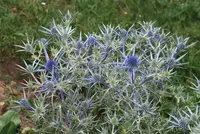
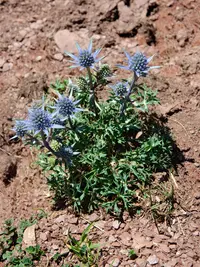
Amethyst eryngo, Eryngium amethystinum, is a hardy perennial from dry, rocky areas of southern Europe. It belongs to the carrot family but looks more like a small thistle. Compact, upright stems carry spiky, steel-blue to violet bracts around cone-shaped flower heads, giving a striking architectural look in borders and gravel gardens. The foliage is often deeply divided and somewhat leathery. This species prefers full sun, lean, well-drained soil, and tolerates drought once established, which makes it suitable for low-maintenance plantings. Many gardeners find it relatively simple to care for amethyst eryngo if soil is not heavy or waterlogged.

Care Difficulty
Easy Care

Light Preference
Full Sun

Water Requirements
Low Water

Temperature Preference
Cold Hardy

Hardiness Zone
4–9

Soil Texture
Sandy, Loamy, Rocky

Soil pH
Slightly acidic (6.5–7.0), Neutral (7.0)

Soil Drainage
Well-drained

Fertilization
Minimal (feed rarely)
Scan your plant to receive care tips personalized for your specific plant
Available on iOS and Android
This sun-loving perennial performs best in open, bright conditions that mimic dry, rocky habitats.
This species prefers dry, well-drained conditions and is highly intolerant of standing water.
This hardy perennial tolerates a wide temperature range when planted in open, free-draining soil.
This drought-adapted perennial tolerates a wide humidity range and rarely needs special adjustment.
This species prefers lean, well-drained soil and dislikes prolonged moisture around the roots.
This species can grow in containers if the setup prioritizes strong drainage and root stability.
This dryland perennial needs only modest feeding to maintain flowering and compact growth.
Pruning Eryngium amethystinum is minimal and mainly focused on tidiness and seed control.
This species forms a deep taproot and dislikes disturbance, so transplanting should be rare and carefully planned.
Propagation is usually done from seed, as division of this deep-rooted perennial is stressful for the plant.
This hardy perennial tolerates typical temperate winters and usually needs little special care once established in the ground.

Plant Health Check
Not sure what's wrong with your plant? Check your plant's health inside the app.
This species is naturally adapted to dry, rocky, limestone-rich slopes and open steppe in the central and eastern Mediterranean, where summers are hot and rainfall is low.
Its distinctive amethyst to steel-blue color develops most strongly in full sun and poor, well-drained soils, because pigment production increases under high light and mild stress conditions.
The spiny, cone-shaped flower heads are packed with many tiny florets that offer accessible nectar and pollen to bees, hoverflies, and other insects over an extended summer flowering period.

Historical herbals from central and eastern Europe sometimes mentioned this species among ornamental thistles valued in monastery and estate gardens for long-lasting cut and dried flowers, linking it to early traditions of growing amethyst eryngo for decorative use.
Lack of flowers usually comes from too much shade, overly rich or wet soil, or plants that are still immature. It typically needs a lean, well-drained site and at least 1–2 years to flower reliably.
Keep your plants happy and healthy with plant identification, disease detection, and easy care guidance.