Deep root training
During the first 1–2 seasons, water less frequently but deeply so roots are encouraged to grow downward, which improves drought tolerance on windy, exposed sites.

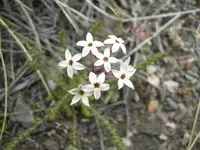
Arjona patagonica is a small perennial herb native to the arid regions of Patagonia in South America. It typically forms low, sparse clumps with narrow leaves adapted to dry, open habitats. The plant produces modest, often inconspicuous flowers, focusing more on survival in poor, sandy or rocky soils than on showy display. It is mainly of interest to collectors of unusual xeric, or dry-loving, species rather than general ornamental gardeners. Its adaptation to harsh, low-moisture environments can make it challenging to maintain in typical garden conditions. Those who want to learn how to care for Arjona patagonica should be prepared to replicate its bright light, excellent drainage, and restrained watering needs.

Care Difficulty
Moderate Care

Light Preference
Full Sun

Water Requirements
Low Water

Temperature Preference
Cool Climate

Hardiness Zone
8–10

Soil Texture
Sandy, Loamy, Rocky

Soil pH
Slightly acidic (6.5–7.0), Neutral (7.0)

Soil Drainage
Well-drained

Fertilization
Minimal (feed rarely)
Scan your plant to receive care tips personalized for your specific plant
Available on iOS and Android
This steppe species prefers bright, open conditions with strong light and low competition from taller plants.
This species is adapted to dry, well-drained habitats and is more tolerant of drought than excess moisture.
This plant is adapted to continental steppe climates with cool winters and warm, dry summers.
This species is strongly adapted to arid, steppe conditions, so humidity management is not a meaningful care factor for Arjona patagonica.
This species prefers very open, dry, mineral soils that mimic its native Patagonian steppe habitat.
This species is generally unsuitable for long-term container growing due to its deep, searching root system and dry-steppe adaptation.
This hardy, nutrient-efficient species typically grows well without added fertilizer in open ground.
Pruning needs for Arjona patagonica are minimal and mainly sanitary.
This species is usually grown in the ground, so care focuses on occasional transplanting rather than container repotting.
Propagation of Arjona patagonica is possible but tends to be specialized rather than routine for home growers.
This plant is adapted to cold, dry habitats and usually needs little targeted winter care in suitable climates.

Plant Health Check
Not sure what's wrong with your plant? Check your plant's health inside the app.
This species is a hemiparasitic shrub that attaches its roots to those of nearby plants in Patagonian steppe habitats, drawing water and nutrients while still performing its own photosynthesis.
Native populations grow in open, cold, windy grasslands and shrublands of southern South America, where the plant tolerates poor, dry soils and high solar radiation.
Molecular studies place this species in the family Schoepfiaceae within the order Santalales, alongside other root-parasitic lineages that were historically difficult to classify based only on morphology.
The underground tubers are traditionally eaten in parts of South America, usually cooked or roasted. Only use correctly identified plants from clean, uncontaminated sites. Avoid harvesting from protected natural areas or where local regulations restrict wild collection.
Keep your plants happy and healthy with plant identification, disease detection, and easy care guidance.