Manage vigorous roots
Install a root barrier or plant at least 4–5 ft away from paving, walls, and pipes to reduce damage from the strong, spreading root system as the tree matures.

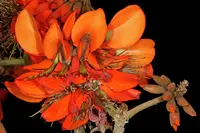
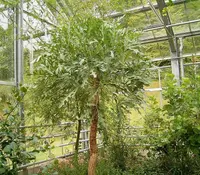
The coast coral tree, Erythrina caffra, is a deciduous flowering tree known for its thick trunk, spiny branches, and striking red, coral-shaped blooms. It often develops a broad, spreading crown that provides light shade in warm climates.
This species is native to coastal areas of South Africa, where it grows in mild, frost-free regions. It can be long-lived and sturdy once established but resents hard frost and poorly drained soil.
For those learning how to care for Coast coral tree, its main needs are strong light, warmth, and well-drained soil, with moderate water and good air movement.

Care Difficulty
Moderate Care

Light Preference
Full Sun

Water Requirements
Moderate Water

Temperature Preference
Tropical / Frost Sensitive

Hardiness Zone
9–11

Soil Texture
Sandy, Loamy

Soil pH
Slightly acidic (6.5–7.0), Neutral (7.0)

Soil Drainage
Well-drained

Fertilization
Minimal (feed rarely)
Scan your plant to receive care tips personalized for your specific plant
Available on iOS and Android
This sun-loving tree develops best structure and flowering in strong, direct light.
This drought-tolerant tree prefers deep, infrequent watering once established.
This species thrives in warm, frost-free climates with mild winters.
Humidity is not a critical factor for Erythrina caffra, which adapts well to typical indoor and outdoor levels.
Erythrina caffra prefers a loose, well-drained mineral-rich substrate that does not stay wet for long.
This species can be grown in containers when managed as a pruned small tree or shrub.
Erythrina caffra benefits from modest feeding to support flowering and healthy canopy growth in containers or nutrient-poor soils.
Pruning manages size, structure, and safety for Erythrina caffra while maintaining good flowering wood.
Coast coral tree is usually grown in the ground, so guidance focuses on safe transplanting and occasional container upsizing.
Erythrina caffra is commonly propagated from seeds or semi-hardwood cuttings when warmth and light are adequate.
This subtropical tree is frost-sensitive and needs protection in climates colder than USDA zone 9–10.

Plant Health Check
Not sure what's wrong with your plant? Check your plant's health inside the app.
This species is naturally distributed along the southeastern and southern coasts of South Africa, where it grows in mild, frost‑free coastal forests and along riverbanks exposed to ocean influence.
In many South African towns, especially in Durban and Port Elizabeth (Gqeberha), it is widely planted as an ornamental street and shade tree, valued for its vivid red flowers and tolerance of coastal conditions.
The large, bright red, nectar‑rich flowers are adapted for pollination by sunbirds, which insert their beaks between the petals to reach nectar and transfer pollen from tree to tree.

The Coast coral tree is the official floral emblem of the city of Durban in South Africa, reflecting its long-standing cultural and ornamental importance in that coastal region.
Lack of flowering usually relates to plant age, insufficient winter chill, heavy pruning at the wrong time, or excess nitrogen fertilization. Avoid pruning new wood before spring and prioritize phosphorus and potassium over nitrogen once the tree is established.
Keep your plants happy and healthy with plant identification, disease detection, and easy care guidance.