Tuolumne fawnlily Care (Erythronium tuolumnense)

Tuolumne fawnlily

About Tuolumne fawnlily

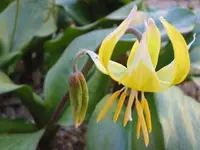
Tuolumne fawnlily, Erythronium tuolumnense, is a small spring‑flowering bulb from the Sierra Nevada foothills of California. It forms clumps of mottled leaves and nodding, yellow, lily‑like flowers. This woodland perennial emerges early, flowers, then retreats underground by summer, following a natural dormancy cycle. It prefers cool, moist conditions in spring and drier soil later in the year. Gardeners who learn how to care for Tuolumne fawnlily find it moderately easy in climates with mild, damp winters and not too hot summers. It suits shaded rock gardens, woodland borders, and naturalistic plantings where soil is humus‑rich and drains freely.

Main Plant Requirements

Care Difficulty

Moderate Care

Light Preference

Partial Shade

Water Requirements

Regular Water

Temperature Preference

Cold Hardy

Hardiness Zone

5–8

Soil Texture

Loamy, Peaty, Organic-rich

Soil pH

Acidic (5.5–6.5)

Soil Drainage

Moist but well-drained

Fertilization

Minimal (feed rarely)

Get Personalized Care Plan

Scan your plant to receive care tips personalized for your specific plant

Available on iOS and Android

How to Care for the Tuolumne fawnlily

This woodland bulb thrives in cool, bright conditions with filtered light similar to a deciduous forest floor.

  • Provide dappled or filtered light with 2–4 hours of gentle morning sun and shade or high bright shade the rest of the day.
  • In hot summers, protect Tuolumne fawnlily from strong midday and afternoon sun to prevent leaf scorch and premature dormancy.
  • If flowering declines or leaves stretch thin and pale, increase light slightly, but avoid exposing bulbs to sudden full sun after emergence.

This spring-flowering bulb prefers steadily moist, well-drained soil during active growth, then drier conditions in dormancy.

  • In spring, water when the top 2–3 cm of soil feel barely dry, aiming for evenly moist but never soggy soil around the bulbs.
  • Ensure sharp drainage with humus-rich, loose soil; standing water or heavy clay causes bulb rot and limp, yellowing foliage in Erythronium tuolumnense.
  • Reduce or stop watering once foliage yellows and collapses in late spring or early summer, allowing the soil to dry more between natural rainfall events.

This species is adapted to cool, temperate climates with distinct spring growth and summer dormancy.

  • Active growth is best at 50–65°F (10–18°C), with cool nights that help support strong leaves and flower development.
  • Dormant bulbs tolerate winter lows down to about 10–15°F (-12 to -9°C) under mulch or snow; deeper frost may require extra insulation.
  • Extended heat above 80–85°F (27–29°C) can stress plants; provide shade and organic mulch to keep soil cooler during hot, dry spells.

Humidity is not a critical factor for this woodland bulb, which adapts to typical outdoor levels.

This woodland perennial prefers humus-rich, moist but well-drained soil that stays cool around the bulbs.

  • Use a loose, loamy mix with plenty of leaf mold or compost to mimic woodland leaf litter for Erythronium tuolumnense.
  • Ensure sharp drainage by blending in grit or coarse sand, especially in heavier native soils.
  • Aim for slightly acidic to neutral pH, roughly 6.0–7.0, avoiding strongly alkaline conditions.
  • Avoid compacted, waterlogged, or very heavy clay soils, which encourage bulb rot and poor root aeration.

This species can be grown in containers, but only when the pot can reliably provide a cool, moist, yet sharply drained root zone.

  • Choose a deep pot that allows bulbs to sit at least 7–10 cm below the surface so they are insulated from temperature swings.
  • Use a thick, organic mulch on top of the potting mix to keep the root zone cool and reduce moisture evaporation.
  • Place the container where it is shaded from hot afternoon sun, since exposed sides of pots heat up and dry the bulbs quickly.

This woodland bulb needs only light feeding, as Tuolumne fawnlily is adapted to modest, humus-rich soils.

  • Apply a thin layer of compost or leaf mold over the planting area in early spring before flowering.
  • If growth is weak, use a balanced, slow-release granular fertilizer (around 5-5-5 or 10-10-10) at low label rates.
  • Avoid liquid feeds stronger than 1/2 dilution, and do not apply once foliage begins to yellow and enter dormancy.
  • Do not fertilize during summer dormancy or winter, as inactive bulbs cannot use added nutrients.

Pruning needs for Erythronium tuolumnense are minimal and focus on cleanliness rather than shaping.

  • In late spring, remove spent flower stems at the base with clean scissors or hand pruners.
  • Allow healthy leaves to die back naturally, cutting them only once fully yellow and dry.
  • Gently clear away dead foliage and debris in late summer or fall to reduce fungal disease risk.
  • Avoid cutting green foliage, as it is storing energy in the bulb for next year’s flowers.

This species is usually grown in the ground, with transplanting done sparingly to avoid disturbing the bulbs.

  • Transplant clumps only when flowering declines or overcrowding is obvious, typically every 5–7 years.
  • Choose late summer to early fall, when bulbs are dormant and foliage has fully died back.
  • Lift bulbs gently with a fork, keeping soil around roots to limit damage and moisture loss.
  • Replant at the same depth in well-drained, humus-rich soil, then water lightly to settle without saturating.

Propagation of Erythronium tuolumnense is usually done by bulb division, with seed used mainly for patient growers.

  • Divide crowded clumps in late summer to early fall, when bulbs are dormant.
  • Lift the clump carefully, separate offsets by hand, and replant them at original depth and spacing.
  • Keep soil evenly moist but not waterlogged until new roots establish in cool, shaded conditions.
  • Sow fresh seed in pots outdoors in fall; germination may take 1–2 years and flowering several more.

This hardy bulb needs little winter care in most temperate gardens, relying on its underground dormancy.

  • Erythronium tuolumnense tolerates typical winter cold where soil stays drained and not waterlogged.
  • Apply a light mulch of leaf mold or compost in late fall to buffer soil temperature and conserve moisture.
  • In very cold regions or exposed sites, add an extra mulch layer and avoid deep soil disturbance over the bulbs.

Care Tips

Mark Dormant Clumps

After the foliage dies back, discreetly mark clump locations with slim labels or stones so you avoid disturbing the bulbs during summer border work or future planting.

Use Leaf Mold Mulch

Apply a thin layer (1–2 in) of leaf mold over the planting area each autumn to mimic woodland leaf litter, keeping bulbs cool and moist while gradually improving soil structure.

Companion Shade Planting

Plant shallow-rooted, late-emerging perennials such as hostas or ferns nearby so their foliage hides fading leaves without competing heavily with the bulbs.

Protect From Ground Disturbance

Avoid regular hoeing, deep hand-weeding, or pet traffic over the colony, and instead use a light organic mulch to reduce weeds and keep the soil surface stable above the bulbs.

Lift And Divide Carefully

Every 4–6 years, lift clumps only when foliage has fully yellowed, then gently separate offsets and replant them immediately at the same depth to maintain vigorous flowering and support long-term Erythronium tuolumnense care.

Common Pests and Diseases

Slugs and snails

This pest feeds on the tender spring foliage and flower buds, often leaving large irregular holes and slime trails on leaves and emerging shoots.

Solution

Hand-pick at dusk or early morning, use physical barriers such as copper tape or rings, and place slug traps (beer traps or boards) near plantings; keep mulch thin right around the bulbs so crowns are less attractive hiding spots.

Botrytis leaf blight

This disease causes water-soaked spots on leaves that turn brown or gray, sometimes with fuzzy gray mold in cool, damp weather.

Solution

Remove and discard affected leaves promptly, avoid overhead watering, improve spacing and airflow, and in very wet springs consider a preventative application of a labeled fungicide if plants have a history of severe infection.

Basal bulb rot

Symptoms include yellowing, collapsing foliage in spring and soft, discolored bulbs that may show fungal or bacterial decay at the base.

Solution

Dig and discard affected bulbs, improve drainage by amending heavy soil with grit or organic matter, avoid overwatering and waterlogged sites, and plant only firm, healthy bulbs at the correct depth.

Narcissus bulb fly

This insect lays eggs near bulbs, and the large larvae tunnel into the bulb, causing stunted growth, distorted leaves, or complete failure to emerge the following season.

Solution

Lift and inspect bulbs if plants decline without clear cause, destroy infested bulbs, cover the planting area with fine mesh during the main egg-laying period, and replant sound bulbs slightly deeper and in well-drained soil to reduce attacks while growing Tuolumne fawnlily.

Interesting Facts

Sierra Nevada endemic

This species occurs naturally only in a very small area of the Sierra Nevada foothills in Tuolumne County, California, typically along moist, rocky streambanks and shaded woodland slopes.

Early spring specialist

It emerges and flowers in early spring, taking advantage of high light levels on the forest floor before trees fully leaf out, then quickly goes dormant as summer heat and drought arrive.

Yellow-flowered fawnlily

Unlike many related species with mottled leaves or pink-to-white flowers, this plant has clear yellow, nodding, lily-like flowers and plain green leaves, which make it distinctive among North American Erythronium species.

Botan icon

Did you know?

A cultivated selection derived from this species, Erythronium 'Pagoda', has become one of the most widely grown garden fawnlilies worldwide, even though the wild parent species remains geographically restricted and of conservation concern in its native California habitat.

FAQs about Tuolumne fawnlily

This woodland bulb usually blooms in early to mid spring, depending on climate. Flowers typically last 2–3 weeks in cool, moist conditions. Warmer, drier weather shortens the display, especially if soil dries out or plants are disturbed.

Grow Healthy Plants with Botan Care

Keep your plants happy and healthy with plant identification, disease detection, and easy care guidance.

Botan plant care app — identify plants on mobile

Explore More Plants