Staggered Bulb Planting
Plant bulbs in small groups at slightly different depths (1–2 cm variation) so flowering is spread over several days and the display looks fuller and more natural.

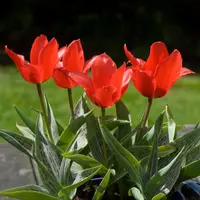
Tulipa greigii 'Red Riding Hood' is a compact spring-flowering bulb known for its bright red blooms and striking purple-streaked leaves. It forms low, sturdy clumps that stand up well to wind and rain.
This tulip originates from Central Asia, where it grows in rocky, well-drained habitats. In gardens it is valued for reliable early flowering and a tendency to return for several years when conditions suit it.
It prefers full sun, moderately moist but free-draining soil, and a dry rest in summer. These traits make how to care for Greigii Tulip fairly straightforward for most home gardeners.

Care Difficulty
Moderate Care

Light Preference
Full Sun

Water Requirements
Moderate Water

Temperature Preference
Cold Hardy

Hardiness Zone
3–8

Soil Texture
Sandy, Loamy, Organic-rich

Soil pH
Acidic (5.5–6.5), Slightly acidic (6.5–7.0)

Soil Drainage
Well-drained

Fertilization
Minimal (feed rarely)
Scan your plant to receive care tips personalized for your specific plant
Available on iOS and Android
This compact tulip prefers bright, direct sun in cool climates to produce strong stems and vivid flower color.
This bulb prefers evenly moist but not saturated soil during active spring growth, then much drier conditions in summer dormancy.
This tulip needs a cool winter followed by a mild spring to flower and grow reliably.
Outdoor-grown Tulipa greigii 'Red Riding Hood' performs well in typical 30–60% ambient humidity and usually does not need special humidity management.
Tulipa greigii 'Red Riding Hood' needs sharply drained, moderately fertile soil to keep bulbs healthy and prevent rot.
This tulip is suitable for short-term container growing during the bulb cycle outdoors.
This tulip benefits from modest feeding to support strong bulbs and reliable flowering.
Pruning focuses on deadheading and foliage management to keep Tulipa greigii 'Red Riding Hood' healthy for future blooms.
Transplanting is more relevant than repotting, as this tulip is usually grown in beds or borders rather than long-term containers.
Propagation of Tulipa greigii 'Red Riding Hood' is typically done by bulb offsets rather than seed for true-to-type plants.
This tulip is quite cold hardy and usually needs minimal winter care in most temperate gardens.

Plant Health Check
Not sure what's wrong with your plant? Check your plant's health inside the app.
This cultivar is known for its gray-green leaves marked with purple to maroon streaks and blotches, a trait inherited from wild Tulipa greigii populations in Central Asia where leaf mottling may help break up the plant’s outline against rocky soils.
Its flowers are relatively large in proportion to the short stem, opening into a broad, bowl-shaped form that presents the dark basal blotch and anthers to early pollinators on sunny spring days.
Selected in the mid-20th century, this cultivar is valued in breeding and horticulture for its reliable early spring flowering and consistent red coloration across different growing seasons and climates.

Tulipa greigii, the species behind this cultivar, is one of the key wild tulips that shaped modern garden tulip breeding, contributing compact growth, strong stems, and distinctive leaf mottling that are now widely used traits in contemporary ornamental tulip lines.
Lack of flowers usually comes from bulbs planted too shallow or too deep, depleted bulbs after previous flowering, or excessive warmth in winter. Ensure good post-bloom care so bulbs can recharge for the next season.
Keep your plants happy and healthy with plant identification, disease detection, and easy care guidance.