Staking Flower Spikes
Install a discreet ring stake or thin bamboo support when the central flower spike reaches about 15–20 cm to prevent wind or rain from snapping the heavy, top-loaded stem.

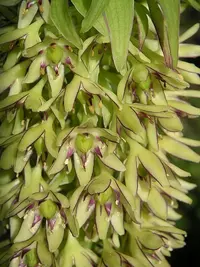
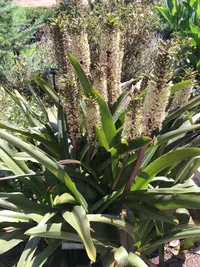
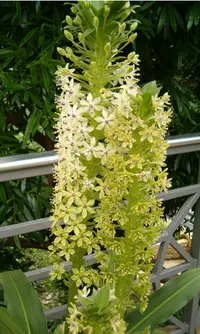
Variegated pineapple lily, Eucomis bicolor, is a bulbous perennial grown for its unusual flower spikes that resemble tiny pineapples topped with a rosette of leafy bracts. It forms a low clump of strap-shaped, often lightly speckled leaves, then sends up sturdy stems with densely packed greenish-white flowers edged in purple. Native to South Africa, this plant prefers warm conditions, good light, and soil that drains freely, especially in wetter climates. It suits containers or sunny borders in regions with mild winters, and bulbs are often lifted and stored where frost is severe. Many gardeners find it straightforward to care for Variegated Pineapple Lily once its need for winter dryness and protection is understood.

Care Difficulty
Moderate Care

Light Preference
Full Sun

Water Requirements
Moderate Water

Temperature Preference
Warm Climate

Hardiness Zone
7–10

Soil Texture
Sandy, Loamy, Organic-rich

Soil pH
Acidic (5.5–6.5), Slightly acidic (6.5–7.0)

Soil Drainage
Well-drained

Fertilization
Light (every 4–6 weeks)
Scan your plant to receive care tips personalized for your specific plant
Available on iOS and Android
Eucomis bicolor grows best with bright, direct light for part of the day and some protection from harsh extremes.
Watering for Eucomis bicolor should support plump bulbs and active growth without allowing prolonged saturation.
This bulb prefers warm growing conditions and does poorly in prolonged cold or frost.
Eucomis bicolor tolerates a wide humidity range but grows best in moderately moist air.
Eucomis bicolor prefers a sharply drained, airy mix that still holds moderate moisture around the bulbs.
This species is well suited to container growing for patios, decks, and seasonal displays.
Eucomis bicolor benefits from moderate feeding during its active growing season to support strong foliage and flowering.
Pruning Eucomis bicolor is simple and mainly focuses on removing spent or damaged growth to keep bulbs healthy.
Container-grown Eucomis bicolor or crowded clumps in beds benefit from occasional division and transplanting to maintain vigor.
New Eucomis bicolor plants are most commonly produced by bulb division, with seed used mainly for longer projects or breeding.
Winter care for Eucomis bicolor depends on climate, with bulbs needing more protection in colder regions.

Plant Health Check
Not sure what's wrong with your plant? Check your plant's health inside the app.
This species forms a dense spike of small greenish-white flowers topped by a tuft of leafy bracts, giving a strong visual resemblance to a miniature pineapple fruit, which is why it is commonly called pineapple lily.
The leaves, stems, and flower stalks often show purple or maroon speckling, a characteristic pattern that helps distinguish this species from other Eucomis and adds ornamental value in the garden.
Flowering typically occurs in late summer to early autumn, providing nectar and pollen for bees and other insects at a time when many earlier-season ornamentals have finished blooming.

Eucomis bicolor is naturally distributed in high-altitude regions of South Africa and Lesotho, where it grows in open grasslands and along rocky slopes, demonstrating notable tolerance to strong sun, fluctuating temperatures, and periodic moisture stress in its native habitat.
Lack of flowers usually comes from insufficient light, bulbs planted too shallow or too deep, or exhaustion after many years in the same spot. Allow full dormancy, feed lightly after flowering, and avoid removing leaves too early.
Keep your plants happy and healthy with plant identification, disease detection, and easy care guidance.