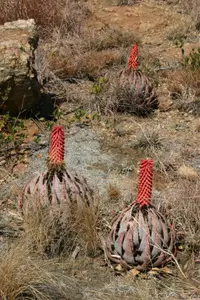
Medusa’s head Care (Euphorbia caput-medusae)

Also known as: Medusahead Barrelwort
Medusa’s head

About Medusa’s head

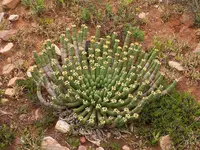
Medusa’s head, Euphorbia caput-medusae, is a succulent shrub from coastal South Africa. It forms a low, central crown with many snaking, finger-like stems that resemble its mythological name. The plant stays compact and architectural, making it suitable for containers and small indoor displays.

This species stores water in its thick stems and is drought-tolerant, but it dislikes cold, wet conditions. It prefers bright light, very free-draining soil, and careful watering that avoids constant moisture. These traits make it relatively easy to grow if its dislike of overwatering is respected and you learn how to care for Medusa’s head.

Main Plant Requirements

Care Difficulty

Easy Care

Light Preference

Full Sun

Water Requirements

Low Water

Temperature Preference

Tropical / Frost Sensitive

Hardiness Zone

10–11

Soil Texture

Sandy, Loamy, Rocky

Soil pH

Slightly acidic (6.5–7.0), Neutral (7.0)

Soil Drainage

Well-drained

Fertilization

Minimal (feed rarely)

Get Personalized Care Plan

Scan your plant to receive care tips personalized for your specific plant

Available on iOS and Android

How to Care for the Medusa’s head

This succulent prefers bright, non-scorching light to maintain compact, healthy stems.

  • Provide 4–6 hours of morning sun or bright, filtered light daily; light afternoon shade helps prevent scorching in hot, inland climates.
  • Medusa’s head tolerates light partial shade, but very low light causes stretched, weak stems and dull color over several months.
  • Outdoors, shift plants gradually into stronger spring–summer sun; in very intense sun, use 30–40% shade cloth to reduce leaf burn and substrate overheating.

Watering should mimic a dry, coastal-succulent climate with thorough but infrequent soakings.

  • Allow the top 3–5 cm of soil to dry fully before watering; the surface should look pale, feel dry, and the pot feel lighter when lifted.
  • Use very free-draining, gritty soil so water runs through in seconds; empty saucers promptly to avoid root rot in Euphorbia caput-medusae.
  • In spring–summer, expect more frequent watering; in winter dormancy, reduce sharply, watching for mild stem wrinkling as a sign to water again.

This species prefers warm, frost-free conditions similar to a mild Mediterranean or coastal desert climate.

  • Aim for 65–80°F (18–27°C) for best growth; brief peaks up to 90°F (32°C) are tolerated if soil drains well and air moves freely.
  • Protect from cold; growth slows below 55°F (13°C) and tissue damage can occur near 40°F (4°C), especially in wet soil.
  • Never expose to frost; move plants under cover before nights approach 40–45°F (4–7°C) and acclimate gradually when shifting between cool and warm seasons.

This species is adapted to dry air and usually does not need special humidity control indoors.

This succulent needs a very fast-draining, mineral-based substrate to prevent root rot.

  • Use a gritty mix such as 50–70% inorganic material (pumice, coarse sand, or fine gravel) with the rest a lean cactus potting base.
  • Aim for slightly acidic to neutral pH around 6.0–7.0, avoiding heavy lime-rich or salty substrates for Euphorbia caput-medusae.
  • Ensure strong drainage by using coarse particles (3–6 mm) and keeping organic matter low so the mix dries within a few days after watering.
  • Avoid peat-heavy, compact, or moisture-retentive mixes that stay wet, as these quickly damage the fine feeder roots.

This species is well suited to container growing due to its compact root system and spreading stems.

  • Choose a wide, shallow pot that allows the stems to spread while preventing excessive unused depth that can hold stagnant moisture.
  • Select a heavier material such as clay or ceramic to anchor the plant, since the radiating stems can make the container unstable when large.
  • Raise the pot slightly on feet or a stand so drainage holes clear free and water runs off quickly after each watering.

This drought-adapted succulent needs only light feeding to maintain compact, healthy growth.

  • Use a balanced liquid cactus or succulent fertilizer at 1/4–1/2 strength for caring for Medusa’s head.
  • Feed once every 4–6 weeks during active growth in spring and summer only.
  • Avoid high-nitrogen products, which encourage weak, elongated shoots.
  • Do not fertilize in fall and winter when growth slows or stops.

Pruning Euphorbia caput-medusae is mainly corrective, helping maintain shape and remove problem growth.

  • Best time is late winter to early spring, before strong new growth starts.
  • Remove dead, damaged, or badly crowded stems at the base using clean, sharp pruners.
  • Wear gloves and avoid skin contact with the milky sap, which can be irritating.
  • Light shaping encourages a tidier, more compact clump without affecting overall vigor.

This species prefers to stay slightly root-bound and needs infrequent repotting in well-drained soil.

  • Repot every 3–4 years, or when roots circle the pot or emerge from drainage holes and growth slows.
  • Choose late spring as the safest time, using a gritty cactus mix and a pot only 2–3 cm wider.
  • Loosen circling roots gently and keep the old root ball mostly intact to limit stress.
  • After repotting, keep soil just lightly moist for 1–2 weeks and provide bright, filtered light.

Euphorbia caput-medusae is most commonly propagated by stem cuttings taken during warm weather.

  • Take firm, healthy stems in late spring or early summer using a sterile, sharp knife.
  • Rinse off milky sap, then allow cut surfaces to dry and callus for 3–7 days in shade.
  • Insert callused cuttings into a gritty, barely moist cactus mix with good air movement.
  • Keep warm at 70–80°F in bright, indirect light until roots form, then water sparingly.

This succulent is frost-tender and needs protection from freezing temperatures, especially in containers.

  • Move potted plants indoors or to a bright, frost-free greenhouse when nights approach 35–40°F.
  • Keep soil almost dry in winter, watering lightly only when stems begin to soften.
  • In mild climates, grow in fast-draining soil and avoid exposed, low-lying frost pockets.
  • Do not expose stems to prolonged temperatures below 32°F, which can cause tissue collapse.

Care Tips

Stabilize heavy pots

Use a wide, heavy container or place the pot inside a cachepot filled with gravel to counterbalance the spreading stems and prevent the plant from tipping as the crown enlarges.

Control stem sprawl

If stems overrun neighboring plants, gently coil longer arms onto the soil surface or over a decorative topdressing layer so they root in place instead of hanging and snapping at the base.

Safe sap handling

When pruning or taking cuttings, wear gloves and immediately blot the white sap with a dry paper towel, then rinse the cut surface under cool water to reduce latex flow and avoid skin irritation.

Encourage offset growth

To obtain more heads for division, lightly top-dress with a thin layer of coarse grit around the crown each spring, which supports new side shoots while keeping their bases dry and rot-free.

Outdoor summer rotation

If moving the plant outdoors for summer, rotate the pot by 90° every 1–2 weeks so the crown develops evenly and the radiating stems do not become lopsided, which simplifies caring for Medusa’s head over time.

Common Pests and Diseases

Mealybugs

This pest often hides in the crevices at the base of the tubercles and between stems, sucking sap and causing dull, stunted growth. Symptoms include cottony white clusters and sticky honeydew on the plant surface.

Solution

Isolate the plant, then dab visible insects with cotton swabs dipped in 70% isopropyl alcohol and repeat weekly until no new clusters appear. Improve light and air movement, and use a light systemic insecticide or horticultural soap labeled for succulents if the infestation is widespread, taking care to keep chemicals off the soil latex sap wounds.

Spider mites

These insects prefer hot, dry conditions and can colonize the many small surface ridges, causing a dusty look and fine webbing between stems. Symptoms include tiny pale speckles, slow growth, and a general loss of green color.

Solution

Rinse the plant thoroughly with a firm but gentle stream of water, including between stems, then increase humidity slightly around the plant without keeping the soil wet. Use repeated applications of insecticidal soap or a miticide safe for succulents, and keep the plant in bright light to support recovery.

Root mealybugs

This pest attacks the underground caudex and roots, leading to slow decline, poor new growth, and unexplained wilting despite correct watering. Symptoms include white cottony patches on roots and inside the pot when the plant is unpotted.

Solution

Unpot the plant, discard all old soil, and wash the roots under lukewarm running water to remove insects and debris. Trim heavily damaged roots, treat the root zone with an appropriate systemic insecticide or a soak in 70% alcohol diluted 1:1 with water, then repot in fresh, very well-drained gritty mix and keep slightly on the dry side for 1–2 weeks.

Fungal stem canker

This disease develops where stems stay damp or are injured, especially in cool, poorly ventilated spots, and can cause sunken dark lesions and localized collapse of the finger-like branches. Symptoms include soft, discolored patches that may spread from a wound or water-sitting point.

Solution

Cut out affected tissue well into firm, healthy green tissue using a sterile blade, allow cut surfaces to dry and callus in bright, indirect light for several days, and avoid overhead watering. Improve air circulation, keep stems dry, and in severe cases apply a sulfur or copper-based fungicide sparingly, following label directions for succulents while following Euphorbia caput-medusae care instructions to avoid further stress.

Interesting Facts

Ancient dune specialist

This species naturally occurs on coastal sand dunes and rocky slopes of South Africa’s Western Cape, where its radiating stems help stabilize loose, shifting substrates.

Caustic defensive latex

Like many spurges, it produces a white, milky latex that is notably caustic and can irritate skin and eyes, effectively deterring herbivores from feeding on its tissues.

Mat-forming growth habit

Instead of a single upright stem, it develops a short central base that gives rise to many snake-like branches, forming a low, spreading dome that can cover a broad surface over time.

Botan icon

Did you know?

The species name caput-medusae, meaning Medusa’s head, was inspired by the resemblance of its many radiating, serpent-like stems to the snake hair of the Medusa figure from Greek mythology and has become a widely used reference point in modern Euphorbia caput-medusae plant care literature.

FAQs about Medusa’s head

This species blooms best when mature, slightly root-bound, and exposed to strong light with a short, dry rest in cooler months. Excess shade, frequent repotting, heavy feeding, or year-round watering often delays or prevents flowering.

Grow Healthy Plants with Botan Care

Keep your plants happy and healthy with plant identification, disease detection, and easy care guidance.

Botan plant care app — identify plants on mobile

Explore More Plants