Fendler's Sandmat Care (Euphorbia fendleri)

Fendler's Sandmat

About Fendler's Sandmat

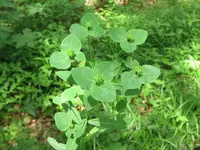
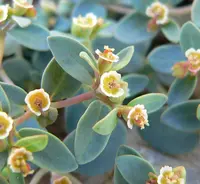
Fendler's sandmat (Euphorbia fendleri) is a small, drought-adapted perennial in the spurge family, native to dry grasslands and open slopes of the southwestern United States. It usually forms low, spreading mats with small leaves and inconspicuous, pale-toned flowers that attract insects. The plant exudes a milky sap when damaged, a typical feature of many Euphorbia species. It is generally tough and low-maintenance when given dry, well-drained soil and plenty of sun, but the sap and dry conditions mean it suits more attentive beginners or intermediate growers. Understanding how to care for Fendler's Sandmat helps it stay compact and healthy in rock gardens or naturalistic xeric plantings.

Main Plant Requirements

Care Difficulty

Easy Care

Light Preference

Full Sun

Water Requirements

Low Water

Temperature Preference

Warm Climate

Hardiness Zone

6–9

Soil Texture

Sandy, Loamy, Rocky

Soil pH

Slightly acidic (6.5–7.0), Neutral (7.0)

Soil Drainage

Well-drained

Fertilization

Minimal (feed rarely)

Get Personalized Care Plan

Scan your plant to receive care tips personalized for your specific plant

Available on iOS and Android

How to Care for the Fendler's Sandmat

This desert perennial needs strong sun but benefits from some protection during the hottest hours.

  • Provide 6–8 hours of direct sun daily; morning and late-afternoon sun are ideal, with light midday shade in very hot climates.
  • Tolerates light partial shade, but flowering and compact growth of Fendler's Sandmat are best in high, open light exposures.
  • In summer, watch for leaf scorch or bleached stems in reflected heat; in winter, choose the sunniest possible south-facing or west-facing site.

This species is adapted to dry conditions and prefers infrequent, deep watering.

  • Outdoors in arid climates, allow soil to dry at least in the top 5–8 cm before watering again, then soak the root zone thoroughly.
  • Use very fast-draining, gritty soil on slopes or raised areas to prevent standing water, which leads to root rot in Euphorbia fendleri.
  • In cool seasons, watering may be needed only after prolonged drought; shriveling stems suggest underwatering, while yellowing, soft tissue indicates excess moisture.

This plant thrives in warm, dry climates and is sensitive to hard frost.

  • Optimal growth occurs around 70–90°F (21–32°C) during the growing season, with low humidity and good air movement.
  • Mature plants can tolerate brief drops to about 20–25°F (-6 to -4°C) if soil is dry, but repeated freezes may damage new growth.
  • In heat waves above 95°F (35°C), the plant usually copes if soil is dry and roots are shaded; avoid sudden shifts from cool, shaded spots into intense heat.

This species is adapted to arid conditions and usually does not need special humidity management.

This desert perennial prefers fast-draining, sandy mineral soil that dries quickly between waterings.

  • Use a mix of roughly 60–70% coarse sand or small grit with 30–40% cactus potting mix to mimic Euphorbia fendleri’s native habitat.
  • Ensure the mix is very free-draining, with water passing through in seconds rather than pooling at the surface.
  • Aim for slightly acidic to neutral pH, around 6.0–7.0, and avoid heavy clay that compacts and suffocates roots.
  • Improve aeration by blending in perlite or pumice, and avoid mixtures high in peat that stay wet for long periods.

This species can be grown in containers if the potting setup prevents prolonged root wetness.

  • Select a wide, shallow pot to accommodate its spreading root system while keeping the soil volume small enough to dry quickly.
  • Choose unglazed clay rather than plastic if extra moisture loss is needed in cooler or humid climates.
  • Elevate the pot slightly on feet or a stand so drainage holes stay clear and water does not collect under the container.

This drought-adapted native needs very modest feeding, so focus on maintaining lean, well-drained soil when caring for Fendler's Sandmat.

  • Use a light application of slow-release, low-rate balanced NPK fertilizer (such as 5-5-5) once in early spring if growth appears weak.
  • Avoid rich compost layers; a thin top-dressing of gritty, low-organic material is sufficient in poor soils.
  • Skip feeding in late fall and winter, when growth is dormant, to prevent soft, cold-tender tissue.

Pruning Euphorbia fendleri is usually minimal and aims to maintain a compact, healthy form.

  • Best time is late winter to very early spring, before active new growth starts.
  • Remove dead, damaged, or crossing stems with clean, sharp scissors or hand pruners.
  • Thin crowded sections lightly to improve air flow and light penetration, which supports denser growth.
  • Avoid cutting into very old, woody bases; focus on younger stems and always avoid sap contact with skin.

This species is more often grown in the ground than in containers, so focus on careful transplanting rather than frequent repotting.

  • Transplant in spring once frost risk has passed, choosing a sunny, sharply drained site similar to the original conditions.
  • Look for signs such as circling roots, poor drainage, or very slow growth before moving container plants to a slightly larger pot.
  • Minimize root disturbance by lifting with a wide soil ball and handling roots gently, then water lightly to settle soil without waterlogging.
  • Allow the plant a short acclimation period with moderate sun and low watering until new growth indicates recovery.

Euphorbia fendleri is most reliably propagated from seed under warm, bright, dry-leaning conditions.

  • Sow fresh seed in late winter to early spring in a sandy, well-drained mix kept barely moist, not wet.
  • Provide bright light and warmth around 70–75°F to support uniform germination and sturdy seedling growth.
  • Transplant seedlings once they have several true leaves, disturbing roots as little as possible.
  • Stem cuttings are possible but less dependable and require very fast-draining medium and careful watering.

This hardy species tolerates typical cold in much of its native range and usually needs limited winter care.

  • In-ground plants in well-drained soil generally overwinter without extra protection in mild to moderate climates.
  • Apply a very light, gravelly mulch around the root zone where winters are cold but dry, avoiding heavy, wet mulches.
  • For container plants, move pots to a cold, sheltered, frost-free spot with bright light and very sparse watering.

Care Tips

Handle Sap Safely

Wear gloves and avoid touching your face or eyes when cutting or moving stems, as the milky latex sap can irritate skin and is toxic if ingested; rinse tools and any skin contact promptly with plenty of water.

Encourage Compact Form

Pinch back soft stem tips in late spring to early summer to promote branching and a denser, ground-hugging habit, but allow cuts to dry and callus in dry air rather than sealing them with moisture-retaining products.

Optimize Drainage Mounds

On heavy or compacted soils, create low, gravelly mounds 5–10 cm high and plant on top to keep the crown off persistently wet ground and reduce root and crown rot risk when growing Fendler's Sandmat.

Control Self-Seeding

Monitor for unwanted seedlings around the planting area and remove them while small, as the plant can self-sow in favorable dry sites and become difficult to thin once roots establish in rocky soils.

Winter Wet Protection

In regions with cold, wet winters, lay a very thin layer of coarse grit or small gravel around the crown in late fall to keep the base drier and protect it from freeze–thaw damage combined with excess moisture.

Common Pests and Diseases

Aphids

These insects cluster on young stems and flower stalks, sucking sap and causing distortion, yellowing, and sticky honeydew on Euphorbia fendleri in naturalistic or xeric plantings.

Solution

Prune off heavily infested tips, then wash remaining stems with a firm stream of water and repeat every few days; if needed, spot-treat colonies with insecticidal soap or a light horticultural oil, applied in the early morning to avoid heat stress on this sun-adapted species.

Spider mites

These pests become an issue on Euphorbia fendleri in hot, very dry conditions, causing fine stippling, a dull or bronzed appearance, and sometimes delicate webbing on stems and leaves.

Solution

Increase humidity around the plant slightly without overwatering the soil, then hose down stems thoroughly to dislodge mites; in persistent cases, use insecticidal soap or a low-rate miticidal oil, ensuring full coverage of stems and leaf undersides and repeating at 5–7 day intervals until new growth appears clean.

Powdery mildew

This disease can develop on E. fendleri foliage in poorly ventilated, overhead-watered sites, leading to white, powdery patches and gradual weakening of affected shoots.

Solution

Remove and dispose of infected leaves and thin overcrowded plants to improve air movement, then water at soil level rather than from above; in recurrent cases, apply a sulfur-based or potassium bicarbonate fungicide labeled for ornamentals at the first sign of infection, following label rates closely as part of broader Euphorbia fendleri care instructions.

Interesting Facts

Sand-loving specialist

This species occurs naturally on sandy or gravelly soils in arid regions of the Southwestern United States, where its low, spreading habit helps stabilize loose substrates against wind erosion.

Seasonal growth strategy

Euphorbia fendleri often behaves as a short-lived perennial or occasional annual, taking advantage of favorable moisture in spring and early summer, then retreating or dying back when drought stress becomes severe.

Inconspicuous floral display

Its small greenish structures that look like simple flowers are actually cyathia, a specialized inflorescence type in Euphorbia where multiple reduced flowers are clustered to function as a single unit for pollinators.

FAQs about Fendler's Sandmat

This species usually forms low, patchy mats and spreads slowly by seed in dry, open sites. It is not typically aggressive in gardens, but in very sandy, disturbed soils it can naturalize and slowly extend its patches.

Grow Healthy Plants with Botan Care

Keep your plants happy and healthy with plant identification, disease detection, and easy care guidance.

Botan plant care app — identify plants on mobile

Explore More Plants