Safe handling routine
Wear disposable gloves and long sleeves when cutting or repotting, keep paper towels ready to blot the white sap immediately, and wash tools and skin contact areas with soap and water right after handling.

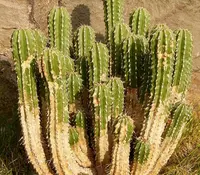
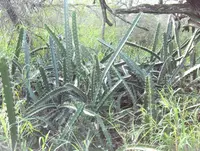
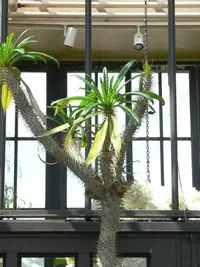
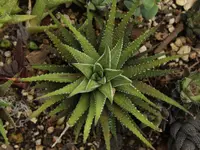
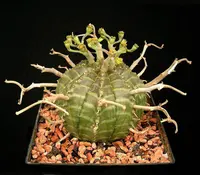
Euphorbia officinarum is a succulent shrub from arid regions of North Africa, known for its upright, many-angled, cactus-like stems and sparse, tiny leaves. It stores water in its thick green columns and often forms dense clumps over time.
This species naturally occurs in rocky, dry habitats with intense sun and very fast-draining soils. It is drought-tolerant but sensitive to excess moisture and poor drainage.
These traits make it relatively easy to maintain for growers who provide bright light, minimal watering, and a gritty substrate. Understanding how to care for Euphorbia officinarum mainly comes down to avoiding overwatering and frost exposure.

Care Difficulty
Moderate Care

Light Preference
Full Sun

Water Requirements
Low Water

Temperature Preference
Tropical / Frost Sensitive

Hardiness Zone
10–11

Soil Texture
Sandy, Loamy, Rocky

Soil pH
Slightly acidic (6.5–7.0), Neutral (7.0)

Soil Drainage
Well-drained

Fertilization
Minimal (feed rarely)
Scan your plant to receive care tips personalized for your specific plant
Available on iOS and Android
This succulent prefers strong light that mimics its native arid habitat.
Watering should mimic infrequent desert rains while avoiding prolonged wet soil.
This species prefers warm, dry conditions and is sensitive to cold and frost.
This species handles typical indoor humidity and rarely needs special humidity management.
This succulent needs a very fast-draining, mineral-rich soil to prevent root and stem rot.
This species is well suited to container growing due to its compact, upright habit and slow to moderate root spread.
This drought-adapted succulent needs only light feeding to avoid weak, etiolated growth in containers.
Pruning is minimal and mainly corrective, aimed at maintaining a stable, compact form.
Container-grown plants benefit from infrequent repotting that prioritizes drainage and root stability.
Propagation is possible but should be done cautiously because of toxic latex sap and spines.
This species is highly frost-sensitive and needs strict cold-season protection in most climates.

Plant Health Check
Not sure what's wrong with your plant? Check your plant's health inside the app.
This succulent shrub is native almost exclusively to arid regions of southwestern Morocco, where it forms distinctive stands on rocky, lime-rich slopes and plateaus.
Its stems branch in a rigid, many-armed pattern that creates low, candelabra-shaped clumps, an adaptation that maximizes light capture while limiting water loss in intense sun.
The sharp spines along its ridged stems are modified stipules, which occur in pairs at each node and help protect the water-storing tissues from herbivores.

Euphorbia officinarum was historically described as a source of the traditional resin known as euphorbium, a pungent, highly irritant latex that was exported from North Africa to Europe for centuries and studied by early pharmacologists for its drastic effects on skin and mucous membranes.
This species contains a milky latex sap that is highly irritating. Contact can cause skin redness, eye injury, and digestive upset if ingested. Keep away from children and pets, wear gloves, and avoid touching eyes or mouth.
Keep your plants happy and healthy with plant identification, disease detection, and easy care guidance.