Handle Sap Safely
Always wear nitrile or latex gloves and long sleeves when cutting or repotting, and rinse any spilled latex sap from tools and pots with soapy water to reduce skin irritation risk.

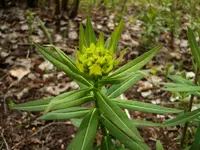
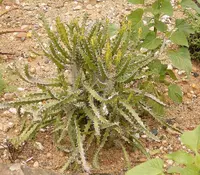
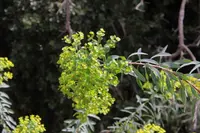
Euphorbia semivillosa is a shrubby euphorbia, typically forming a low, branching mound with narrow leaves and small, inconspicuous flowers framed by showy greenish bracts. Its overall look is more architectural than floral, making it suitable for structured plantings and collections.
This species is native to arid or seasonally dry habitats, so it is adapted to strong light, lean soils, and periods of limited moisture. These traits usually make it relatively straightforward to grow in well-drained substrate, provided excess water is avoided.
Gardeners who want to learn how to care for Euphorbia semivillosa should note its need for bright exposure, fast-draining mineral-rich soil, and protection from prolonged cold and winter wet.

Care Difficulty
Moderate Care

Light Preference
Full Sun

Water Requirements
Low Water

Temperature Preference
Warm Climate

Hardiness Zone
Unknown

Soil Texture
Sandy, Loamy, Rocky

Soil pH
Slightly acidic (6.5–7.0), Neutral (7.0)

Soil Drainage
Well-drained

Fertilization
Minimal (feed rarely)
Scan your plant to receive care tips personalized for your specific plant
Available on iOS and Android
This drought-tolerant succulent thrives in bright, open conditions with strong light.
This species prefers infrequent, deep watering and fast-drying soil.
This succulent performs best in warm, dry conditions with good air movement.
This succulent tolerates a wide humidity range and rarely needs special humidity management indoors.
This species needs a sharply draining, mineral-rich substrate to avoid root and stem rot.
This species is well suited to container cultivation when drainage and stability are managed carefully.
This species grows in low-nutrient conditions and typically needs only light feeding in cultivation.
Pruning is mainly corrective for this plant and focuses on safety and maintaining a clean outline.
This plant prefers stable conditions and benefits from infrequent, careful repotting or transplanting.
Propagation is usually done vegetatively and demands attention to sap safety and dry conditions.
This species is not strongly frost hardy and benefits from thoughtful winter management, especially in containers.

Plant Health Check
Not sure what's wrong with your plant? Check your plant's health inside the app.
This species is naturally restricted to Madeira Island, where it grows on rocky slopes and cliffs within the island’s laurel forest and coastal scrub habitats.
In the wild it is most often found on sun-exposed, well-drained volcanic or rocky substrates, reflecting its strong adaptation to drought and shallow soils.
Like many members of Euphorbia, it produces a white latex sap that is irritant and toxic if ingested or if it contacts skin or eyes, so handling should be careful when following Euphorbia semivillosa care instructions.
The milky sap is irritating and potentially toxic. Contact may cause skin redness or eye injury, and ingestion can lead to nausea or vomiting. Always wear gloves, avoid sap contact, and keep the plant away from pets and children.
Keep your plants happy and healthy with plant identification, disease detection, and easy care guidance.