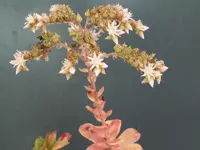
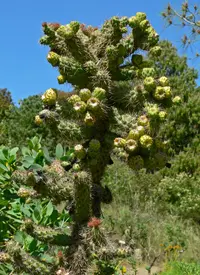
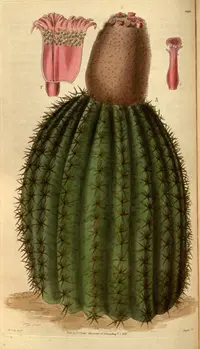
Map Tree Care (Euphorbia tetragona)

Also known as: Honey Naboom, Honey Euphorbia, Honey Candelabra-Tree
Map Tree

About Map Tree

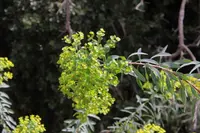
Map Tree (Euphorbia tetragona) is a succulent shrub or small tree with upright, many-angled green stems that resemble a candelabra. It stores water in its thick, ribbed stems rather than in leaves.

This species is native to arid regions of South Africa, where it grows in rocky, well-drained habitats with intense sun. Its drought tolerance and slow to moderate growth make it relatively simple to keep in containers.

For those who want to learn how to care for Map Tree, it prefers bright light, minimal watering, and a gritty, fast-draining soil mix that prevents root rot.

Main Plant Requirements

Care Difficulty

Easy Care

Light Preference

Full Sun

Water Requirements

Low Water

Temperature Preference

Tropical / Frost Sensitive

Hardiness Zone

10–11

Soil Texture

Sandy, Loamy, Rocky

Soil pH

Slightly acidic (6.5–7.0), Neutral (7.0)

Soil Drainage

Well-drained

Fertilization

Minimal (feed rarely)

Get Personalized Care Plan

Scan your plant to receive care tips personalized for your specific plant

Available on iOS and Android

How to Care for the Map Tree

This succulent prefers bright, intense light that mimics its native arid habitats.

  • Provide 6–8 hours of direct sun outdoors; morning and late-afternoon sun are ideal, with light afternoon shade in very hot climates.
  • Indoors, Map Tree (Euphorbia tetragona) does best in a south- or west-facing window with strong sun or bright, filtered light all day.
  • Insufficient light causes stretched, weak stems and dull color; harsh summer sun without acclimation can scorch ribs, so increase exposure gradually in spring.

Water this succulent sparingly, allowing the soil to dry well between soakings.

  • Wait until the top 3–5 cm of soil are completely dry before watering, then water deeply so excess drains away quickly.
  • In spring and summer, this Euphorbia tetragona usually needs water every 10–21 days depending on heat, pot size, and airflow; in winter, reduce to light, infrequent watering.
  • Soft, yellowing, or blackened stems indicate overwatering and possible root rot; severe wrinkling or shriveling of stems signals that it is time to water.

This species thrives in warm, dry conditions and is sensitive to frost.

  • Optimal growth occurs at 70–85°F (21–29°C); it handles short spikes up to about 95°F (35°C) if soil is fast-draining and air is moving.
  • Protect it from temperatures below 40°F (4°C); damage often appears near 32°F (0°C), and hard frost can kill stems and roots.
  • In regions with cool winters, treat it as a warm-season plant: keep outdoors in 65–85°F (18–29°C) weather, then move to a frost-free spot before night lows drop below 45°F (7°C).

This drought-adapted succulent tolerates typical indoor humidity and rarely needs special adjustments.

  • Aim for 30–50% humidity; avoid sustained levels above 70% that encourage rot in stems and roots.
  • Dry household air is usually safe, but very damp rooms can cause soft, yellowing tissue and black rot spots.
  • Improve air movement rather than misting; use a fan or open window to keep foliage dry and reduce fungal issues when caring for Map Tree.

Provide a fast-draining, mineral-rich mix to prevent root rot and support upright growth.

  • Use a sandy or gritty mix, such as 50–70% cactus soil blended with coarse perlite, pumice, or horticultural sand for strong drainage.
  • Keep structure open and airy so water passes through in seconds; dense peat-heavy substrates hold excess moisture and suffocate roots.
  • A slightly acidic to neutral pH around 6.0–7.0 suits Euphorbia tetragona, but stability and drainage matter more than exact pH.
  • Avoid compacted, organic-rich garden soil; instead, add coarse grit or small gravel to any mix that feels spongy or stays wet longer than 2–3 days.

This species is well-suited to container growing due to its compact, upright succulent stems.

  • Choose a heavy terracotta or clay pot to balance the tall, top-heavy stems and slightly increase evaporation from the root zone.
  • Select a pot only 2–5 cm wider than the root ball so the mix dries evenly and does not stay wet at the bottom.
  • Ensure multiple unobstructed drainage holes and, if needed, elevate the pot on feet so excess water exits quickly rather than pooling underneath.

This drought-tolerant succulent needs only light feeding to maintain steady growth in containers.

  • Use a balanced liquid NPK fertilizer at 1/4–1/2 strength for Map Tree during active growth in spring–summer.
  • Apply every 4–6 weeks for potted plants; in-ground plants in lean soil can receive 1 light feeding in spring.
  • Choose cactus/succulent fertilizer or slow-release granules mixed into the topsoil for controlled nutrition.
  • Stop feeding in fall–winter when growth slows, as excess nutrients can cause weak, elongated stems.

Pruning is mainly used to control size and remove damaged growth on Euphorbia tetragona.

  • Schedule pruning in late spring or early summer when the plant is actively growing.
  • Remove dead, shriveled, storm-damaged, or crossing stems to maintain a clean, open structure.
  • Shorten overly tall or leaning stems at a node to manage height and encourage branching.
  • Use sharp, disinfected cutters and avoid skin contact with the milky sap; allow cut surfaces to dry and callus.

This succulent prefers slightly tight pots and only needs infrequent repotting when clearly root-bound.

  • Repot every 3–4 years, or when roots circle the pot, emerge from drainage holes, or growth slows noticeably.
  • Plan repotting for late spring, using a container just 2–5 cm wider with ample drainage holes.
  • Handle the root ball gently, shake off only loose soil, and trim rotten roots with sterilized tools.
  • Replant in fresh, gritty cactus mix, keep the plant dry for 3–5 days, then resume light watering to limit root stress.

Propagation of this species is most successful from stem cuttings taken in warm months.

  • Take healthy, pencil-thick stem cuttings in late spring–summer using clean, sharp pruners.
  • Let cuttings sit dry for 5–7 days until the cut ends fully callus to reduce rot risk.
  • Root callused stems in a coarse, dry cactus mix with bright, indirect light and 70–80°F warmth.
  • Water very sparingly after planting; increase slightly once new growth appears, indicating successful rooting.

This succulent is frost sensitive and needs protection in regions with cold winters.

  • Keep outdoor plants only in climates where temperatures remain above 30–32°F; otherwise grow in containers.
  • Before first frost, move potted plants indoors to a bright, cool room with good airflow.
  • Maintain soil almost dry in winter, watering just enough to prevent shriveling and discourage root rot.

Care Tips

Sturdy pot choice

Use a wide, heavy terracotta or ceramic pot to counterbalance the tall, segmented stems and reduce the risk of the plant tipping over as it gains height.

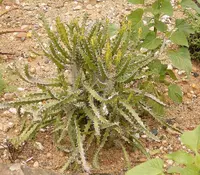
Discrete stem staking

Add a slim bamboo stake or two and loosely tie taller stems with soft plant ties or string, which helps prevent breakage without restricting the plant’s natural segmented growth.

Rotating for symmetry

Rotate the container 90° every 2–3 weeks so that all sides receive similar light exposure, which keeps the columnar stems upright and evenly spaced instead of leaning strongly to one side.

Safe sap handling

When pruning or removing damaged stems, wear gloves and avoid touching your face, as the milky latex sap is irritating; keep tools and surfaces easy to rinse so cleanup is quick and safe when caring for Map Tree.

Winter rest adjustments

In cooler months with shorter days, allow the potting mix to dry more thoroughly between waterings and avoid repotting or heavy feeding, supporting a natural semi-dormant period that reduces stress and rot risk.

Common Pests and Diseases

Spider mites

This pest feeds on succulent stems, causing fine speckling, dull color, and delicate webbing between ribs or at branch joints.

Solution

Rinse stems thoroughly with a strong but controlled stream of water, then treat with repeated applications of insecticidal soap or a light horticultural oil, keeping the plant out of direct sun until dry. Increase humidity slightly around the plant and reduce heat stress, and isolate it from other succulents until no new webbing or stippling appears.

Mealybugs

These insects appear as white, cottony clusters in stem crevices and around new growth, sucking sap and causing stunted, distorted segments.

Solution

Dab visible insects with cotton swabs dipped in 70% isopropyl alcohol, then follow with several treatments of insecticidal soap, paying attention to crevices and branch junctions. Quarantine the plant, inspect regularly with a hand lens, and remove heavily infested stems if needed to protect the rest of the plant while following consistent Euphorbia tetragona plant care practices.

Scale insects

This pest appears as small brown or gray bumps firmly attached to stems, leading to sticky honeydew and sooty mold on nearby surfaces.

Solution

Gently scrape or peel off individual scales with a fingernail or soft tool and wipe stems with a cloth lightly moistened with 70% isopropyl alcohol. Follow up with 2–3 rounds of horticultural oil at label rates, applied in the evening, and keep the plant well lit and dry between waterings to discourage reinfestation.

Corky stem lesions

This disease presents as localized corky, brown, or sunken patches on the green stem surface, often following physical damage or sunburn, and can slowly expand.

Solution

Cut away severely damaged stem sections with a sterile, sharp blade, allowing healthy tissue to dry and callus in bright, indirect light. Reduce watering until wounds are fully callused, avoid overhead wetting of stems, and provide stable light and temperature to prevent additional stress-related lesions.

Fungal stem rot

This disease starts as soft, water-soaked, dark patches on the lower stem or around old wounds, which can spread quickly through succulent tissue.

Solution

Immediately remove and discard all mushy or discolored tissue, cutting back to firm, healthy stem with sterile tools, and allow cuts to dry and callus in a warm, airy spot. Reduce or stop watering until the plant is clearly firm and stable, use a coarse, fast-draining cactus mix, and avoid water sitting against the stem base to prevent new infections.

Interesting Facts

Shrub, not cactus

Although it has upright, ribbed, spiny stems that resemble a cactus, this species is a succulent shrub from the spurge family (Euphorbiaceae) and not a true cactus, and it produces a typical Euphorbia milky latex when injured.

Natural South African hedge

In parts of its native range in South Africa, this species is used as a living fence or boundary hedge, taking advantage of its dense, multi-stemmed growth and sharp spines that discourage browsing animals.

Small, specialized flowers

The plant bears tiny inflorescences called cyathia, a specialized Euphorbia flower structure that mimics a single flower but is actually a cup-like cluster of highly reduced male and female flowers.

Botan icon

Did you know?

The toxic white latex of this species is so irritant that, like many Euphorbia shrubs in southern Africa, it has historically been noted as potentially harmful to livestock and to human skin and eyes if handled without care.

FAQs about Map Tree

Growth is moderate for a succulent shrub. In warm, bright conditions it often adds about 10–25 cm per year, slowing in winter. Container size, light intensity, and nutrient availability strongly influence overall height gain and branching.

Grow Healthy Plants with Botan Care

Keep your plants happy and healthy with plant identification, disease detection, and easy care guidance.

Botan plant care app — identify plants on mobile

Explore More Plants