Spinestar Barrelwort Care (Euphorbia stellispina)

Spinestar Barrelwort

About Spinestar Barrelwort

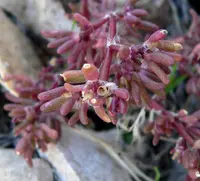
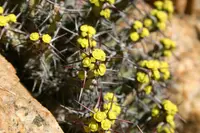
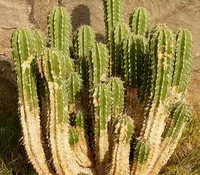
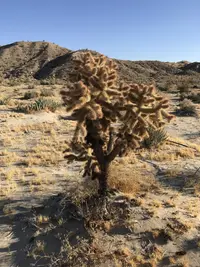
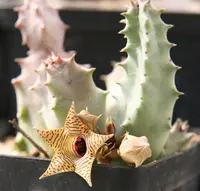
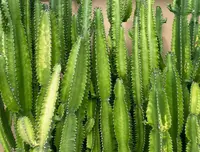
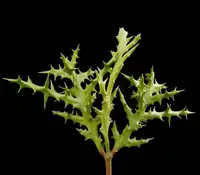
Spinestar Barrelwort (Euphorbia stellispina) is a small, strongly spined succulent shrub from arid regions of South Africa. It forms low, rounded clumps of segmented, dark green to gray-green stems. Sharp, star-shaped spines ring each segment, giving the plant a striking, architectural look that appeals to collectors of unusual succulents. Small, yellowish cyathia (the cup-like Euphorbia flowers) appear near the stem tips. This species prefers bright, dry conditions and very well-drained, gritty soil. It grows slowly and can be long-lived when its roots are protected from excess moisture. Understanding how to care for Spinestar Barrelwort mainly involves preventing overwatering and providing strong light.

Main Plant Requirements

Care Difficulty

Moderate Care

Light Preference

Full Sun

Water Requirements

Low Water

Temperature Preference

Tropical / Frost Sensitive

Hardiness Zone

10–11

Soil Texture

Sandy, Rocky, Loamy

Soil pH

Slightly acidic (6.5–7.0), Neutral (7.0)

Soil Drainage

Well-drained

Fertilization

Minimal (feed rarely)

Get Personalized Care Plan

Scan your plant to receive care tips personalized for your specific plant

Available on iOS and Android

How to Care for the Spinestar Barrelwort

This sun-loving South African succulent thrives in strong, direct light under arid conditions.

  • Provide 6–8 hours of direct sun daily; full sun suits mature Spinestar Barrelwort, while young plants benefit from light morning sun and filtered midday light.
  • In very hot climates, protect from harsh afternoon sun with light shade to prevent stem scorch and bleaching.
  • In winter, ensure the brightest possible exposure and avoid prolonged shade, which causes weak, elongated growth and sparse spines.

This drought-adapted succulent stores water in its stems and needs infrequent, careful watering.

  • Allow the top 3–5 cm of soil to dry completely before watering; in hot, dry weather this may mean deep watering every 2–4 weeks in the ground.
  • Use very fast-draining, gritty soil; water until it runs through, then let excess drain away to prevent root rot and stem softening.
  • In cool or winter conditions, reduce watering to brief, occasional sips only when stems begin to slightly wrinkle, never when the soil is still moist.

This species prefers warm, dry conditions and has low tolerance for prolonged cold or frost.

  • Aim for 70–85°F (21–29°C) during active growth, which supports firm stems and compact spine development.
  • Protect from temperatures below 40°F (4°C); brief dips to 32°F (0°C) may be survived if completely dry, but frost can scar or kill tissue.
  • In hot spells above 95°F (35°C), increase airflow and provide light shade to limit heat stress while keeping soil on the dry side.

This succulent tolerates typical indoor humidity and does not need special moisture in the air.

  • Target 30–50% relative humidity, similar to most heated homes, for stable growth of Spinestar Barrelwort.
  • Dry air is usually tolerated, but combined with high heat it can speed water loss and cause mild leaf or stem shriveling.
  • If shriveling appears, increase local humidity slightly by grouping plants or placing a water tray nearby rather than misting.

This species needs a very fast-draining, mineral-based substrate to prevent root and stem rot.

  • Use a sandy, gritty mix, such as cactus soil amended 30–50% with coarse pumice, perlite, or 3–5 mm gravel for structure and aeration.
  • Aim for slightly acidic to neutral pH around 6.0–7.0, avoiding heavy liming or strongly alkaline amendments unless a test shows strong acidity.
  • Avoid peat-heavy, compact, or water-retentive mixes that stay wet longer than 2–3 days, as these promote fungal problems in Euphorbia stellispina.
  • For container depth, choose a pot that allows 8–12 cm of well-drained mix below the root zone so water can drain away from the crown.

This species is very suitable for container growing due to its compact, slow habit and preference for controlled drainage.

  • Choose a wide, low, heavy pot to counterbalance the spiny, top-heavy stems and reduce tipping risk outdoors or on shelves.
  • Terracotta or other porous materials help moisture evaporate faster, which reduces the chance of prolonged wetness around the roots.
  • Select a pot only 2–4 cm wider than the root ball so the mix dries evenly rather than staying wet in unused outer zones.

This drought-adapted succulent needs only light feeding to maintain steady growth and spine production.

  • Use a low-nitrogen balanced cactus fertilizer (for example 5-10-10) or a dilute general balanced NPK formulated for succulents.
  • Feed Spinestar Barrelwort at half the label strength every 4–6 weeks during spring–summer while growth is active.
  • Avoid organic composts that hold moisture; use mineral or grit-heavy substrates instead.
  • Stop feeding in fall–winter when growth slows or the plant is cool and semi-dormant.

Euphorbia stellispina needs minimal pruning, focused on health and safety rather than shaping.

  • Prune in late spring or early summer, when active growth helps wounds seal faster.
  • Remove only dead, diseased, or badly damaged stems, plus any crossing or crowded shoots that trap moisture.
  • Use sharp, clean bypass pruners; wear gloves and eye protection to avoid contact with the irritating milky sap (latex).
  • Avoid heavy structural cuts, which can disfigure the clump and increase risk of rot at large wounds.

This slow-growing succulent tolerates slightly cramped pots and dislikes frequent disturbance of its roots.

  • Check for roots circling the drainage holes, soil that dries almost too fast, or declining vigor as signs a larger pot is needed.
  • Plan repotting for late spring, every 3–5 years, using a shallow, wide container with very fast-draining cactus mix.
  • Lift the plant gently, tease roots only lightly, and remove old, compacted mix without breaking the brittle root system.
  • Allow roots to dry for 1–2 days in shade after repotting, then resume light watering to reduce transplant stress and rot risk.

Propagation of Euphorbia stellispina is possible but requires care due to its latex sap and rot risk.

  • Use stem cuttings in late spring–early summer or fresh seeds if available from mature plants.
  • When taking cuttings, wear gloves, rinse off the milky sap, and let the cut ends callus in dry shade for 5–7 days.
  • Plant callused cuttings into sterile, gritty cactus mix and keep just slightly moist, with bright indirect light and good airflow.
  • For seeds, sow on the surface of a well-draining mix, keep warm at 70–80°F, and maintain very light, even moisture until germination.

This species prefers cool, dry winter conditions and is not suitable for prolonged hard frost outdoors in cold climates.

  • Keep outdoor plants in regions with mild, frost-light winters; brief light frosts may be tolerated if soil stays dry.
  • Mulch lightly with inorganic grit or gravel to insulate the root zone while avoiding excess moisture around the crown.
  • Move container plants indoors or into a frost-free greenhouse when temperatures risk dropping below 30°F.
  • Water sparingly in winter, just enough to prevent shriveling, and maintain bright light with good air circulation to limit rot.

Care Tips

Rotate For Symmetry

Turn the pot 90° every 2–3 weeks during active growth so all ribs receive similar light and the spines develop evenly around the plant body.

Use Mineral Topdress

Apply a 1–2 cm layer of coarse gravel or pumice on the soil surface to stabilize the plant, keep the stem base dry, and discourage fungus gnats that thrive in exposed, damp soil.

Protect From Winter Damp

In cool, dull months place the pot in the brightest, driest indoor spot available and increase air movement slightly with a small fan to prevent rot at the stem base when the soil is dry for long periods.

Specialized Repotting Technique

When repotting, grasp the plant through folded newspaper or thick gloves, keep the old root ball largely intact, and only remove clearly dead or blackened roots to reduce transplant shock and lower rot risk.

Controlled Offset Removal

If offsets appear and crowd the main stem, remove them with a sterile, very sharp knife, let the cut surfaces dry and callus for 7–10 days, then root them in a dry, gritty mix to expand a collection while maintaining good airflow around the mother plant during caring for Spinestar Barrelwort.

Common Pests and Diseases

Mealybugs

This pest often hides in spine bases and rib crevices, sucking sap and causing stunted growth and yellowing patches on stems. Symptoms include cottony white clusters that are easy to miss between the spines.

Solution

Isolate the plant, then dab visible insects with cotton swabs dipped in 70% isopropyl alcohol and repeat weekly until no new clusters appear. For heavier infestations, use a labeled systemic insecticide for succulents and reduce excess nitrogen fertilization, which makes growing Spinestar Barrelwort more attractive to mealybugs.

Spider mites

These insects thrive on Euphorbia stellispina in hot, dry indoor air, causing a dull, gray-green cast, tiny pale speckles, and very fine webbing between ribs and spines. This pest weakens the plant over time and can deform new growth.

Solution

Rinse the plant thoroughly with a strong but controlled stream of lukewarm water, focusing on ribs and spine bases, then allow it to dry in bright, airy conditions. If mites persist, apply a miticide or neem oil solution labeled for succulents every 7–10 days and slightly increase humidity without wetting the soil excessively.

Scale insects

This pest appears as small, hard, brown or tan bumps on stems that do not wipe off easily and often cluster along ribs. These insects feed on sap, leading to slow decline, sticky honeydew, and sometimes sooty mold on nearby surfaces.

Solution

Manually pry off individual scales with a fingernail or soft brush and treat affected areas with cotton swabs dipped in 70% isopropyl alcohol. For larger populations, use a systemic insecticide suitable for Euphorbia species and keep the plant in bright, well-ventilated conditions to limit reinfestation.

Corking from fungal infection

This disease can start as soft, slightly sunken spots at the base or damaged areas that later dry into rough, brown, corky patches along stems. Symptoms include localized tissue collapse when overwatered in cool conditions, especially in dense, poorly draining soil.

Solution

Cut away affected soft tissue with a sterile knife until only firm, healthy tissue remains, then let the wounds dry and callus in a dry, bright place with no direct midday sun. Repot into a very fast-draining mineral mix, water sparingly, and avoid overhead watering or prolonged cool, damp conditions to prevent further fungal infection.

Latex burn and secondary infection

This problem occurs when the milky sap from cuts or spine damage irritates and kills nearby tissue, which can then be invaded by opportunistic fungi or bacteria. Symptoms include sunken, brown, or black patches around old wounds or pruning sites that may slowly spread if conditions stay humid and wet.

Solution

Allow any fresh cuts to dry and stop bleeding before watering, and keep the plant dry and shaded from intense sun for several days after pruning. If tissue around a wound starts to blacken or soften, trim back to healthy tissue with sterilized tools, dust the area with dry sulfur or a similar wound protectant, and maintain a dry, airy environment until a firm callus forms.

Interesting Facts

Star-like spine clusters

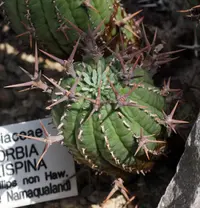
This species forms striking circular clusters of rigid spines arranged in a star pattern at each tubercle, a feature that inspired the name stellispina, which means star-spined.

Shrub-forming succulent

Unlike many small, solitary succulents, it can form a much-branched, low shrub with numerous upright stems, creating a dense, spiny dome over time in habitat.

Arid Karoo specialist

It is naturally restricted to arid regions of South Africa’s Karoo, where it grows on rocky, well-drained slopes and uses its thick, water-storing stems to survive long dry periods.

Botan icon

Did you know?

The milky latex of this species, like that of many Euphorbia, is toxic and strongly irritant, and serves as a chemical defense against herbivores that might otherwise feed on its water-rich stems in the dry Karoo environment.

FAQs about Spinestar Barrelwort

This species performs best outdoors in bright, arid conditions with excellent drainage. Indoor cultivation is possible under strong light and low humidity, but growth is slower and rot risk increases if ventilation and watering are not carefully managed.

Grow Healthy Plants with Botan Care

Keep your plants happy and healthy with plant identification, disease detection, and easy care guidance.

Botan plant care app — identify plants on mobile

Explore More Plants