Safe handling routine
Wear gloves and avoid touching your face when cutting or repotting, then immediately rinse any sap from tools and skin with plenty of water to reduce irritation from the toxic latex.

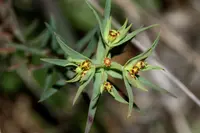
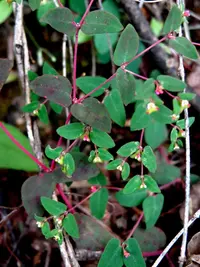
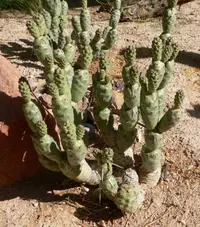
Euphorbia sulcata is a small, shrubby succulent from arid regions of southern Africa. It forms low, branching clumps with narrow, ridged stems and small, sparse leaves.
The plant stores water in its stems and has a slow, compact growth habit, which suits containers and rock gardens in warm climates. Yellowish-green flowering structures appear near the stem tips, adding subtle interest rather than showy color.
It is generally considered easy to grow if kept in bright light, low to moderate moisture, and very well-drained, gritty soil. Understanding how to care for Euphorbia sulcata mainly involves avoiding overwatering and prolonged cold, damp conditions.

Care Difficulty
Moderate Care

Light Preference
Full Sun

Water Requirements
Low Water

Temperature Preference
Warm Climate

Hardiness Zone
9–11

Soil Texture
Sandy, Loamy, Rocky

Soil pH
Slightly acidic (6.5–7.0), Slightly alkaline (7.0–7.5)

Soil Drainage
Well-drained

Fertilization
Minimal (feed rarely)
Scan your plant to receive care tips personalized for your specific plant
Available on iOS and Android
This drought-tolerant succulent prefers bright, open exposures with controlled intensity.
This species stores water in its tissues and needs infrequent but thorough watering.
This plant favors warm, dry conditions and is sensitive to cold and frost.
This species prefers dry indoor air and does not have special humidity requirements.
Euphorbia sulcata thrives in very fast-draining, mineral-rich soil that prevents water from sitting around the roots.
This species is well suited to container growing when the pot is chosen to support its drought-tolerant, shallow-rooted habit.
This drought-adapted succulent needs only light feeding to maintain steady growth without forcing soft, weak tissue in Euphorbia sulcata.
This species needs only light, purposeful pruning to keep stems healthy and safely managed.
Container-grown plants benefit from infrequent but careful repotting to maintain a stable, dry-root environment.
Propagation is usually done from stem cuttings, which root reliably in warm, dry conditions when handled correctly.
This plant is somewhat drought- and cold-tolerant but benefits from simple precautions in regions with freezing winters.

Plant Health Check
Not sure what's wrong with your plant? Check your plant's health inside the app.
This species develops distinctly sulcate, or deeply grooved, stem segments, which increase surface area and may aid in water runoff and light capture in its arid native habitats.
Like many spurge relatives, it produces a white, milky latex rich in diterpenoid compounds that deter most herbivores and can irritate human skin and eyes if contact occurs.
The plant stores water in its succulent tissues and can temporarily halt growth during extended dry periods, resuming active growth when moisture and temperatures become favorable for growing Euphorbia sulcata.
Yes, this species is considered toxic. The milky sap can irritate skin and eyes and is harmful if eaten. Keep it away from children and pets, and wear gloves when pruning or propagating.
Keep your plants happy and healthy with plant identification, disease detection, and easy care guidance.