bull's eye Care (Euryops chrysanthemoides)

Also known as: Paris Daisy, African Bush Daisy, Golden Daisybush, Golden True-Eye, Daisy Bush
bull's eye

About bull's eye

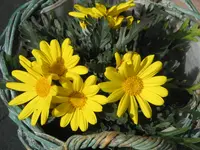
Bull's eye, Euryops chrysanthemoides, is a compact evergreen shrub valued for its bright yellow daisy-like flowers and finely divided, dark green foliage. It typically grows as a dense mound, providing long-lasting color in borders, containers, and coastal gardens.

This species is native to South Africa, where it thrives in sunny, dry, and well-drained habitats. It adapts well to mild climates and tolerates heat and light drought, which makes it relatively easy to manage.

Its main demands are high light, low to moderate moisture, and free-draining soil; heavy shade or waterlogged conditions reduce its health and flowering. Understanding these traits helps guide how to care for bull's eye in typical home gardens.

Main Plant Requirements

Care Difficulty

Easy Care

Light Preference

Full Sun

Water Requirements

Moderate Water

Temperature Preference

Tropical / Frost Sensitive

Hardiness Zone

9–11

Soil Texture

Sandy, Loamy, Rocky

Soil pH

Slightly acidic (6.5–7.0), Neutral (7.0)

Soil Drainage

Well-drained

Fertilization

Light (every 4–6 weeks)

Get Personalized Care Plan

Scan your plant to receive care tips personalized for your specific plant

Available on iOS and Android

How to Care for the bull's eye

This sun-loving shrub needs strong light to flower well in most gardens.

  • Provide 6–8 hours of direct sun daily; morning sun with light afternoon shade works best in very hot climates.
  • Tolerates light partial shade (3–4 hours sun), but flowering and growth decline if grown in shade most of the day.
  • In cooler coastal areas, it can handle full sun all day; monitor bull's eye leaves for scorch or pale, leggy growth as signs of light stress.

This drought-tolerant shrub prefers thorough, infrequent watering once established.

  • Outdoors in the ground, water when the top 5–7 cm of soil feels dry; in hot, dry spells this may be every 5–10 days, less often in cool weather.
  • Use well-drained, sandy or loamy soil so water does not pool around the roots, which increases risk of root rot and yellowing foliage.
  • Reduce watering in cool seasons; wilted, limp leaves suggest underwatering, while blackened stem bases or mushy roots indicate overwatering in Euryops chrysanthemoides.

This plant thrives in mild, frost-free climates with warm, sunny conditions.

  • Best growth occurs around 65–80°F (18–27°C); flowering is strongest where days are warm and nights are slightly cooler.
  • Tolerates brief dips to about 28–30°F (-2 to -1°C), but repeated or hard frosts damage leaves and young shoots, so protection or relocation is needed in cold snaps.
  • Handles dry heat up to about 90–95°F (32–35°C) if soil is not waterlogged; in extreme heat, light afternoon shade reduces stress and flower scorch.

This shrub tolerates a wide humidity range and rarely needs special humidity management indoors.

  • Target 30–60% relative humidity, similar to most heated or air-conditioned homes.
  • Bull's eye handles dry air well; leaves usually stay firm and flowering is not reduced unless air is extremely dry for long periods.
  • If leaf edges brown while soil moisture is correct, move the plant away from heating vents or use a small nearby water tray to slightly raise local humidity.

Euryops chrysanthemoides prefers lean, fast-draining soil that does not stay wet after watering.

  • Use a sandy or sandy-loam mix; combine roughly 2 parts all-purpose potting mix with 1 part coarse sand or fine grit plus 1 part perlite for structure and aeration.
  • Ensure very sharp drainage; water should flow through in seconds, with no pooling on the surface or in the saucer.
  • Aim for slightly acidic to neutral pH, around 6.0–7.0, which supports nutrient uptake without encouraging excessive foliage at the expense of flowers.
  • Avoid heavy clay, peat-heavy mixes that stay soggy, or compacted substrates, which limit root oxygen and raise the risk of root rot.

This species is well suited to container growing outdoors in sunny locations.

  • Choose a wider, heavier pot to counteract the top-heavy, shrubby canopy and reduce the chance of tipping in wind.
  • Select terracotta or another breathable material if extra evaporation is needed in wet climates, plastic if moisture retention is needed in hot, dry sites.
  • Use a pot only 2–4 in larger than the root mass to prevent unused, wet substrate from surrounding the roots after watering.

Euryops chrysanthemoides responds well to modest feeding in containers and poor soils, supporting continuous flowering.

  • Use a balanced liquid fertilizer (for example 10-10-10) at 1/2 strength every 3–4 weeks during the warm growing season.
  • Alternatively, incorporate slow-release granules in spring for steady nutrition in pots or lean garden soil.
  • Reduce or stop feeding in winter when growth slows, especially outdoors or in cool indoor conditions.
  • Light applications of compost around the root zone can support long-term soil health when caring for bull's eye.

Thoughtful pruning keeps Euryops chrysanthemoides compact, leafy, and free-flowering.

  • In late winter or early spring, lightly trim back overall growth to maintain a rounded, bushy shape.
  • Throughout the growing season, remove spent flower stems, dead twigs, and damaged or crossing branches.
  • Use clean, sharp hand pruners and make cuts just above a leaf node to encourage branching.
  • Avoid cutting into very old, thick wood; focus on younger shoots for best regrowth and flowering response.

This shrub is often grown in the ground but can also adapt to containers if transplanted thoughtfully.

  • Plan major transplanting or repotting for early spring, just before strong new growth begins.
  • Look for roots circling the pot, slow growth, or quick drying soil as signs a container plant needs more space every 2–3 years.
  • Move to a pot 1–2 in wider with well-drained, gritty mix, handling the root ball gently and loosening only tight outer roots.
  • Water thoroughly after moving, then keep soil lightly moist and shaded from harsh sun for a week to reduce transplant shock.

Euryops chrysanthemoides is commonly propagated from cuttings for uniform, floriferous plants.

  • Take 7–10 cm semi-ripe stem cuttings in late summer or early autumn from non-flowering shoots.
  • Remove lower leaves, dip the base in rooting hormone, and insert into a very free-draining mix such as sand and perlite.
  • Provide bright, indirect light, high humidity, and bottom heat around 70–75°F to improve rooting success.
  • Seeds can also be sown in spring in a light seed mix, kept barely moist and warm until germination.

This species prefers mild winters and needs protection in climates with freezing conditions.

  • In USDA zones colder than 9, grow Euryops chrysanthemoides in containers so plants can be moved indoors before frost.
  • For in-ground plants in marginal climates, apply a 5–8 cm mulch layer around the root zone, keeping it off the stems.
  • Place indoor or sheltered plants in the brightest possible spot and water sparingly, allowing the top soil to dry slightly between waterings.

Care Tips

Staggered Rejuvenation

Every 2–3 years, cut back only one-third of the oldest, woodiest stems at the base in late winter to keep the shrub compact and flowering while avoiding a sudden loss of bloom.

Pinch For Bushiness

On young plants, pinch out the soft tips of new shoots in early spring and again after the first flush of flowers to encourage dense branching and more flower-bearing stems.

Flowering Cycle Management

After a heavy bloom flush, remove spent flower stalks and lightly trim back by 2–3 in to trigger a fresh wave of buds rather than allowing energy to go into seed formation.

Wind And Lean Control

In exposed sites, insert 1–2 discreet stakes and loosely tie leaning or top-heavy stems, then gradually shorten support ties over a season to train sturdier, self-supporting growth.

Container Rotation Strategy

For container plants, rotate the pot 90° every 1–2 weeks and slightly shift its position seasonally so the plant does not become one-sided, which greatly improves the overall form when growing bull's eye.

Common Pests and Diseases

Aphids

This pest feeds on tender shoots and flower buds, causing distortion, sticky honeydew, and sometimes sooty mold on foliage. Infestations are most common on lush new growth and in sheltered, warm spots.

Solution

Spray the plant thoroughly with a strong jet of water to dislodge colonies, then treat remaining aphids with insecticidal soap or a ready-to-use neem oil product, coating stem tips and leaf undersides. Remove heavily infested shoot tips to reduce population pressure and encourage sturdier regrowth as part of general Euryops chrysanthemoides care.

Spider mites

These insects are actually tiny arachnids that cause fine stippling on leaves, dulling of foliage color, and eventual bronzing or leaf drop in hot, dry conditions. Fine webbing may be visible between leaves and stems when populations are high.

Solution

Increase humidity around the plant and rinse foliage thoroughly, especially the undersides of leaves, to remove mites and webs. For persistent problems, apply insecticidal soap or horticultural oil at labeled intervals, ensuring full coverage and improving air movement around the plant to make conditions less favorable.

Leaf spot

This disease causes small dark or tan lesions on leaves that may enlarge, merge, and lead to yellowing or premature leaf drop, especially in prolonged damp weather. Symptoms include more severe spotting on older, shaded foliage and dense interior growth.

Solution

Prune out and discard badly affected leaves and any congested interior stems to improve light and airflow. Avoid overhead watering, irrigate at the base in the morning, and if spotting progresses, use a labeled ornamental fungicide containing chlorothalonil or copper, following all package directions.

Powdery mildew

This disease produces white, powdery fungal growth on leaves and tender stems, which can lead to distortion and reduced flowering. Symptoms include more visible growth on older or shaded foliage and during periods of warm days and cool, humid nights.

Solution

Remove and dispose of leaves with heavy white growth and thin dense areas of the plant to increase airflow. Water at soil level, avoid evening overhead watering, and treat with a sulfur or potassium bicarbonate fungicide formulated for ornamentals if the problem recurs or covers large portions of the plant.

Interesting Facts

Long-lived shrub daisies

This species can form dense, woody shrubs that flower reliably for many years, especially in mild coastal climates where hard frosts are rare.

Coastal wind tolerance

Native to the coastal regions of South Africa, it is adapted to windy, exposed sites and often grows naturally on dunes and rocky slopes close to the sea.

Year-round flowering potential

In frost-free climates with enough light, it can produce yellow, daisy-like flowers for much of the year rather than only in a short seasonal flush.

Botan icon

Did you know?

In its native South African range, this shrub plays a role in stabilizing sandy soils on coastal slopes and dunes, helping to reduce erosion where vegetation cover is sparse.

FAQs about bull's eye

Lack of flowers usually comes from insufficient light, overfertilizing with high-nitrogen products, or old, woody stems. Deadhead spent blooms, reduce nitrogen, provide strong sun, and lightly prune after flowering to encourage new, flower-bearing growth when caring for bull's eye.

Grow Healthy Plants with Botan Care

Keep your plants happy and healthy with plant identification, disease detection, and easy care guidance.

Botan plant care app — identify plants on mobile

Explore More Plants