Hedge shaping strategy
Begin light tip-pruning when plants are young, removing only 2–5 cm of new growth several times per year to create dense branching and an even hedge line rather than doing heavy cuts once a year.

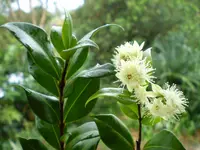
Grey myrtle, Backhousia myrtifolia, is an evergreen shrub or small tree native to the coastal rainforests of eastern Australia. It is often grown for its dense, fine foliage and aromatic leaves with a soft, grey-green tone.
Plants form a neat, rounded habit and carry clusters of small white flowers that add a light, ornamental look rather than bold color. The tidy growth and pleasant scent make it suitable for hedges, screens, or large containers in mild climates.
Grey myrtle prefers moderate light, even moisture, and well-drained soil, which makes it relatively straightforward for gardeners who want to learn how to care for Grey Myrtle.

Care Difficulty
Moderate Care

Light Preference
Partial Shade

Water Requirements
Moderate Water

Temperature Preference
Warm Climate

Hardiness Zone
9–11

Soil Texture
Sandy, Loamy, Organic-rich

Soil pH
Acidic (5.5–6.5), Slightly acidic (6.5–7.0)

Soil Drainage
Moist but well-drained

Fertilization
Minimal (feed rarely)
Scan your plant to receive care tips personalized for your specific plant
Available on iOS and Android
Backhousia myrtifolia prefers bright conditions that mimic open forest edges with some protection from harsh midday sun.
Backhousia myrtifolia prefers evenly moist, well-drained soil that never stays saturated for long periods.
This species prefers mild, frost-free conditions and grows best in climates with warm summers and cool, not cold, winters.
This species prefers moderate humidity but adapts to many home environments when air is not extremely dry.
Backhousia myrtifolia prefers slightly acidic, free-draining, organically enriched soil that stays evenly moist without becoming waterlogged.
This species grows well in containers when its root space, drainage, and stability are carefully managed.
This Australian native benefits from light, targeted feeding rather than heavy fertilization.
Thoughtful pruning keeps Backhousia myrtifolia dense, healthy, and well-shaped.
This shrub-tree is often grown in the ground but can adapt to containers for some years.
New plants are usually raised from semi-hardwood cuttings, with seed used less often.
This species prefers mild climates and is only lightly tolerant of frost.

Plant Health Check
Not sure what's wrong with your plant? Check your plant's health inside the app.
This species typically grows along the edges of subtropical rainforests and moist gullies in eastern Australia, where it helps form the mid‑canopy layer under taller trees.
When the leaves are crushed, they release a strong, sweet aroma due to essential oils in the leaf glands, which is why it is often planted as a fragrant ornamental shrub or small tree.
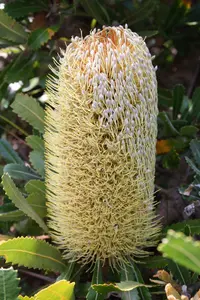
It produces dense clusters of small, cream to white flowers with many prominent stamens, giving the inflorescences a soft, brush-like appearance that attracts a range of pollinating insects.

Historical records describe this species being used by Australian timber workers as a natural air freshener and insect deterrent in camps, where leafy branches were hung in living areas for their persistent, sweet fragrance.
Lack of flowers usually comes from insufficient light, heavy pruning at the wrong time, or nutrient imbalance with too much nitrogen. Support flowering by providing bright conditions, avoiding hard pruning after buds form, and using a balanced, low‑phosphorus fertilizer.
Keep your plants happy and healthy with plant identification, disease detection, and easy care guidance.