Select Proper Substrate
Use freshly cut or recently fallen hardwood sticks or small logs from willow, poplar, or birch, as Exidia recisa colonizes sound, damp wood more reliably than heavily decayed material.

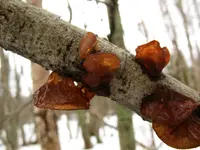
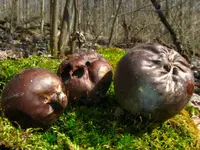
Amber jelly fungus, Exidia recisa, is a jelly-like wood-decay fungus rather than a traditional leafy plant. It forms soft, translucent, amber to pale brown cushions or discs, often clustered together. These fruiting bodies appear mostly on dead or dying hardwood branches in cool, temperate regions. It is commonly found in damp woodlands, especially during wet, cool weather.
Exidia recisa plays a role in breaking down dead wood, which makes it dependent on consistently moist, shaded habitats. In cultivation it is considered niche and somewhat difficult, as it needs decaying wood, high humidity, and stable moisture. Those who want to learn how to care for amber jelly fungus should understand that it is best managed as an outdoor, habitat-based organism rather than a typical potted specimen.

Care Difficulty
Moderate Care

Light Preference
Partial Shade

Water Requirements
Keep Soil Moist

Temperature Preference
Cool Climate

Hardiness Zone
3–8

Soil Texture
Loamy, Organic-rich

Soil pH
Acidic (5.5–6.5), Slightly acidic (6.5–7.0)

Soil Drainage
Waterlogged tolerant

Fertilization
Minimal (feed rarely)
Scan your plant to receive care tips personalized for your specific plant
Available on iOS and Android
This wood-inhabiting jelly fungus prefers cool, low-intensity light conditions typical of shaded forests.
This species thrives on consistently damp, but not flooded, dead wood or branches.
This temperate-zone fungus performs best in cool to mild outdoor conditions across the year.
This wood-inhabiting jelly fungus prefers consistently moist air but tolerates brief drying.
This saprophytic fungus grows on dead wood, so soil conditions only matter when preparing a substrate-like environment.
This species can be grown in containers only when the container holds appropriately prepared wood rather than conventional potting soil.
This fungus normally grows on nutrient-rich dead wood and needs no additional fertilizer in cultivation.
Exidia recisa needs no true pruning, but light cleanup of the host wood can help maintain healthy colonies.
This species is rarely grown in pots; management focuses on relocating or replacing the colonized wood rather than classic repotting.
Exidia recisa propagation focuses on spreading colonized wood or spores rather than conventional plant methods.
This cold-hardy jelly fungus generally requires no special winter care in temperate climates.

Plant Health Check
Not sure what's wrong with your plant? Check your plant's health inside the app.
This jelly fungus typically fruits in late fall to early spring, often appearing on dead willow wood during periods when many other fungi are inactive.
When dry, its amber or pale brown gelatinous fruit bodies contract and become hard and shrunken, but they rehydrate and regain their jelly-like texture after rain or high moisture.
It is a saprotroph, meaning it feeds on dead organic matter, and it plays a specific role in breaking down the dead branches and twigs of willow and related trees along streams and wetlands.

Genetic and microscopic studies have shown that this species, once confused with other amber jelly fungi, is distinct enough that it has been placed in its own genus, originally described as Exidia recisa and later clarified under Exidiopsis recisa in some modern classifications.
This species is technically edible but has little flavor and a gelatinous texture, so it is rarely collected for food. Identification can be difficult, and confusing it with other wood fungi is risky for foragers.
Keep your plants happy and healthy with plant identification, disease detection, and easy care guidance.