

Edge Containment
Install low landscape edging or shallow buried barriers around beds to prevent this vigorous mat-former from creeping into lawns or adjacent planting areas.

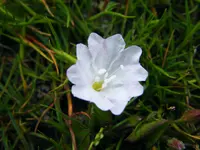
Pink ear, Falkia repens, is a low-growing, mat-forming perennial often used as a groundcover or filler between paving stones. It has small, rounded green leaves and soft pink, funnel-shaped flowers that create a delicate carpet effect when in bloom.
This species is native to parts of southern Africa, where it naturally creeps over sandy or rocky ground. It tends to be relatively undemanding once established, which makes it appealing for gardeners learning how to care for Pink Ear.
Pink ear generally prefers sunny, open positions, well-drained soil, and moderate moisture, and it copes better with light foot traffic than many other small groundcovers.

Care Difficulty
Easy Care

Light Preference
Full Sun

Water Requirements
Regular Water

Temperature Preference
Warm Climate

Hardiness Zone
9–11

Soil Texture
Sandy, Loamy, Organic-rich

Soil pH
Acidic (5.5–6.5), Slightly acidic (6.5–7.0)

Soil Drainage
Moist but well-drained

Fertilization
Minimal (feed rarely)
Scan your plant to receive care tips personalized for your specific plant
Available on iOS and Android
This creeping groundcover prefers bright conditions and can handle a range of sun exposures when established.
This plant prefers consistent, moderate moisture without staying saturated for long periods.
This species grows best in mild, frost-free conditions typical of warm-temperate and subtropical climates.
This species handles a wide humidity range but grows best with moderately moist air.
This creeping species prefers a loose, well-drained mix that stays evenly moist but not saturated.
This plant is well suited to container culture, especially for hanging baskets or shallow wide pots.
This low, trailing species benefits from light feeding rather than heavy fertilization.
Pruning helps Falkia repens stay dense, low, and healthy as a groundcover or trailing plant.
This species is usually grown as a groundcover, so focus on transplanting and occasional container refreshes.
Falkia repens is commonly multiplied from vegetative material rather than seed for uniform growth.
This plant is moderately frost sensitive and benefits from simple winter protection in colder climates.

Plant Health Check
Not sure what's wrong with your plant? Check your plant's health inside the app.
This species is native to coastal regions of South Africa, where it helps stabilize sandy soils on dunes and disturbed sites with its mat-forming growth.
Its creeping stems readily root at the nodes when they touch moist soil, allowing the plant to spread quickly and form dense, low groundcover.
The plant produces small, pink, funnel-shaped flowers that open in the warmer months and are adapted to attract small pollinating insects in its native habitat.
This species spreads quickly by trailing stems and rooting at the nodes, forming a dense mat. It can edge into nearby areas, so use edging or containers where controlled coverage is important, especially in small gardens.
Keep your plants happy and healthy with plant identification, disease detection, and easy care guidance.

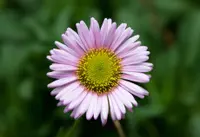
seaside fleabane
Erigeron glaucus
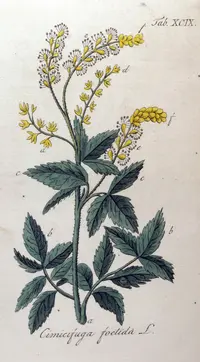
Actaea cimicifuga
Actaea cimicifuga
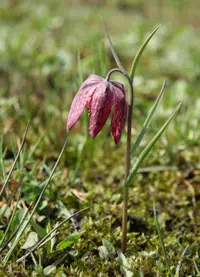
Snake's head fritillary
Fritillaria meleagris
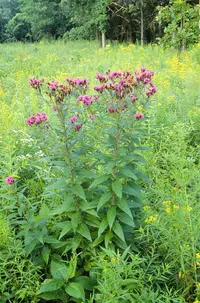
prairie ironweed
Vernonia fasciculata
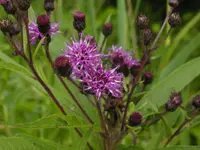
New York ironweed
Vernonia noveboracensis
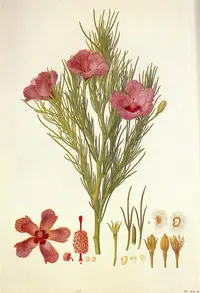
Alyogyne hakeifolia
Alyogyne hakeifolia
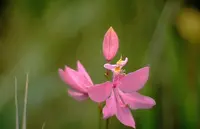
Tuberous grass pink
Calopogon tuberosus
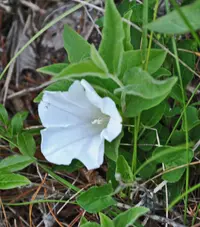
low false bindweed
Calystegia spithamaea