Early framework training
Install strong wires or a trellis before planting and fan out the young shoots horizontally along the structure in the first 1–2 seasons to create a stable framework that can safely carry the plant’s heavy mature growth.

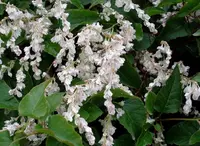
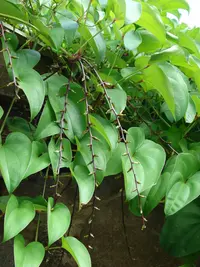
Bukhara fleeceflower, Fallopia baldschuanica, is a fast-growing deciduous vine often used to quickly cover walls, fences, and pergolas. It forms dense green foliage and long, twining stems that can create a thick screen in a short time.
In late spring to fall it produces many small white to creamy flowers that give a soft, cloud-like effect, followed by decorative seed clusters. The plant originates from Central Asia and nearby regions and has adapted well in many temperate gardens.
Its vigorous growth makes it easy to establish but also means it can become invasive if not controlled. Those who want to learn how to care for Bukhara Fleeceflower should focus on giving it strong support, moderate moisture, and well-drained soil in a sunny to lightly shaded spot.

Care Difficulty
Easy Care

Light Preference
Full Sun

Water Requirements
Moderate Water

Temperature Preference
Cold Hardy

Hardiness Zone
5–9

Soil Texture
Sandy, Loamy, Clay

Soil pH
Acidic (5.5–6.5), Slightly acidic (6.5–7.0)

Soil Drainage
Moist but well-drained

Fertilization
Minimal (feed rarely)
Scan your plant to receive care tips personalized for your specific plant
Available on iOS and Android
This vigorous climber thrives in full sun but tolerates some shade in hotter regions.
This fast-growing vine prefers consistently moist but not waterlogged soil, especially in its first growing seasons.
This hardy climber tolerates a wide temperature range once established, especially in temperate climates.
Humidity is rarely a concern for outdoor Fallopia baldschuanica, which adapts well to typical ambient levels.
Fallopia baldschuanica prefers moderately fertile, well-structured soil that drains freely yet holds some moisture.
This vigorous climber can be grown in containers if the setup manages its strong root system and top growth carefully.
This vigorous climber grows well in average soil, so Bukhara Fleeceflower needs only modest feeding in the ground.
Pruning is important for Fallopia baldschuanica to control size, maintain structure, and support flowering.
This fast-growing climber is usually planted in the ground, so focus on careful transplanting rather than frequent repotting.
New plants are commonly raised from vegetative material, but Fallopia baldschuanica spreads strongly and should be managed carefully.
This climber is generally hardy in temperate climates and usually needs minimal winter care once established in the ground.

Plant Health Check
Not sure what's wrong with your plant? Check your plant's health inside the app.
This vigorous climber flowers from late summer into fall, providing abundant nectar and pollen when many other plants have finished blooming, which supports bees, hoverflies, and other late-season pollinators.
Genetic and morphological studies indicate that this species is likely of hybrid origin between related knotweed vines, which helps explain its extreme vigor and adaptability in different environments.
Instead of tendrils or adhesive pads, its very long, twining stems wrap around supports such as wires, trellises, or trees, enabling it to cover large vertical surfaces quickly.

In several temperate regions, especially parts of western Europe, this species has escaped cultivation and become locally invasive, forming dense, fast-growing curtains that can smother shrubs and trees and are difficult to remove once established.
This species spreads very vigorously through fast stem growth and abundant self-seeding. In many regions it is considered invasive. Use strong supports, root barriers, and regular hard pruning, and check local regulations before planting or growing Bukhara Fleeceflower outdoors.
Keep your plants happy and healthy with plant identification, disease detection, and easy care guidance.