Giant Fennel Care (Ferula communis)

Giant Fennel

About Giant Fennel

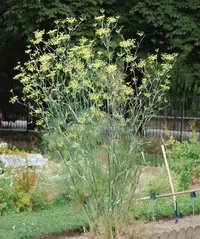
Giant fennel, Ferula communis, is a tall, long-lived perennial from the carrot family, forming stout clumps with thick, hollow stems and finely divided, feathery foliage. Mature plants produce large, rounded clusters of small yellow flowers held high above the leaves, giving a bold, architectural look in open landscapes.

This species is native to the Mediterranean region, where it grows in dry, sunny, often rocky or scrubby habitats. It suits gardeners who prefer low-maintenance plants, but it needs space and good drainage to avoid root problems.

Those who want to care for Giant Fennel should provide full sun, relatively dry conditions once established, and poor to moderately fertile soil that does not stay wet for long periods.

Main Plant Requirements

Care Difficulty

Moderate Care

Light Preference

Full Sun

Water Requirements

Low Water

Temperature Preference

Warm Climate

Hardiness Zone

7–10

Soil Texture

Sandy, Loamy, Rocky

Soil pH

Slightly acidic (6.5–7.0), Slightly alkaline (7.0–7.5)

Soil Drainage

Well-drained

Fertilization

Minimal (feed rarely)

Get Personalized Care Plan

Scan your plant to receive care tips personalized for your specific plant

Available on iOS and Android

How to Care for the Giant Fennel

This Mediterranean perennial needs strong outdoor light to build sturdy stems and flowering stalks.

  • Provide full sun for 6–8 hours per day; in hot inland climates, give Ferula communis light afternoon shade to reduce leaf scorch.
  • Plant in an open, unshaded position with free air movement; avoid dense shade, which causes weak, floppy growth and reduced flowering.
  • In summer, monitor for wilting or leaf yellowing on the sunniest, hottest days, which can signal heat stress; in winter, ensure at least bright, unobstructed exposure.

This deep-rooted perennial prefers infrequent, thorough watering once established.

  • Allow the top 5–7 cm of soil to dry before watering; in open ground with good drainage, this often means watering only after prolonged dry spells.
  • Aim for sharply drained, gritty or sandy soil so excess water moves away from the crown and roots, reducing risk of rot in Ferula communis.
  • Watch foliage: drooping, dull leaves and dry soil indicate underwatering, while yellowing, soft bases or a sour smell in the soil point to overwatering.

This species is adapted to warm, dry-summer climates with mild, wetter winters.

  • Optimal growth occurs around 65–80°F (18–27°C), especially during spring when new foliage and flowering stems develop.
  • Mature plants tolerate down to about 20–25°F (-6 to -4°C) for short periods but young crowns are more vulnerable to hard frost, especially in poorly drained soil.
  • In regions with summer heat above 90°F (32°C), provide some air movement and avoid reflected heat from walls or paving to limit stress and leaf scorch.

Humidity is not a major factor for Ferula communis, which thrives in dry, open climates.

Ferula communis prefers deep, well-drained mineral soils that stay dry to slightly moist around the root zone.

  • Use a sandy or sandy-loam mix with coarse mineral content to prevent waterlogging around the taproot.
  • Aim for slightly alkaline to neutral pH, roughly 7.0–8.0, avoiding strongly acidic conditions.
  • Incorporate coarse sand or fine gravel rather than large amounts of peat or compost to maintain structure and drainage.
  • Avoid heavy clay, compacted, or consistently wet soils, which encourage root rot and poor establishment.

This species is generally unsuitable for long-term container growing due to its large taproot and size.

This Mediterranean perennial usually needs minimal feeding in open ground with reasonably fertile soil.

  • For growing Giant Fennel in poorer soils, use a light top-dressing of compost in early spring to support vigorous growth.
  • If using synthetic fertilizer, choose a balanced NPK (such as 10-10-10) at half strength once in mid-spring.
  • Avoid summer overfeeding, which can cause lush, weak growth prone to lodging and wind damage.
  • Do not feed during late fall and winter dormancy to prevent soft, frost-sensitive tissue.

Pruning Ferula communis is mainly about safety, tidiness, and managing its large flowering stems.

  • Cut back spent flowering stalks at ground level in late summer or fall using clean, sharp loppers.
  • Remove dead, damaged, or diseased foliage whenever noticed to reduce pest and disease pressure.
  • Thin crowded stems carefully to maintain good air flow and a stable, upright habit.
  • Wear gloves and eye protection, as sap can be irritating and stems are thick and fibrous.

This deep-rooted perennial is best established in a permanent ground position and moved as little as possible.

  • Transplant young plants in early spring or early fall, before the taproot becomes very deep and brittle.
  • Choose a sunny, well-drained site where the mature clump can stay for many years without lifting.
  • When rootbound in a nursery pot, with roots circling and growth slowing, shift carefully into a deeper container.
  • Handle the taproot gently, disturb soil minimally, water thoroughly, then keep evenly moist until growth resumes.

Propagation of Ferula communis is usually done from seed, as the plant resents disturbance and has a strong taproot.

  • Collect fresh seed from mature flower heads and sow in late summer to fall for natural cold stratification.
  • Use deep pots or trays with sharply drained mix, as seedlings develop a long taproot early.
  • Keep soil just moist, in bright light and cool conditions, allowing several weeks to months for germination.
  • Avoid dividing mature plants, since cutting the taproot often leads to poor recovery or loss of the clump.

In mild to moderate climates this species is fairly hardy and usually needs only light winter attention outdoors.

  • In regions with freezes below about 15–20°F, apply 5–8 cm of dry mulch around the crown in late fall.
  • Allow foliage to die back naturally; remove soft, collapsed stems to limit rot near the crown.
  • Container plants in colder areas can be overwintered in a bright, frost-free, well-ventilated space.

Care Tips

Deep staking support

Install sturdy stakes or a low wire framework early in the season and loosely tie the tall, hollow stems to prevent wind damage and snapping as the plant reaches full height.


Wind exposure planning

Site plants where prevailing winds are filtered by a hedge or fence, or create a simple windbreak with mesh or slatted panels to reduce stem breakage on exposed sites.

Root space management

Allow generous spacing and avoid planting directly in front of the crown so neighboring shrubs or perennials do not compete with or overshadow the strong taproot system as it expands.

Self-seeding control

If you want to limit spread, cut off most spent flower heads before seeds ripen, leaving only a few umbels to mature if some natural reseeding is desired for growing Giant Fennel.

Protective handling gear

Wear gloves, long sleeves, and eye protection when cutting or moving stems, and wash exposed skin afterward, because the sap can irritate skin, especially in bright sunlight.

Common Pests and Diseases

Rust fungus

This disease causes orange to brown pustules on leaves and stems, often leading to yellowing and premature dieback of affected foliage.

Solution

Remove and destroy infected leaves and spent flowering stems, avoid overhead watering, and space plants to improve airflow; in severe, recurring cases, apply a sulfur- or copper-based fungicide early in the season according to label directions.

Powdery mildew

This disease appears as a white, powdery coating on leaves and young stems, which can cause distortion and reduced vigor in dry, warm conditions with poor air movement.

Solution

Increase spacing and airflow around plants, water at soil level to keep foliage dry, remove heavily infected parts, and use a potassium bicarbonate or sulfur-based fungicide if symptoms spread widely.

Stem and crown rot

This disease leads to dark, soft decay at the base of the stems and crown, often causing sudden collapse of the tall flowering stalks, especially on poorly drained soils.

Solution

Improve drainage by planting on raised mounds or slopes, avoid overwatering and waterlogging, promptly remove and dispose of collapsed plants, and do not replant Ferula communis in the exact same saturated spot.

Aphids

These insects cluster on young shoots and flower stalks, sucking sap and causing curling, yellowing, and sticky honeydew that can encourage sooty mold growth.

Solution

Wash colonies off with a strong stream of water, encourage natural predators such as lady beetles, and if needed apply insecticidal soap or a light horticultural oil, coating the undersides of stems and shoots.

Root-knot nematodes

This pest causes swollen galls on roots, leading to poor growth, yellow foliage, and reduced flowering on plants grown in light, sandy soils.

Solution

Rotate planting sites, improve soil organic matter, avoid moving infested soil or roots, and consider using soil solarization in hot climates before replanting to lower nematode populations when growing Giant Fennel.

Interesting Facts

Highly toxic sap

The latex-like sap of this species is strongly irritant and potentially fatal to grazing animals, especially sheep, which is why it is considered a dangerous weed in some Mediterranean pastures.

Mediterranean fire-adapted giant

Native populations in the Mediterranean basin often grow in dry, rocky, fire-prone habitats, and the robust rootstock allows plants to resprout after disturbance in suitable conditions.

Umbel specialist pollinators

Its large yellow compound umbels attract a wide range of insects, but syrphid flies and small solitary bees are frequently reported as key pollinators in natural stands.

Botan icon

Did you know?

Ancient Greek sources describe a giant fennel-like plant, likely Ferula communis, as the hollow stalk used to carry and conceal fire over long distances, which later became symbolically linked with the mythological staff of Prometheus.

FAQs about Giant Fennel

Lack of flowering often comes from plants being too young, overcrowded, or stressed by poor drainage or nutrient-poor soil. Ensure deep, stable planting, generous root space, and avoid frequent disturbance, as this species resents transplanting once established.

Grow Healthy Plants with Botan Care

Keep your plants happy and healthy with plant identification, disease detection, and easy care guidance.

Botan plant care app — identify plants on mobile

Explore More Plants