Alder Buckthorn Care (Frangula alnus)

Also known as: glossy buckthorn, Glossy False-Buckthorn, breaking buckthorn
Alder Buckthorn

About Alder Buckthorn

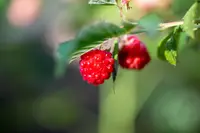
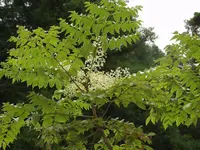
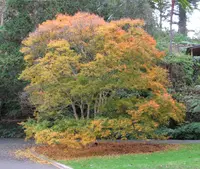
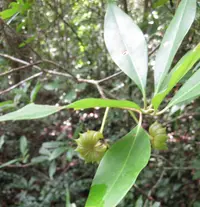
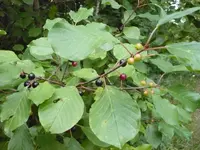
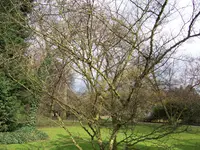
Alder buckthorn, Frangula alnus, is a deciduous shrub or small tree native to Europe and parts of western Asia, now also naturalized in North America. It typically forms a multi-stemmed, upright habit with smooth gray-brown bark, simple glossy leaves, and small greenish flowers followed by round berries that ripen from green to red to black.

In the wild it often grows in moist woodland edges, bogs, and along streams, favoring cool to temperate climates. Gardeners who want to care for Alder Buckthorn should note its preference for moist, well-drained, slightly acidic soils and a position in full sun to light shade.

This species is generally robust and tolerant of variable conditions once established, but its spreading by seed can make it invasive in some regions, so site choice and management are important.

Main Plant Requirements

Care Difficulty

Moderate Care

Light Preference

Partial Sun

Water Requirements

Regular Water

Temperature Preference

Cold Hardy

Hardiness Zone

2–7

Soil Texture

Loamy, Silty, Peaty

Soil pH

Strongly acidic (4.5–5.5), Acidic (5.5–6.5)

Soil Drainage

Moist but well-drained

Fertilization

Minimal (feed rarely)

Get Personalized Care Plan

Scan your plant to receive care tips personalized for your specific plant

Available on iOS and Android

How to Care for the Alder Buckthorn

Frangula alnus prefers steady, gentle light typical of woodland edges or open hedgerows.

  • Provide 4–6 hours of sun daily, ideally morning sun with light afternoon shade, to balance growth and leaf health for Alder Buckthorn.
  • Plant in partial shade or dappled light; it tolerates full sun in cool, moist sites but needs more shade in hotter, drier regions.
  • Watch for leaf scorch, pale foliage, or stunted shoots, which may signal too much intense sun or too little overall light, especially in summer.

Frangula alnus prefers consistently moist but not waterlogged soil, especially while establishing.

  • Let the top 3–5 cm of soil start to dry between waterings, then water deeply so moisture reaches the full root zone.
  • In spring and early summer, monitor closely and increase watering during dry spells; reduce watering in late fall and winter as growth slows.
  • Yellowing, soft leaves and a sour smell indicate overwatering or poor drainage, while drooping, crisp leaves and shrinking new growth signal underwatering.

This hardy shrub tolerates a wide temperature range and suits many outdoor climates.

  • Active growth is strongest around 60–75°F (16–24°C), with good root development and steady shoot extension in this range.
  • Established plants often survive down to about -20°F (-29°C), but young shrubs benefit from protection from severe, drying winter winds.
  • Heat up to 85–90°F (29–32°C) is usually tolerated if soil stays moist; prolonged extreme heat with drought stress can cause leaf scorch and early leaf drop.

Frangula alnus tolerates a wide humidity range and usually does not need special humidity management outdoors.

Frangula alnus prefers consistently moist, structured soil that holds water yet still allows air to reach the roots.

  • Use a deep, loamy soil with high organic matter, such as garden soil amended with compost or well-rotted leaf mold.
  • Aim for slightly acidic to neutral pH around 5.5–7.0, avoiding strongly alkaline or saline conditions.
  • Improve drainage and aeration in heavier clay by incorporating coarse sand or fine grit at 20–30% of the volume.
  • Avoid compacted, dry, or repeatedly waterlogged sites, which restrict root oxygen and increase root rot risk.

This species is possible to grow in containers but is generally better suited to open ground.

  • Choose a tall, heavy container to support the developing woody root system and prevent wind tipping as the shrub gains height.
  • Use a moisture-retentive yet free-draining mix, such as 2 parts loam-based compost to 1 part composted bark or grit, to balance stability and drainage.
  • Position the container where rain can reach it easily, since its preference for moist substrate makes manual watering demands high in sheltered spots.

Frangula alnus generally needs minimal feeding in average garden soil.

  • Apply a light layer of garden compost or well-rotted manure around the root zone in early spring.
  • Use a balanced slow-release fertilizer (around 10-10-10) once in spring if soil is poor or growth is weak.
  • Avoid high-strength products; use at half the label rate to prevent soft, frost-prone growth.
  • Do not feed Alder Buckthorn in late fall or winter, when the plant is dormant.

Frangula alnus benefits from light, structured pruning to maintain a healthy framework.

  • Carry out main pruning in late winter to early spring before bud break.
  • Remove dead, diseased, crossing, or inward-growing branches first to open the canopy.
  • Shorten overly long shoots to maintain shape and encourage well-spaced new growth.
  • Use clean, sharp bypass pruners or loppers and make smooth, angled cuts just above a bud.

This species is usually grown in the ground, so focus on careful transplanting rather than frequent repotting.

  • Transplant in late fall or early spring when the plant is dormant and soil is workable.
  • Choose a site with moist, well-drained soil and full sun to light shade, suitable for growing Alder Buckthorn.
  • Move young plants every 2–3 years at most; mature shrubs dislike repeated disturbance.
  • Water thoroughly before and after transplanting, keep the root ball intact, and mulch to reduce root stress.

Frangula alnus is commonly propagated from seed and softwood cuttings.

  • Collect ripe berries in late summer to early fall, clean the seeds, and sow in a cold frame for natural stratification.
  • Provide moist, well-drained seed mix and cool conditions; germination often occurs after winter chilling.
  • Take softwood cuttings in late spring to early summer from non-flowering shoots.
  • Insert cuttings into a free-draining medium, keep humidity high, and maintain gentle bottom warmth around 68–72°F.

Frangula alnus is cold hardy and usually needs little winter care in temperate climates.

  • Mulch the root zone with 5–8 cm of organic material in late fall to moderate soil temperature.
  • Container-grown plants benefit from shelter against drying winds and root insulation with mulch or bubble wrap.
  • Avoid late-season nitrogen feeding, which can delay hardening and increase frost damage risk to new shoots.

Care Tips

Suckering Management

Inspect the base each spring and cut unwanted root suckers at or slightly below soil level to keep the shrub from spreading aggressively and to maintain a controlled hedge or specimen form.

Wildlife-Safe Netting

If birds strip berries before they ripen, use loose, wildlife-safe netting only during fruiting season and remove it promptly afterward to protect both the crop and local fauna.

Soil Buffer Strip

On heavy or compacted sites, maintain a 30–60 cm mulch-only buffer around the stem with no turf grass to reduce competition, keep soil structure open, and support deeper root development.

Targeted Regeneration Pruning

Every 3–5 years, remove 1–3 of the oldest stems at ground level in late winter to encourage vigorous new shoots and a denser, younger framework.

Habitat-Aware Planting

Before growing Alder Buckthorn, confirm its legal status in your state and plant it with a clear boundary plan, such as edging or mown grass strips, to prevent unwanted spread into natural areas.

Common Pests and Diseases

Alder leaf beetle

This pest feeds on leaves, creating shot holes and skeletonized areas that can make the shrub look tattered. Symptoms include clusters of metallic blue beetles and black larvae on the foliage.

Solution

Hand-pick adults and larvae where practical and drop them into soapy water, and prune heavily infested twigs. For larger shrubs, use a foliar spray containing neem oil or spinosad, applied according to label directions and repeated as needed while larvae are present.

Alder aphids

These insects cluster on young shoots and leaf undersides, sucking sap and causing curling leaves, sticky honeydew, and sometimes sooty mold on the surface. Ant activity around stems often increases when colonies are established.

Solution

Spray affected shoots with a strong jet of water to dislodge colonies, then follow with insecticidal soap or horticultural oil, making sure to cover leaf undersides. Encourage natural predators like lady beetles by avoiding broad-spectrum insecticides in the surrounding area.

Rust

This disease produces orange to rust-brown pustules on the undersides of leaves, sometimes with yellow spots on the upper surface. Severe infections can trigger early leaf drop and reduce vigor over time.

Solution

Remove and destroy infected leaves from the plant and ground to reduce spore spread, and avoid overhead watering that keeps foliage wet for long periods. In locations with yearly rust problems, maintain good spacing and airflow, and consider applying a labeled copper-based fungicide at bud break if past infections have been severe.

Leaf spot

Symptoms include small brown to purplish spots on leaves that may merge into larger blotches, sometimes with a pale halo. Repeated infections can thin the canopy, especially on stressed shrubs in humid or shaded sites.

Solution

Collect and dispose of fallen leaves, thin dense branches to improve air circulation, and water at soil level rather than over the canopy. In persistent cases, a preventative fungicide labeled for ornamental shrubs can be applied at the first sign of spotting, especially during extended wet weather.

Scale insects

These insects appear as small, fixed bumps on stems and older twigs and feed on plant sap, which can lead to reduced growth and dieback of fine branches. Honeydew and sooty mold may develop on heavily infested plants.

Solution

Prune out and destroy heavily infested branches and scrub reachable stems with a soft brush and soapy water to remove scales. During the crawler stage, apply horticultural oil or insecticidal soap according to label directions, repeating as needed for complete coverage and timing treatments to early summer in most regions.

Interesting Facts

Nitrogen-fixing root nodules

Frangula alnus forms small nodules on its roots containing nitrogen-fixing microorganisms, which help it thrive in nutrient-poor, acidic soils and subtly enrich the surrounding substrate over time.

Specialist butterfly host

The caterpillars of several brimstone butterflies (genus Gonepteryx) use alder buckthorn leaves as a key larval food source, making this shrub ecologically important in supporting certain native butterfly populations.

Dual seed dispersal strategy

Its fruits are eaten by birds that disperse seeds over long distances, while some seeds also drop and germinate near the parent plant, supporting both local thicket formation and wider colonization of suitable wetland and woodland edges.

Botan icon

Did you know?

In parts of its native European range, alder buckthorn bark was historically one of the preferred raw materials for making high-quality charcoal used in early gunpowder, because its charcoal burns very evenly and with relatively little ash.

FAQs about Alder Buckthorn

Reduced flowering often results from heavy shade, nutrient-poor or very dry soil, or recent hard pruning. Ensure adequate light, moderate soil fertility, and avoid cutting all young shoots in late winter, as flower buds form there.

Grow Healthy Plants with Botan Care

Keep your plants happy and healthy with plant identification, disease detection, and easy care guidance.

Botan plant care app — identify plants on mobile

Explore More Plants