Manage Basal Suckers
Inspect the base of the plant several times each growing season and cleanly remove basal suckers while they are still soft and under 20–30 cm tall to maintain a single or multi-stem framework and prevent wasted energy.

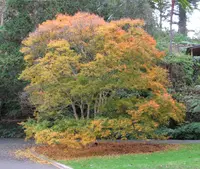
Subcostate crape myrtle, Lagerstroemia subcostata, is a small deciduous tree or large shrub valued for its summer flowers and attractive bark. It typically has a rounded, branching habit and produces clusters of delicate blossoms followed by small seed capsules.
This species is native to parts of East Asia, where it grows in warm, temperate to subtropical climates. It adapts fairly well to garden conditions when given full sun, reasonably well-drained soil, and moderate moisture.
Good disease resistance and tolerance of pruning make it manageable for many home landscapes, though cold sensitivity can limit its use in cooler regions. Understanding how to care for Subcostate Crape Myrtle helps keep its canopy healthy and flowering reliably.

Care Difficulty
Easy Care

Light Preference
Full Sun

Water Requirements
Moderate Water

Temperature Preference
Warm Climate

Hardiness Zone
7–10

Soil Texture
Sandy, Loamy, Clay

Soil pH
Acidic (5.5–6.5), Slightly acidic (6.5–7.0)

Soil Drainage
Well-drained

Fertilization
Minimal (feed rarely)
Scan your plant to receive care tips personalized for your specific plant
Available on iOS and Android
This species is a sun-loving small tree that flowers best with strong light exposure.
Watering should support steady growth without leaving the root zone saturated.
This tree prefers warm, temperate to subtropical conditions with a distinct warm growing season.
This species tolerates a wide humidity range and usually does not need special humidity management outdoors.
This species prefers moderately fertile, well-structured soil that drains efficiently yet holds some moisture.
This species can be grown in containers, especially when kept as a small tree or shrub form.
This species grows adequately in average soil but benefits from light, well-timed feeding for stronger growth and flowering.
Thoughtful pruning keeps Lagerstroemia subcostata healthy, structurally sound, and flowering well.
This tree is usually landscape-grown, so guidance focuses on transplanting rather than long-term container culture.
Lagerstroemia subcostata is commonly propagated from semi-hardwood cuttings or seeds under controlled conditions.
Mature plants are moderately cold hardy in suitable climates and usually need only light winter care.

Plant Health Check
Not sure what's wrong with your plant? Check your plant's health inside the app.
Mature trees develop smooth bark with patchy flaking that reveals multiple pale tones, giving trunks a mottled appearance that differs from many other crape myrtle species.
This species is naturally distributed in parts of Taiwan, southern China, and nearby regions, where it grows as a small tree in warm-temperate to subtropical forests and along exposed slopes.
Its summer flower clusters provide nectar and pollen that attract bees and other insects, making it a useful ornamental tree in landscapes that support urban biodiversity.
Growth is moderate once established. In suitable outdoor conditions, it typically adds about 20–40 cm per year, sometimes more in warm climates. Growth slows in poor soil, with drought stress, or after heavy pruning.
Keep your plants happy and healthy with plant identification, disease detection, and easy care guidance.