


Deadhead For Rebloom
Remove spent flower heads down to a strong side shoot every 3–5 days in peak season to prolong blooming and reduce self-seeding into surrounding beds.

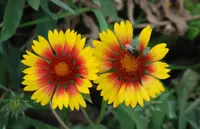
Common gaillardia (Gaillardia aristata) is a hardy, short-lived perennial from the prairies and open grasslands of North America. It forms clumps of gray-green leaves and produces many daisy-like flowers with red centers and yellow or orange edges.
Plants usually stay compact and bushy, making them suitable for borders, pollinator gardens, and dry, sunny areas. Flowers attract bees and butterflies and often bloom over a long season.
This species tolerates poor, sandy, or rocky soil and prefers full sun and well-drained conditions. These traits make it forgiving for beginners who want to learn how to care for common gaillardia without complex routines.

Care Difficulty
Easy Care

Light Preference
Full Sun

Water Requirements
Low Water

Temperature Preference
Cold Hardy

Hardiness Zone
3–9

Soil Texture
Sandy, Loamy, Rocky

Soil pH
Acidic (5.5–6.5), Slightly acidic (6.5–7.0)

Soil Drainage
Well-drained

Fertilization
Minimal (feed rarely)
Scan your plant to receive care tips personalized for your specific plant
Available on iOS and Android
This sun-loving perennial performs best with strong, direct light in open sites.
This drought-tolerant perennial prefers infrequent, deep watering and fast-draining soil.
This hardy perennial tolerates a wide temperature range but grows best in moderate warmth.
Humidity is rarely a concern for Gaillardia aristata, which prefers dry air similar to outdoor garden conditions.
Gaillardia aristata performs best in lean, well-drained soil that avoids prolonged moisture around the roots.
This species is suitable for container growing when drainage and root space are carefully managed.
Gaillardia aristata grows well in modest soils and benefits from light, targeted feeding rather than heavy fertilization.
Pruning Gaillardia aristata focuses on maintaining flowering performance and a tidy, compact shape.
This species is typically grown in garden beds, so care focuses more on transplanting clumps than on frequent repotting.
Gaillardia aristata is commonly propagated by seed and by division of mature clumps.
This perennial is quite cold hardy and usually needs only minimal winter care in most temperate climates.

Plant Health Check
Not sure what's wrong with your plant? Check your plant's health inside the app.
Gaillardia aristata is native to open, often rocky habitats across western North America and regularly occurs at elevations above 2,000 m, showing strong adaptation to intense sun, wind, and temperature swings in mountain and prairie environments.
This species often colonizes recently disturbed sites such as burned areas, roadsides, and overgrazed rangeland, where its deep root system and drought tolerance allow it to establish quickly and stabilize soil.
The large bicolored flower heads of Gaillardia aristata provide both nectar and easily accessible pollen for native bees, butterflies, and other insects, and have been used in research as a model for studying pollinator preferences for color patterns.

Hybridization between Gaillardia aristata and the southwestern species Gaillardia pulchella has produced many modern blanket flower cultivars, and genetic studies show that some widely grown ornamental forms are complex hybrids tracing back to this wild Great Plains and Rocky Mountain species.
Lack of blooms usually comes from too much shade, overly rich or wet soil, or old, spent flower heads left on the plant. Remove faded blooms, avoid heavy fertilizing, and ensure at least moderate direct light exposure.
Keep your plants happy and healthy with plant identification, disease detection, and easy care guidance.

sacred lotus
Nelumbo nucifera
 POPULAR
Madagascar jasmine
Stephanotis floribunda
Ground Pineapple
Thonningia sanguinea
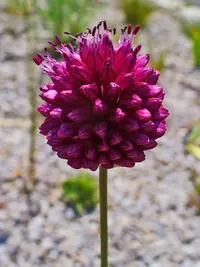
Drumstick allium
Allium sphaerocephalon
 POPULAR
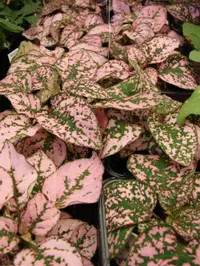
Polka Dot Plant
Hypoestes phyllostachya
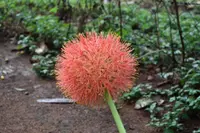
fireball lily
Scadoxus multiflorus
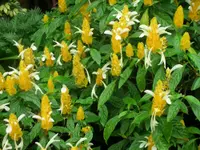
golden shrimp plant
Pachystachys lutea
long-leaved butterwort
Pinguicula longifolia