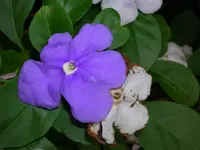
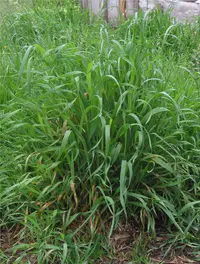
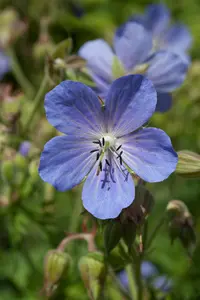
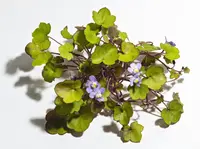
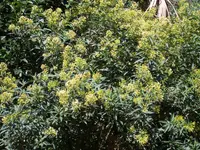
white avens Care (Geum canadense)

white avens

About white avens

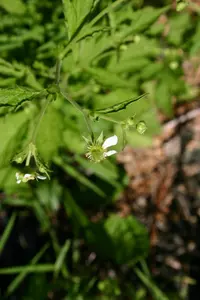
White avens (Geum canadense) is a hardy, herbaceous perennial in the rose family, common in woodlands, edges, and shady clearings across much of North America. It forms loose clumps of upright, branching stems with small, white, five-petaled flowers and distinctive hooked seed heads that cling to fur and clothing.

The plant usually grows in light shade with moderate soil moisture and tolerates a range of soil types, including disturbed ground. Its ability to self-seed and adapt to different conditions makes it relatively easy to establish, though it can spread in suitable habitats. Gardeners who want to learn how to care for white avens benefit from understanding its natural woodland origins.

Main Plant Requirements

Care Difficulty

Easy Care

Light Preference

Partial Shade

Water Requirements

Moderate Water

Temperature Preference

Cold Hardy

Hardiness Zone

3–8

Soil Texture

Loamy, Silty, Organic-rich

Soil pH

Acidic (5.5–6.5), Slightly acidic (6.5–7.0)

Soil Drainage

Moist but well-drained

Fertilization

Minimal (feed rarely)

Get Personalized Care Plan

Scan your plant to receive care tips personalized for your specific plant

Available on iOS and Android

How to Care for the white avens

Geum canadense grows best in bright outdoor conditions that mimic open woodland edges.

  • Provide 4–6 hours of sun daily, ideally with morning sun and light afternoon shade to prevent leaf scorch in hot summers.
  • Plant white avens where it receives dappled or filtered light under taller plants or trees, especially in regions with intense midday sun.
  • In cooler climates it tolerates near full sun, but in warmer areas shift it to partial shade if foliage looks pale, crispy, or wilting by midday.

Geum canadense prefers consistently moist but not waterlogged soil in the ground.

  • Water when the top 2–3 cm of soil feels barely damp, aiming for deep soaking rather than light splashes so roots grow down, not shallowly.
  • In spring and early summer, monitor after warm, dry spells; in cooler or rainy periods, skip watering if soil stays evenly moist.
  • Watch for yellowing, soft stems as a sign of overwatering and for drooping, dry leaves and cracked soil as signs the plant needs water.

This hardy perennial tolerates a wide temperature range typical of temperate climates.

  • Active growth is strongest around 60–75°F (16–24°C), with good performance through most of the typical spring and fall seasons.
  • Established plants survive winter cold down to about -20°F (-29°C) in the ground when soil drainage is good and roots are insulated by mulch.
  • During hot spells above 85°F (29°C), provide extra shade and soil moisture, as prolonged heat and dryness can stress foliage and reduce flowering.

This species is adaptable and usually does not need special humidity control outdoors in typical US climates.

This plant prefers consistently moist, well-structured soil that stays aerated and never waterlogged.

  • Use a loamy, organic-rich soil with a mix of mineral particles and decomposed leaf mold or compost to mimic woodland conditions.
  • Ensure moderate drainage; soil should retain moisture yet allow excess water to drain within a few hours after heavy watering or rain.
  • Aim for slightly acidic to neutral pH around 6.0–7.0, avoiding strongly alkaline or salty substrates that hinder nutrient uptake.
  • Improve aeration and structure by incorporating 20–30% compost plus a small portion of coarse sand or fine grit, avoiding dense clay that compacts easily.

This species can be grown in containers if the pot is prepared to stay evenly moist without becoming saturated.

  • Choose a container at least 20–25 cm deep to allow room for its fibrous root system to spread downward and stabilize the plant.
  • Select a heavier material such as clay or ceramic to reduce tipping risk as top growth becomes fuller and to moderate moisture swings.
  • Top-dress the container surface with fine bark or leaf mold to slow evaporation and keep the root zone cooler in hot conditions.

Geum canadense is a low-nutrient woodland native, so fertilizer is optional and should stay light.

  • If growth or flowering declines, apply a thin layer of compost around plants once each spring.
  • Use a mild, balanced NPK granular or slow-release product at 1/2 strength in early spring only.
  • Avoid midsummer and fall feeding to prevent soft growth before winter.
  • White avens in rich garden soil usually performs well without additional fertilizer.

Pruning Geum canadense is simple and mainly keeps plants tidy and flowering well.

  • In late spring and summer, deadhead spent flower stems to encourage further blooming and reduce self-seeding.
  • Remove dead, damaged, or weak stems at ground level with clean hand pruners.
  • In late fall or very early spring, cut back old foliage to make room for fresh growth.
  • Thin crowded clumps lightly to maintain an open shape and good air flow.

This species is most often grown in the ground, so focus on dividing and transplanting established clumps.

  • Plan transplanting or division in early spring or early fall, when temperatures are mild.
  • Lift clumps gently, then separate sections with healthy roots and several shoots.
  • Replant divisions at the original depth in moist, well-drained soil, and water thoroughly to settle roots.
  • Container plants need larger pots only when roots circle tightly or growth becomes noticeably slow.

Geum canadense is commonly propagated by seed or by division of mature clumps.

  • Sow fresh seeds outdoors in fall or early spring; natural cold exposure supports germination.
  • Prepare a loose, moist seedbed or tray, keeping the surface consistently damp but not waterlogged.
  • In early spring or early fall, dig and divide healthy clumps into pieces with several buds and roots.
  • Replant divisions promptly, water well, and keep soil evenly moist until new growth establishes.

This species is cold hardy in much of North America and usually needs minimal winter care.

  • After hard frost, foliage can be left as a natural mulch or cut back if desired.
  • Apply a light 5–7 cm layer of leaf mulch around the crown in colder regions for extra root insulation.
  • Container-grown plants in very cold climates benefit from being sunk into the ground or moved to a sheltered, unheated space.

Care Tips

Encourage Natural Spreading

Allow a light self-seeding zone around established clumps by delaying deadheading on a few plants, then thin excess seedlings in early spring to maintain an airy, naturalistic patch.

Leaf Litter Mulch

Leave a thin layer of shredded leaves around plants over winter to protect shallow roots, then gently pull it back in spring so new growth can emerge without rotting at the crown.

Hand-Remove Bindweed

Inspect beds monthly and carefully tease out bindweed or other twining weeds from the stems by hand so they do not smother the plant’s open growth habit.

Staggered Division Plan

Divide older clumps in rotation every 3–4 years, doing only a portion of the planting each year to keep flowering continuous while rejuvenating the entire stand over time.

Monitor for Rust

Check lower leaves regularly for small orange or brown pustules, remove and dispose of affected foliage promptly, and improve air flow between plants to reduce fungal rust spread when caring for white avens.

Common Pests and Diseases

Powdery mildew

This disease causes a white, powdery coating on leaves, stems, and sometimes flower stalks, especially in humid conditions with poor air movement. Symptoms include distorted new growth and premature leaf yellowing.

Solution

Remove and discard heavily infected leaves to reduce spore load, then thin surrounding vegetation or divide dense clumps to improve airflow. Avoid overhead watering, water at soil level in the morning, and if needed use a sulfur or potassium bicarbonate fungicide labeled for ornamental perennials, following label directions closely as part of general Geum canadense care.

Leaf spot

This disease produces small brown to purplish spots on leaves that may enlarge, merge, and cause partial defoliation, particularly in long periods of wet weather. Symptoms include weakened, sparse foliage on stressed plants in shade or crowded plantings.

Solution

Prune out and dispose of affected leaves and any dead plant material on the soil surface, since many leaf spot fungi overwinter in debris. Improve spacing, avoid wetting foliage, and if outbreaks are severe, apply a copper- or chlorothalonil-based fungicide labeled for ornamental perennials at the first sign of spotting.

Aphids

These insects cluster on young stems, buds, and leaf undersides, sucking sap and causing curling or distorted new growth. This pest also excretes sticky honeydew that can attract sooty mold and ants.

Solution

Spray infested shoots with a strong stream of water to dislodge colonies, then follow with insecticidal soap or a light horticultural oil, ensuring thorough coverage of leaf undersides. Encourage natural predators like lady beetles by avoiding broad-spectrum insecticides on nearby plants and by leaving some non-flowering vegetation undisturbed.

Spider mites

These pests feed on leaf undersides, causing fine stippling, dull or bronzed foliage, and in heavier infestations, delicate webbing between leaves and stems. Symptoms include leaves that look dusty or faded, especially during hot, dry weather.

Solution

Rinse foliage thoroughly with water, focusing on undersides, and repeat several times over 1–2 weeks to knock back populations. Increase ambient humidity around plants, reduce drought stress, and if needed apply insecticidal soap or a low-rate horticultural oil, taking care not to spray in full sun or high heat.

Crown rot

This disease leads to wilting, yellowing, and collapse of the central crown, with the base of the plant turning brown, soft, and sometimes foul-smelling, particularly in waterlogged or heavy soils. Symptoms include poor new growth and sections of the clump dying out from the center.

Solution

Dig out and discard affected plants and any obviously rotted crown tissue, then improve drainage by amending soil with coarse organic matter or grit before replanting in a slightly raised position. Avoid overwatering, do not let mulch touch the crown, and in sites with a history of crown rot, select only the healthiest divisions and monitor closely after wet periods.

Interesting Facts

North American woodland native

This species is native to eastern and central North America, where it grows naturally in open woods, forest edges, and shaded clearings, often forming part of the herb layer under deciduous trees.

Hooked seed dispersal

Its dry fruits carry small hooked bristles that readily attach to animal fur or clothing, an adaptation that helps the plant spread through a mechanism known as epizoochory, or seed transport on the outside of animals.

Early-summer nectar source

The small white flowers provide nectar and pollen for a range of small bees and flies in late spring to early summer, supporting pollinators during a period when woodland floral resources can be relatively limited.

Botan icon

Did you know?

Genetic and morphological studies have shown that this species hybridizes naturally with the yellow-flowered Geum aleppicum in regions where their ranges overlap, creating intermediate plants that helped botanists understand evolutionary relationships within the genus Geum.

FAQs about white avens

This species grows at a moderate rate, usually reaching mature height in 2–3 seasons under average garden conditions. Rich, moist soil and consistent moisture increase growth speed, while dense shade or very dry soil noticeably slow development.

Grow Healthy Plants with Botan Care

Keep your plants happy and healthy with plant identification, disease detection, and easy care guidance.

Botan plant care app — identify plants on mobile

Explore More Plants