Label Dormancy Cycle
Attach a small tag to the pot noting expected dormancy and sprouting months so you do not accidentally discard the tubers when the foliage dies back and the pot looks empty.

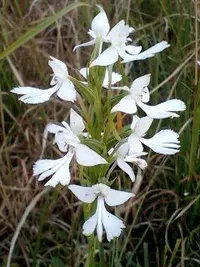
Phantom orchid, Habenaria dentata, is a terrestrial orchid species known for its delicate, white, fringed flowers and slender upright stems. It grows from small underground tubers that rest dormant outside the growing season.
In nature, it occurs in parts of East and Southeast Asia, often in grassy or lightly shaded, seasonally moist habitats. The plant can be challenging for beginners, mainly because it has a strict seasonal cycle and is sensitive to excess moisture during dormancy.
Those who care for Phantom Orchid need to manage its growth and rest phases carefully. It generally prefers bright, filtered light, airy, sharply draining substrate, and consistent but not waterlogged moisture while in active growth.

Care Difficulty
Hard Care

Light Preference
Partial Shade

Water Requirements
Keep Soil Moist

Temperature Preference
Tropical / Frost Sensitive

Hardiness Zone
10–11

Soil Texture
Loamy, Peaty, Organic-rich

Soil pH
Acidic (5.5–6.5)

Soil Drainage
Moist but well-drained

Fertilization
Light (every 4–6 weeks)
Scan your plant to receive care tips personalized for your specific plant
Available on iOS and Android
This terrestrial orchid prefers soft, filtered light that mimics bright forest edges.
This species needs evenly moist but never waterlogged soil during active growth.
This orchid prefers warm, frost-free conditions with a distinct cooler dry rest.
This terrestrial orchid prefers moderate, stable humidity to prevent leaf and tuber stress.
Habenaria dentata needs a loose, sharply draining yet evenly moist mix around its tubers.
This species adapts well to container growing when depth and drainage match its tuberous root system.
Habenaria dentata benefits from light, targeted feeding during its active growth period only.
Habenaria dentata needs minimal pruning, focused on hygiene rather than shaping.
This terrestrial orchid is usually repotted infrequently to avoid disturbing its delicate tubers.
Propagation of Habenaria dentata is possible but delicate, mainly through tuber division rather than seed at home.
This species enters a dry dormancy and needs careful winter moisture management rather than heavy insulation.

Plant Health Check
Not sure what's wrong with your plant? Check your plant's health inside the app.
The white flowers of this terrestrial orchid open and release their fragrance mainly at night, reflecting a pollination strategy targeted at nocturnal moths. The pale color and long nectar spur help guide these insects in low light.
Habenaria dentata survives adverse seasons through underground tubers that store starch and water. Above-ground leaves and stems die back completely during dormancy, then regrow from the tubers when conditions improve.
In the wild, this species often grows in open, seasonally moist grasslands and light woodland edges across parts of East and Southeast Asia. It prefers bright conditions with good drainage rather than dense forest shade.

The specific epithet dentata refers to the finely toothed or fringed margins of the flower segments, a distinctive feature that gives the blooms a delicate, lacy appearance under close inspection.
Lack of flowering usually comes from insufficient cool rest after foliage dies back, depleted tuber energy, or disturbance while dormant. Stable seasonal cycles, light feeding during active growth, and leaving the tubers undisturbed typically restore flowering.
Keep your plants happy and healthy with plant identification, disease detection, and easy care guidance.