Early removal protocol
Promptly fell and remove any tree showing active conks or significant crown decline within the infection center to reduce inoculum sources and slow local spread.

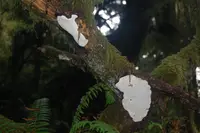
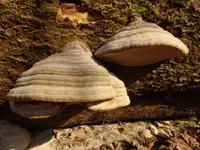
Heterobasidion occidentale is not a typical houseplant but a wood-decaying fungus that colonizes living and dead conifer trees, especially firs and spruces. It forms bracket-like fruiting bodies on trunks and stumps and spreads through roots and airborne spores.
This species is native to western North America, where it plays a major role in forest root rot diseases and wood decomposition. It is not recommended to grow or care for Heterobasidion occidentale intentionally, as it is considered a serious forest pathogen rather than an ornamental or garden organism.
In natural settings, it favors cool, moist forest conditions and establishes best in stressed or recently wounded trees.

Care Difficulty
Moderate Care

Light Preference
Partial Shade

Water Requirements
Moderate Water

Temperature Preference
Cool Climate

Hardiness Zone
Unknown

Soil Texture
Loamy

Soil pH
Slightly acidic (6.5–7.0)

Soil Drainage
Well-drained

Fertilization
Minimal (feed rarely)
Scan your plant to receive care tips personalized for your specific plant
Available on iOS and Android
This wood-decaying fungus naturally develops on conifer hosts in forest habitats with variable light conditions.
This pathogenic fungus depends on moisture conditions in host wood rather than direct watering by a gardener.
This fungus is adapted to cool to mild forest climates and persists across a broad temperature range in wood.
Humidity is not a meaningful care factor for Heterobasidion occidentale, which behaves as a wood-decay fungus rather than a cultivated plant.
Soil management focuses on preventing this root- and butt-rot fungus from establishing in hosts, rather than supporting growth.
This pathogenic wood-decay fungus is not suitable for container growing and is not managed as a potted organism.
This pathogenic fungus grows on host trees and does not benefit from fertilization in a horticultural sense.
Heterobasidion occidentale is not managed through ornamental pruning but through sanitation in forestry or arboriculture contexts.
This fungus is not cultivated in containers, so handling focuses on limiting spread when moving wood or host material.
Deliberate propagation of this serious root-rot pathogen is not recommended and is generally restricted to controlled research settings.
No horticultural winter care applies, but seasonal conditions influence disease dynamics and sanitation timing.

Plant Health Check
Not sure what's wrong with your plant? Check your plant's health inside the app.
This fungus is a major cause of root and butt rot in fir, hemlock, and other conifers in western North America, especially in Douglas-fir and true fir forests. It spreads between trees primarily through root contact, forming large disease centers that can persist for decades.
It is a white-rot fungus, meaning it breaks down lignin, the complex compound that gives wood rigidity and color. This decomposition leaves infected wood lighter in color and stringy, which can severely weaken tree stems and roots.
Heterobasidion occidentale is closely related to Heterobasidion irregulare but is genetically distinct and adapted mainly to cool, moist coastal and montane forests of western North America. It typically infects true firs, hemlocks, and spruces rather than pines, which helps distinguish its ecology from its relative.

The fungus can form large, long-lived clones in forest soils, where a single genetic individual may extend across many infected trees, all connected belowground through roots and decayed wood.
This fungus spreads aggressively in conifer forests through root contacts and airborne spores. In plantations or windbreaks, it can move from stump to stump, creating decay centers that slowly enlarge and may kill many connected trees over time.
Keep your plants happy and healthy with plant identification, disease detection, and easy care guidance.