American featherfoil Care (Hottonia inflata)

Also known as: Featherfoil
American featherfoil

About American featherfoil

American featherfoil (Hottonia inflata) is a native North American aquatic perennial found in shallow ponds, ditches, and slow-moving waters. It forms loose underwater rosettes with finely divided, feathery foliage that creates a soft, cloud-like texture below the surface.

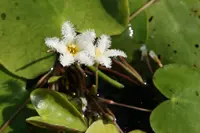
In spring, it sends up inflated, spongy flower stalks that hold clusters of small white to pale lavender blooms above the water. The plant naturally colonizes calm, nutrient-rich, sunny to lightly shaded sites.

Its fully aquatic nature and need for consistent, clean, still water make it more suitable for ponds and specialized water gardens than for casual containers. Gardeners who want to care for American featherfoil should be prepared to maintain stable water conditions and low competition from aggressive aquatic species.

Main Plant Requirements

Care Difficulty

Hard Care

Light Preference

Full Sun

Water Requirements

Aquatic

Temperature Preference

Cold Hardy

Hardiness Zone

4–10

Soil Texture

Silty, Organic-rich, Peaty

Soil pH

Acidic (5.5–6.5), Slightly acidic (6.5–7.0)

Soil Drainage

Waterlogged tolerant

Fertilization

Minimal (feed rarely)

Get Personalized Care Plan

Scan your plant to receive care tips personalized for your specific plant

Available on iOS and Android

How to Care for the American featherfoil

This aquatic species prefers bright, gentle light that mimics open, shallow wetland conditions.

  • Provide 4–6 hours of direct morning sun with light shade or filtered light in the afternoon to prevent leaf scorch.
  • Tolerates partial shade, but flowering of American featherfoil declines if light drops below about 3–4 hours of sun-equivalent brightness.
  • In hot summers, use taller marginal plants or a shade cloth to soften harsh midday sun, while in spring and fall allow more open exposure.

This plant is adapted to standing water and must never be allowed to dry out.

  • Grow in shallow water 10–40 cm deep so foliage stays above the surface while roots and lower stems remain fully submerged.
  • For Hottonia inflata in lined ponds or containers, top up water whenever the level drops more than 2–5 cm to prevent drying of the root zone.
  • Pale, limp foliage indicates low water level, while foul odor, cloudy water, and rotting stems suggest poor water quality and oxygen, not excess moisture itself.

This aquatic plant prefers cool to mild water and air temperatures typical of temperate wetlands.

  • Best active growth occurs around 60–75°F (16–24°C), with stable, cool water helping maintain strong, upright foliage.
  • Tolerates down to about 32°F (0°C) in water that does not freeze solid, but repeated hard freezes of the root zone can kill crowns.
  • Handles short heat spells up to about 86°F (30°C) if water stays deep, well-oxygenated, and partially shaded by companion plants.

This aquatic species needs very high humidity and constant moisture around foliage and roots.

  • Maintain 80–100% humidity by growing in shallow standing water or a water garden, not in exposed pots on dry air.
  • Dry air causes limp, collapsing leaves, browned tips, and slowed growth, especially at the waterline foliage.
  • Increase humidity by clustering plants in a bog tray, using deeper water with emergent stems, or adding a misting system over the pond edge.

This plant grows best in saturated, fine-textured, organic-rich substrates under shallow water.

  • Use a heavy loam or clay-loam rich in organic matter, avoiding fluffy peat-based mixes that float or wash away.
  • Ensure the planting substrate sits under 5–20 cm of still or very slow-moving water, so the soil remains fully saturated.
  • Keep pH roughly 6.0–7.5, amending with a little composted leaf mold rather than lime or strong fertilizers.
  • For Hottonia inflata in tubs, cap the soil with a thin layer of washed sand to limit clouding and soil erosion.

This species can be grown successfully in containers when used as a pond, tub, or water-garden plant.

  • Choose a wide, low, heavy container to keep emergent growth stable and prevent tipping in outdoor wind exposure.
  • Use a solid, non-porous pot or aquatic basket lined with fabric so fine substrate does not leak into the water column.
  • Position the container where water depth over the soil can be kept steady, avoiding locations with large daily water loss from evaporation.

This aquatic native usually needs minimal fertilization when grown in nutrient-rich ponds or wetland containers.

  • In low-nutrient containers, use a balanced aquatic fertilizer (for example 10-10-10) at 1/2 strength during active growth in spring–summer.
  • Apply fertilizer no more than every 4–6 weeks to limit algal blooms and soft, weak growth.
  • Avoid manure-rich compost that clouds water; instead, use aquatic fertilizer tablets pushed into the substrate.
  • Stop feeding American featherfoil in late fall and do not fertilize during winter dormancy.

Pruning Hottonia inflata is mainly done to control spread and maintain water quality in ponds or tubs.

  • Best timing is late spring to late summer when plants grow actively and recover quickly.
  • Trim back excessively long or crowded stems with clean scissors just below the water surface.
  • Remove yellowing, damaged, or decaying foliage to improve appearance and reduce rot in the water.
  • Thinning dense patches improves light penetration and water circulation, supporting healthier, more balanced growth.

This species is more often transplanted within ponds or water gardens than traditionally repotted.

  • Transplant clumps in early spring as growth resumes, or in early fall while water remains above freezing.
  • Move plants when growth slows, stems crowd, or roots fill a planting basket and emerge from drainage holes.
  • Lift the basket gently, rinse off loose substrate, and disturb roots as little as possible to reduce stress.
  • Replant into a slightly larger aquatic basket with heavy loam, then submerge gradually so foliage adapts to its new depth.

Hottonia inflata is commonly propagated by division and by seed under suitable aquatic conditions.

  • Divide established clumps in early spring, separating healthy sections with roots and several shoots.
  • Replant divisions into shallow water with stable levels and low current to encourage quick establishment.
  • For seed propagation, sow fresh seed on wet, fine substrate and keep just submerged in cool, clean water.
  • Provide bright, indirect light and stable temperatures around 60–70°F to support rooting and germination.

In much of its native range, this aquatic perennial is reasonably cold hardy and needs limited winter care.

  • In outdoor ponds, keep rhizomes below the ice line so water around the crown does not freeze solid.
  • Allow foliage to die back naturally; remove only soft, decaying material to maintain water quality.
  • For container-grown plants in very cold climates, sink the pot into a deeper pond zone or move it to a cool, frost-free area.

Care Tips

Seasonal Water Depth

In outdoor ponds or tubs, shift pots to slightly deeper water (30–45 cm) in midsummer to keep roots cooler and reduce stress during heat spikes, then raise them closer to the surface in spring and fall to support faster growth and flowering.

Container Corral Method

Plant in wide, shallow aquatic baskets grouped inside a larger container or lined pond zone so that spreading stems and root fragments stay contained and can be lifted out together for thinning or division.

Oxygenation Management

Combine this plant with gentle water movement from a small pump or air stone to prevent stagnant zones while keeping the flow low enough that delicate stems are not bent or uprooted.

Regular Thinning Strategy

Every 3–4 weeks in the growing season, remove a portion of the older, congested stems and floating rosettes to maintain open water surfaces, improve light penetration, and reduce the risk of decay-related water quality problems when growing American featherfoil.

Substrate Refresh Cycle

Every 1–2 years, lift baskets at the end of the season, trim excess roots, and replace part of the heavy loam or aquatic soil to prevent compaction and nutrient lockup while keeping some old soil to preserve beneficial microorganisms.

Common Pests and Diseases

Aquatic aphids

These insects cluster on soft submerged or emergent stems and leaf whorls, sucking sap and causing distortion and reduced vigor. Symptoms include sticky residues and small green, black, or brown insects visible on the plant.

Solution

Rinse colonies off with a strong but controlled stream of water, using repeated treatments as needed, and remove heavily infested stems. In outdoor ponds, encourage natural predators such as lady beetles and avoid overfertilizing, which promotes soft, aphid-prone growth when trying to grow Hottonia inflata.

Leaf-mining larvae

These insects feed within submerged leaves, creating pale tunnels or blotches that weaken fine leaf segments. Symptoms include thinning foliage and reduced photosynthetic area in affected whorls.

Solution

Trim and remove mined leaves or entire affected stems to physically reduce larvae and prevent spread. Maintain good water quality and avoid excess nutrients that favor insect outbreaks, and use fine-mesh barriers or netting to limit adult insect access in small ornamental ponds if infestations recur.

Algal overgrowth

This condition occurs when filamentous or planktonic algae rapidly cover or shade the plant, reducing light and oxygen around fine leaves. Symptoms include smothered foliage, slowed growth, and sometimes sloughing or decay of shaded stems.

Solution

Reduce nutrient input by limiting fish feeding and fertilizer runoff, manually remove filamentous algae, and perform partial water changes to lower dissolved nutrients. Provide moderate water movement and maintain appropriate planting density so plants receive 6–8 hours of filtered light rather than intense, algae-promoting full sun all day.

Bacterial stem soft rot

This disease causes water-soaked, soft, and sometimes foul-smelling areas on submerged stems, leading to collapse of fine leaf whorls. Symptoms include pale, mushy sections of stem that disintegrate easily when handled.

Solution

Promptly cut away and discard all affected stems, taking a small margin of healthy tissue, and remove any decaying plant debris from the water. Improve water circulation, avoid overcrowding, and maintain stable, cool to moderate temperatures to reduce bacterial growth, replacing highly affected plantings with clean, healthy divisions if necessary.

Fungal leaf blight

This disease develops on stressed or crowded stands, producing brown or grayish patches on finely divided leaves that can spread along stems. Symptoms include progressive dieback of leaf whorls and premature disintegration of affected foliage.

Solution

Thin dense patches to improve light penetration and water movement, and remove all blighted stems from the pond or tank before they break down. Maintain stable water parameters, avoid sudden temperature swings, and keep organic debris low; in contained systems, short-term use of an aquatic-safe fungicidal treatment may be considered if cultural measures do not stop progression.

Interesting Facts

Unique inflated flower stalks

This aquatic plant produces hollow, inflated flower stalks that help hold the small pale-lilac flower clusters above the water surface while the rest of the plant remains submerged.

Submerged featherlike leaves

Its finely divided, featherlike leaves stay completely underwater, increasing surface area for gas exchange and creating shelter for aquatic invertebrates and small fish.

Specialist of quiet waters

The species is naturally restricted to shallow, still or very slow-moving acidic waters such as Carolina bays, cypress ponds, and ditches in the eastern United States, and it can disappear when water levels or quality change.

Botan icon

Did you know?

In several U.S. states this species is considered rare, threatened, or endangered because its specialized shallow wetland habitats have been heavily drained, filled, or altered, making intact populations important indicators of relatively undisturbed coastal plain wetlands.

FAQs about American featherfoil

This species is not ideal for typical indoor decoration. It needs cool, shallow, nutrient-rich water, strong light, and good water movement, which are difficult to maintain in regular room aquariums or indoor containers.

Grow Healthy Plants with Botan Care

Keep your plants happy and healthy with plant identification, disease detection, and easy care guidance.

Botan plant care app — identify plants on mobile

Explore More Plants