Hydnellum lundellii Care

Hydnellum lundellii

About Hydnellum lundellii

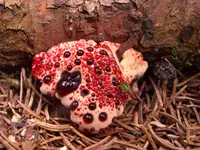
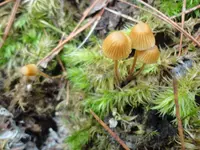
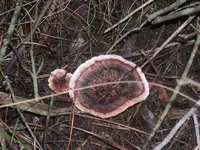
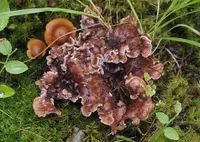
Hydnellum lundellii is a terrestrial tooth fungus, not a typical leafy plant. It forms low, irregular caps with spiny, tooth-like structures on the underside instead of gills. Colors range from pale to darker browns, often blending with forest litter.

This species occurs mainly in coniferous forests of northern Europe, growing on the ground among moss, needles, and decaying organic matter. It forms mycorrhiza, a nutrient-exchange partnership with tree roots, which makes it difficult to cultivate at home.

Anyone looking into how to care for Hydnellum lundellii should know it is best appreciated in its natural habitat, where it prefers undisturbed, moist, well-drained, acidic forest soils with dappled light.

Main Plant Requirements

Care Difficulty

Hard Care

Light Preference

Partial Shade

Water Requirements

Regular Water

Temperature Preference

Cool Climate

Hardiness Zone

Unknown

Soil Texture

Loamy, Sandy, Organic-rich

Soil pH

Strongly acidic (4.5–5.5), Acidic (5.5–6.5)

Soil Drainage

Moist but well-drained

Fertilization

Minimal (feed rarely)

Get Personalized Care Plan

Scan your plant to receive care tips personalized for your specific plant

Available on iOS and Android

How to Care for the Hydnellum lundellii

This mycorrhizal fungus prefers cool, shaded forest conditions rather than direct open sun.

  • Site Hydnellum lundellii under trees in dappled or filtered light, with only 1–3 hours of weak morning sun and full protection from harsh midday and afternoon sun.
  • Aim for bright shade in summer; excessive direct sun dries the forest floor quickly, shrinking fruiting bodies and shortening their lifespan.
  • In dense woodland with deep shade, fruiting may decline; selective thinning of branches that block all indirect light can improve development.

This forest-dwelling fungus depends on consistently moist, well-drained soil rather than frequent surface watering.

  • Ensure the soil around host trees stays evenly moist 5–10 cm down; allow only the top 1–2 cm to dry between natural rains or supplemental watering.
  • Use loose, humus-rich soil with good drainage; standing water, sour smell, or slimy mycelium indicate overwatering and poor aeration.
  • In dry, hot periods, provide deep, infrequent soaking to re-moisten the upper 10–15 cm; cracked soil surface and brittle fruiting bodies indicate underwatering.

This species favors cool to mild conditions typical of temperate forests.

  • Optimal development occurs around 50–68°F (10–20°C); fruiting usually declines when temperatures remain above 77°F (25°C) for extended periods.
  • The mycelium in soil can tolerate brief drops close to 23°F (−5°C), but repeated freeze–thaw cycles can damage fruiting structures at the surface.
  • In warmer seasons, a shaded, mulched forest floor buffers heat; in colder seasons, leaf litter helps insulate the soil, stabilizing temperatures for Hydnellum lundellii care instructions.

This mycorrhizal fungus relies more on suitable soil moisture than on specific air humidity levels.

Hydnellum lundellii needs specific soil conditions that mimic a cool, coniferous forest floor.

  • Use a loose, humus-rich, sandy to loamy substrate built mostly from decomposed conifer needles, leaf litter, and fine bark.
  • Ensure very sharp drainage by mixing coarse sand and fine pine bark so water disperses quickly and the surface never remains wet for long.
  • Keep pH distinctly acidic, around 4.0–5.5, by avoiding lime-containing materials and favoring conifer litter over composted garden waste.
  • Avoid compacted, fertilized, or clay-heavy substrates, which disrupt the natural mycorrhizal relationship and often prevent fruiting.

This species is generally unsuitable for container growing, as it depends on complex mycorrhizal connections with host tree roots in undisturbed soil.

This mycorrhizal fungus relies on its tree partners for nutrients and generally should not be fertilized in cultivation.

Hydnellum lundellii does not require pruning, since the visible fruiting body is temporary and the main organism lives in the soil.

In garden or research settings, focus on transplanting the host tree and soil rather than moving this fungus alone.

  • Transplant only during cool, moist periods to reduce stress on the tree roots and the fungal mycelium.
  • Move a generous volume of native soil containing the fungal partner, keeping it as intact and undisturbed as possible.
  • Avoid frequent moves; fungal networks establish slowly and decline if the host tree or soil is repeatedly disrupted.
  • Water the transplanted tree and soil thoroughly afterward, then maintain even moisture while the root–fungus partnership re-establishes.

Hydnellum lundellii is difficult to propagate intentionally, so cultivation is usually left to specialists.

This temperate woodland fungus is cold hardy and typically needs no special winter care in the ground.

Care Tips

Retain Forest Duff

When establishing a patch, transfer a thin layer of intact forest floor material (needles, leaves, twigs) from near an existing fruiting area to the new site to help bring compatible microbes and preserve the natural moisture and structure this fungus prefers.

Minimal Disturbance Zone

Mark a 50–100 cm radius around known fruiting bodies and avoid raking, trampling, or digging in that area so the underground mycelium network remains intact and can fruit consistently over multiple seasons.

Host Tree Matching

Source spores or colonized substrate from areas with the same or very similar tree species and soil type as your intended site, since this mycorrhizal fungus needs a compatible conifer host to establish and persist.

Microhabitat Shading

Install low, open lattice panels or place coarse woody debris (logs, large branches) on the south and west sides of the fruiting zone to soften direct sun and wind, which helps caps develop fully without excessive drying.

Long‑Term Site Monitoring

Photograph and map fruiting locations each year, noting associated tree species, moss cover, and soil moisture, so you can track how to take care of Hydnellum lundellii by adjusting site management only when changes clearly reduce fruiting.

Common Pests and Diseases

Host-specific parasitic fungi

This disease involves other fungi parasitizing the Hydnellum fruiting body, leading to distorted, discolored, or partially overgrown caps. Symptoms include reduced spore production and premature decay of the mushroom tissue.

Solution

Remove and dispose of affected fruiting bodies to limit spread, and avoid disturbing the surrounding mycorrhizal area, as the host fungus relies on its tree partner. Maintaining a stable, undisturbed, and species-rich forest floor with minimal trampling is the most practical approach for long-term Hydnellum lundellii care instructions in natural or semi-natural settings.

Fungal gnat larvae

This pest consists of small fly larvae that tunnel within the fruiting body, creating galleries and soft, brown, water-soaked areas. Symptoms include rapid collapse of caps and visible maggot-like larvae when cut open.

Solution

Promptly harvest or remove heavily infested fruiting bodies to reduce breeding sites, and keep nearby decaying organic debris to a moderate level to avoid high gnat populations. In controlled culture settings, fine mesh barriers and sticky traps around the fruiting area can reduce adult gnats before they lay eggs.

Slugs and snails

These pests feed on the soft tissue of the fruiting bodies, leaving ragged holes, slime trails, and sometimes complete loss of young caps. Damage is often most visible after wet periods or overnight.

Solution

Hand-pick slugs and snails during damp evenings, and use physical barriers such as copper tape or gritty mineral rings around small cultivated areas. Keep dense ground cover and debris just outside the immediate growth zone to reduce shelter close to the fruiting bodies while still retaining overall moisture.

Mite infestation

These insects are tiny arthropods that feed on fungal tissue and spores, causing pitting on the cap surface and a dusty or eroded appearance. Symptoms include slow degradation of the fruiting body and sometimes visible tiny moving dots under magnification.

Solution

Remove and dispose of heavily infested fruiting bodies and avoid storing them in damp, enclosed containers where mites multiply rapidly. In any controlled rearing or observation setup, increase ventilation, reduce overcrowding of specimens, and clean surrounding equipment regularly to break the mite life cycle.

Interesting Facts

Toothed, corky caps

This species forms tough, corky fruiting bodies with irregular, often fused caps that have tooth-like spines on the underside instead of gills. The cap surface is typically dull brown to grayish and can become cracked with age.

Mycorrhizal conifer partner

The fungus forms ectomycorrhizae with conifers, especially spruce and pine, exchanging mineral nutrients from poor, sandy soils for carbohydrates from the host tree. It is most often recorded in nutrient-poor, well-drained coniferous forests in northern Europe.

Distinctive spore-bearing teeth

Instead of producing spores on flat surfaces, this species develops downward-pointing spines or teeth on the underside of the cap where spores are released. This toothed hymenophore is characteristic of Hydnellum and related genera within the Bankeraceae.

FAQs about Hydnellum lundellii

This tooth fungus is not considered edible. The texture is tough and corky, and flavor ranges from bitter to unpalatable. It is generally collected only for scientific or conservation interest, not for food.

Grow Healthy Plants with Botan Care

Keep your plants happy and healthy with plant identification, disease detection, and easy care guidance.

Botan plant care app — identify plants on mobile

Explore More Plants