Smooth Hydrangea Care (Hydrangea arborescens 'Annabelle')

Also known as: Hydrangea, Wild Hydrangea, Sevenbark
Smooth Hydrangea

About Smooth Hydrangea

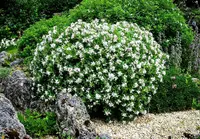
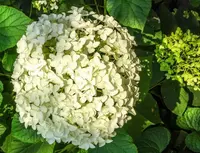
Smooth hydrangea Hydrangea arborescens 'Annabelle' is a deciduous flowering shrub valued for its large, rounded white flower clusters and dense, bushy habit. It typically forms a rounded mound of stems that are covered with broad green leaves and showy summer blooms that gradually age to greenish or tan tones.

This hydrangea originates from woodland regions of eastern North America, which explains its preference for moist, well-drained soil and light shade to partial sun. It is generally considered a reliable, low-maintenance garden shrub, especially in cooler and moderate climates.

Understanding how to care for Smooth Hydrangea mainly involves providing consistent moisture, protection from harsh afternoon sun, and periodic pruning to support strong flowering stems.

Main Plant Requirements

Care Difficulty

Moderate Care

Light Preference

Partial Shade

Water Requirements

Regular Water

Temperature Preference

Cold Hardy

Hardiness Zone

3–9

Soil Texture

Loamy, Silty, Organic-rich

Soil pH

Acidic (5.5–6.5), Slightly acidic (6.5–7.0)

Soil Drainage

Moist but well-drained

Fertilization

Light (every 4–6 weeks)

Get Personalized Care Plan

Scan your plant to receive care tips personalized for your specific plant

Available on iOS and Android

How to Care for the Smooth Hydrangea

This shrub prefers bright, gentle light that avoids intense afternoon exposure.

  • Provide 4–6 hours of morning sun with afternoon shade; east-facing or dappled light under high trees suits Smooth Hydrangea well.
  • In hot summer climates, protect from strong sun after 1–2 p.m. to reduce leaf scorch, drooping, and browning flower heads.
  • In cooler or northern climates, it tolerates near full sun, but flowering declines if grown in dense shade with <3 hours of direct light.

This hydrangea needs consistently moist but not waterlogged soil, especially in its first years.

  • Water when the top 3–5 cm of soil feels dry, soaking the root zone deeply rather than giving light surface splashes.
  • Improve drainage with organic matter so water moves through; yellowing, soft leaves suggest overwatering, while limp, crispy edges indicate drought stress.
  • In hot, dry periods, check soil moisture every 1–2 days; reduce watering in cool, rainy weather and in late fall as Hydrangea arborescens 'Annabelle' goes dormant.

This species is a cold-hardy shrub that grows well in a wide range of outdoor temperatures.

  • Active growth and flowering are strongest around 65–80°F (18–27°C), typical of late spring and early summer in many regions.
  • Dormant woody stems tolerate down to about -20°F (-29°C) in the ground, but new spring shoots are sensitive to late frosts and may need protection.
  • During heat waves above 90°F (32°C), expect temporary wilting at midday; provide mulch and shade to keep roots cooler and reduce stress.

This shrub prefers moderate outdoor humidity and only shows stress in very dry or hot, windy conditions.

  • Aim for 40–60% humidity; typical outdoor garden air is usually adequate for Smooth Hydrangea.
  • Watch for crisp leaf edges, drooping foliage, and premature flower browning as signs of low humidity stress combined with heat.
  • Increase local humidity by applying mulch over the root zone and grouping plants near other shrubs to reduce drying winds.

This hydrangea performs best in consistently moist, well-aerated, organic-rich soil.

  • Use a deep, loamy soil with plenty of organic matter such as compost or leaf mold to retain moisture without becoming waterlogged.
  • Ensure drainage is moderate to fast; improve heavy clay by mixing in compost plus coarse bark or perlite to open the structure.
  • Target a slightly acidic to neutral pH of 5.5–7.0, avoiding strongly alkaline sites that can limit nutrient uptake and cause pale foliage.
  • Avoid compacted, stony, or very sandy ground unless amended, as these conditions restrict roots and dry out too quickly for Hydrangea arborescens 'Annabelle'.

This species adapts reasonably well to large outdoor containers when given adequate root space and moisture control.

  • Choose a wide, heavy container that resists tipping once the plant is in full leaf and bloom, since the canopy becomes top-heavy.
  • Select a potting mix labeled for shrubs or trees that combines peat or coir with bark and perlite to balance moisture retention and drainage.
  • Raise the container slightly on pot feet or bricks so water can exit the drainage holes freely and not pool under the base, which encourages root rot.

Hydrangea arborescens 'Annabelle' responds well to modest, balanced feeding on reasonably fertile soil.

  • Apply a balanced, slow-release granular fertilizer (for example, 10-10-10) once in early spring as new growth starts.
  • On poor soils, supplement with a 2–5 cm layer of compost over the root zone, keeping it away from the main stems.
  • Use about half the label rate for shrubs to avoid soft, excessively leafy growth with weaker stems.
  • Stop feeding by late summer and do not fertilize in winter dormancy, as the plant is not actively growing.

Hydrangea arborescens 'Annabelle' benefits from annual pruning to maintain strong growth and large flower heads.

  • Prune in late winter to very early spring, before buds break, when the plant is leafless and structure is visible.
  • Remove dead, damaged, crossing, or very weak stems at the base with clean, sharp bypass pruners.
  • Cut remaining stems back to 20–40 cm to encourage sturdy new shoots and larger, more uniform flower clusters.
  • Thin out the oldest, thickest stems every few years to improve air flow, light penetration, and overall shrub shape.

This shrub is usually grown in the ground, so care focuses more on transplanting than frequent repotting.

  • Transplant in early spring or early fall, when weather is cool and soil is moist but not waterlogged.
  • Move plants that show poor vigor, have outgrown their space, or sit in soil that drains too slowly or too quickly.
  • Dig a wide root ball, keep as much soil around the roots as possible, and replant at the same depth in amended soil.
  • Water deeply after transplanting, then keep soil evenly moist and mulch 5–8 cm to reduce root stress and moisture loss.

Hydrangea arborescens 'Annabelle' is commonly propagated vegetatively to maintain the cultivar’s traits.

  • Take 10–15 cm softwood cuttings in late spring to early summer, using non-flowering shoots with several leaf nodes.
  • Insert cuttings into a well-drained, moist medium under high humidity and bright, indirect light; rooting hormone improves success.
  • Divide established clumps in early spring or fall, ensuring each division has healthy shoots and a good root portion.
  • Simple layering also works: bend a low stem to the ground, wound lightly, pin in place, cover with soil, and separate once rooted.

This shrub is cold hardy in much of the US and usually needs only basic winter care outdoors.

  • Tolerates freezing conditions in the ground, but young plants benefit from a 5–8 cm mulch layer over the root zone.
  • Use shredded bark, leaves, or compost as mulch, keeping it slightly away from the main stems to prevent rot.
  • In very exposed or windy sites, leave dried flower heads and stems over winter to shield lower buds, cutting them back in late winter.
  • For container specimens in colder regions, move pots to a sheltered, unheated but frost-moderated area and water sparingly.

Care Tips

Install Strong Supports

Place sturdy, unobtrusive peony rings or a low wire grid around the plant in early spring so stems grow up through the support and are held upright when heavy flower heads develop.

Use Staggered Renewal

Every 2–3 years, remove only one-third to one-half of the oldest stems at ground level in late winter to maintain a balance of strong new shoots and some structure for early-season interest.

Mulch For Moisture Buffer

Apply a 5–8 cm layer of shredded bark or leaf mold out to the drip line, keeping it a few cm away from stems, to stabilize root-zone moisture and reduce stress during hot spells.

Plan For Snow Load

In snowy regions, tie outer stems loosely together with soft plant ties in late fall so the shrub flexes as one unit and is less likely to splay or break under wet snow.

Monitor For Floppy Stems

During rapid summer growth, pinch back only the soft tips of excessively tall stems before they set buds to encourage slightly sturdier branching without sacrificing the main flowering display when growing Smooth Hydrangea.

Common Pests and Diseases

Leaf spot

This disease causes small brown or tan spots on leaves that may merge into larger blotches, leading to premature leaf drop in mid to late summer.

Solution

Remove and discard heavily spotted leaves, avoid overhead watering, and keep foliage as dry as possible; in severe, recurring cases, apply a labeled fungicide in late spring to protect new growth and reduce spread.

Powdery mildew

This disease produces a white, powdery film on upper leaf surfaces, sometimes causing leaf curling and reduced vigor, especially in humid, shaded sites with poor air movement.

Solution

Improve air circulation by thinning nearby plants, avoid wetting foliage late in the day, and use a sulfur or potassium bicarbonate fungicide labeled for ornamentals if the white coating spreads quickly or repeatedly each season.

Aphids

These insects cluster on tender stems and the undersides of leaves, sucking sap and causing distorted growth and sticky honeydew that can attract sooty mold.

Solution

Dislodge colonies with a strong stream of water, encourage or introduce natural predators like lady beetles, and use insecticidal soap or a light horticultural oil spray, making sure to coat the undersides of leaves.

Hydrangea scale

This pest appears as small, flat, white or brown bumps on stems and leaf undersides, weakening plants by removing sap and sometimes causing yellowing or sparse foliage.

Solution

Prune out and discard heavily infested stems, gently scrub small populations off with a soft brush, and apply horticultural oil during the crawler stage according to label directions to reduce future infestations.

Botrytis blight

This disease leads to browning petals, water-soaked spots on flower heads, and gray fuzzy mold on fading blooms, especially during cool, wet periods when flower clusters stay damp.

Solution

Promptly deadhead spent or blighted flower heads, space plants for better airflow, avoid overhead irrigation, and in persistent wet weather consider a preventative fungicide labeled for botrytis on ornamentals to protect developing blooms when following Hydrangea arborescens 'Annabelle' care guidelines.

Interesting Facts

Domesticated from wild form

This cultivar was selected in the early 20th century from the wild smooth hydrangea species native to eastern North America, specifically for its unusually large, uniform flower heads compared with typical wild populations.

Sterile flowers dominate

Most of its showy white blossoms are sterile florets that do not produce viable seed, an ornamental trait that creates the characteristic large, spherical heads but reduces its value as a nectar and seed resource compared with more fertile hydrangea forms.

Color stability in soil

Unlike many bigleaf hydrangeas, its flower color does not shift with soil pH; the blooms remain white to slightly greenish as they age because this species lacks the strong pigment changes tied to aluminum availability in the soil.

Botan icon

Did you know?

Hydrangea arborescens 'Annabelle' became so influential in American landscaping after its introduction in the mid-1900s that it effectively reset expectations for what a smooth hydrangea could look like, leading breeders to use it as a key parent in developing newer cultivars with even stronger stems and different flower forms.

FAQs about Smooth Hydrangea

Poor blooming usually comes from heavy shade, excessive nitrogen fertilizer, or hard pruning at the wrong time. This species flowers on new wood, so cut back in late winter and use a balanced, slow-release fertilizer to support bud formation.

Grow Healthy Plants with Botan Care

Keep your plants happy and healthy with plant identification, disease detection, and easy care guidance.

Botan plant care app — identify plants on mobile

Explore More Plants