Manage Spreading Rhizomes
Install a 20–30 cm deep root barrier around beds or paths to keep yellowroot’s rhizomes from spreading into unwanted areas while still allowing a dense, colony-forming patch inside the contained zone.

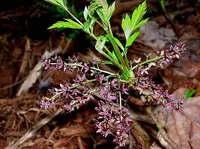
Yellowroot, Xanthorhiza simplicissima, is a small deciduous shrub known for its slender, woody stems and yellow, bitter-tasting roots. It forms low colonies, often creating a groundcover effect along stream banks and in open woodlands.
This species is native to eastern North America, where it grows in moist, shaded to partly shaded habitats. Its tolerance of shade, cold winters, and varied soils makes it relatively easy to integrate into naturalistic gardens.
Gardeners who want to care for yellowroot should note that it prefers consistently moist, well-drained soil and benefits from protection from intense, direct afternoon sun.

Care Difficulty
Easy Care

Light Preference
Partial Shade

Water Requirements
Keep Soil Moist

Temperature Preference
Cold Hardy

Hardiness Zone
3–8

Soil Texture
Loamy, Silty, Organic-rich

Soil pH
Acidic (5.5–6.5), Slightly acidic (6.5–7.0)

Soil Drainage
Moist but well-drained

Fertilization
Minimal (feed rarely)
Scan your plant to receive care tips personalized for your specific plant
Available on iOS and Android
This woodland shrub prefers bright but softened light similar to an open forest edge.
This species prefers consistently moist, well-drained soil, especially during active growth.
This native shrub tolerates a wide temperature range but grows best in moderate conditions.
This species grows well in outdoor humidity that stays roughly within 40–70%.
Xanthorhiza simplicissima prefers consistently moist, humus-rich soil with structure similar to a forest edge site.
This shrub can grow in containers, but only when the pot is managed to mimic a cool, moist woodland root zone.
This native shrub is light-feeding and usually needs only modest nutrition in garden soils.
Pruning Xanthorhiza simplicissima is mainly done to keep the clump tidy and flowering well.
This shrub is usually grown in the ground, so focus on careful transplanting rather than frequent repotting.
Xanthorhiza simplicissima is commonly propagated by division and stem cuttings for reliable cloning of desired plants.
This deciduous shrub is quite cold hardy and usually needs minimal winter attention in the ground.

Plant Health Check
Not sure what's wrong with your plant? Check your plant's health inside the app.
The roots and inner bark contain the alkaloid berberine, which gives the plant its strong yellow color and has been studied for antimicrobial and dye properties in several plant families, including this one.
This species is one of the few woody members of the buttercup family (Ranunculaceae), which is otherwise dominated by herbaceous plants, making its shrubby, suckering habit taxonomically unusual.
Its small, star-shaped, brownish-purple flowers open in early spring and provide nectar and pollen for native bees and other early-emerging pollinators when few other shrubs are in bloom.

Indigenous peoples in eastern North America traditionally used the intensely yellow, berberine-rich root as a natural dye for textiles and baskets, making this shrub an important historical source of durable yellow coloration.
This species spreads by rhizomes, forming colonies over time. It is typically clump-forming to moderately spreading, not a rampant runner. In small spaces, use edging or root barriers and divide clumps when they thicken.
Keep your plants happy and healthy with plant identification, disease detection, and easy care guidance.