Wind-hardening seedlings
Expose young plants to increasing air movement over 7–10 days before planting out, using a sheltered but breezy spot or a fan, to produce sturdier stems and reduce transplant shock when growing sickle wattle outdoors.


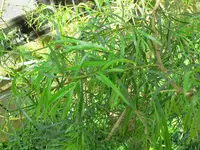
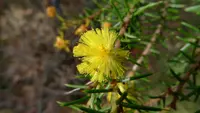
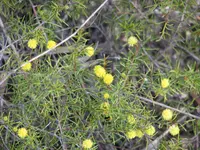
Sickle wattle, Acacia falcata, is an Australian shrub or small tree known for its slender, curved leaf-like phyllodes and soft, yellow, ball-shaped flower clusters. It typically has a bushy, upright habit and can form dense thickets in suitable conditions.
In nature it grows in open forests and woodlands, often on well-drained, sandy or gravelly soils. It is generally fast-growing and hardy, but young plants can be sensitive to poor drainage and root disturbance.
Gardeners who care for sickle wattle value its drought tolerance once established and its ability to cope with low-fertility soils. It prefers full sun to light shade and moderate, even moisture during early growth.

Care Difficulty
Moderate Care

Light Preference
Full Sun

Water Requirements
Low Water

Temperature Preference
Warm Climate

Hardiness Zone
9–11

Soil Texture
Sandy, Loamy, Rocky

Soil pH
Acidic (5.5–6.5), Slightly acidic (6.5–7.0)

Soil Drainage
Well-drained

Fertilization
Minimal (feed rarely)
Scan your plant to receive care tips personalized for your specific plant
Available on iOS and Android
Acacia falcata grows best in bright, open positions with protection from harsh extremes.
This species prefers deep, infrequent watering once established, with time for the soil to dry between soakings.
This plant is adapted to mild, warm climates and does not tolerate hard frost.
Acacia falcata handles typical household humidity well but grows best with moderately dry air.
Acacia falcata prefers mineral-lean, fast-draining soil that mimics light, sandy native conditions.
This species can be grown in containers with attention to stability and rapid drainage.
This nitrogen-fixing Australian native needs only modest feeding in most garden soils.
Thoughtful pruning keeps Acacia falcata compact, safe, and flowering well.
This species is more often grown in the ground than as a long-term container plant.
New Acacia falcata plants are most often raised from seed under warm, bright conditions.
This warm-climate shrub or small tree needs protection from prolonged frost in cooler regions.

Plant Health Check
Not sure what's wrong with your plant? Check your plant's health inside the app.
In its native range of eastern Australia, sickle wattle serves as a larval host plant for several native butterfly species, including some blues (family Lycaenidae) that rely on its foliage for caterpillar development.
Like other wattles, this species forms root nodules with nitrogen-fixing bacteria, helping to enrich poor, sandy or lateritic soils and often facilitating the establishment of other native plants in woodland and heath communities.
Sickle wattle naturally occurs on coastal lowlands and foothills, where it tolerates exposed conditions, salt-laden winds, and nutrient-poor substrates typical of coastal heaths and open forests.

Acacia falcata produces characteristically curved, sickle-shaped phyllodes (leaf-like flattened petioles) instead of true leaves in adult plants, an adaptation that reduces water loss and helps it cope with the seasonally dry conditions of its native habitats.
Lack of flowers often comes from insufficient light, heavy pruning at the wrong time, or excess nitrogen fertilizer. Older wood usually carries buds, so avoid hard pruning before late winter–spring and prioritize balanced fertilizer instead of high-n lawn products nearby.
Keep your plants happy and healthy with plant identification, disease detection, and easy care guidance.