Sturdy stem support
Install low, discreet hoop stakes or short peony rings around young plants in early summer so the soft, heavy flower heads are supported before they start to flop after rain or wind.

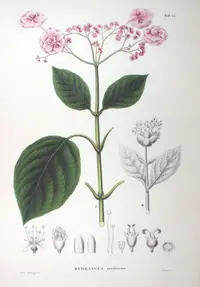
Hydrangea involucrata, often called Japanese hydrangea, is a deciduous shrub valued for its delicate, lacecap-style summer blooms and rounded habit. It typically forms a compact, bushy shape with soft, textured leaves and flower heads framed by showy sterile florets.
This species is native to woodlands and mountain slopes in Japan and nearby regions, where it grows in dappled light and evenly moist, humus-rich soil. In gardens, it is considered moderately easy, provided it is protected from harsh sun, drying winds, and prolonged drought.
Gardeners who learn how to care for Hydrangea involucrata usually appreciate its reliable flowering, good shade tolerance, and natural, informal look in borders or woodland-style plantings.

Care Difficulty
Moderate Care

Light Preference
Partial Shade

Water Requirements
Regular Water

Temperature Preference
Cold Hardy

Hardiness Zone
6–9

Soil Texture
Loamy, Silty, Organic-rich

Soil pH
Acidic (5.5–6.5), Slightly acidic (6.5–7.0)

Soil Drainage
Moist but well-drained

Fertilization
Light (every 4–6 weeks)
Scan your plant to receive care tips personalized for your specific plant
Available on iOS and Android
This shrub prefers bright but gentle light to flower well and avoid leaf scorch.
Consistent, moderate moisture supports healthy growth and flowering.
Stable, moderate temperatures help this hydrangea maintain steady growth and bud development.
This shrub prefers moderately moist air but usually adapts to typical outdoor humidity.
Hydrangea involucrata grows best in consistently moist, well-structured soil with ample organic matter.
This hydrangea is suitable for container growing when the pot supports its fibrous, spreading root system.
Good nutrition supports strong growth and flowering in Hydrangea involucrata, especially in poor soils.
Thoughtful pruning keeps Hydrangea involucrata compact, healthy, and flowering well.
Hydrangea involucrata is usually grown in the ground, but container plants or young shrubs benefit from careful transplanting.
New plants of Hydrangea involucrata are most reliably produced from cuttings and layering.
Hydrangea involucrata is moderately cold hardy but benefits from some winter protection in colder regions.

Plant Health Check
Not sure what's wrong with your plant? Check your plant's health inside the app.
This species has soft, overlapping involucral bracts that wrap around the flower buds like a papery cap, giving rise to the name involucrata. These bracts split and fold back as the inflorescence matures, a feature less pronounced in many other hydrangea species.
Hydrangea involucrata typically produces flat, lacecap-type flower heads with a central cluster of small fertile flowers surrounded by showier sterile florets. This structure helps attract pollinators to the fertile flowers while maintaining a delicate, open appearance.
In many temperate gardens, this species flowers later in summer than some other hydrangeas, often extending interest into early fall. The late bloom timing can help support pollinators when earlier-flowering shrubs have already finished.

Hydrangea involucrata is native to woodland and forest margins in Japan and Taiwan, where it naturally grows as an understory shrub, adapted to dappled light and humus-rich, consistently moist soils.
Lack of flowers usually results from pruning at the wrong time, winter bud damage, or insufficient nutrients. Avoid heavy pruning in late winter, protect buds from hard frost, and apply a balanced, slow-release fertilizer in spring.
Keep your plants happy and healthy with plant identification, disease detection, and easy care guidance.