Protective handling
Always handle this plant with nitrile gloves and wash tools after use, as its toxic alkaloids can be absorbed through skin micro-abrasions and contaminate pruners or pots used for edible crops.

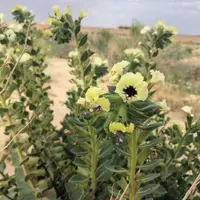
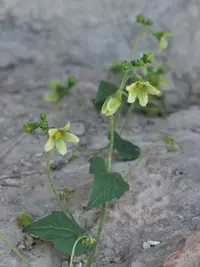
Desert henbane (Hyoscyamus desertorum) is a short-lived, herbaceous plant from arid and semi-arid regions of North Africa and the Middle East. It belongs to the nightshade family and is closely related to other medicinal and toxic henbanes.
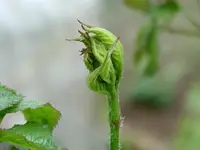
Plants usually form low, branching clumps with soft, grey-green leaves adapted to dry, sunny conditions. The pale, funnel-shaped flowers can be patterned or veined, giving the plant a distinctive look.
This species is adapted to poor, well-drained, often sandy soils and irregular rainfall, which can make cultivation challenging outside dry climates. Gardeners who care for desert henbane must consider its sensitivity to excess moisture and its toxic nature before planting.

Care Difficulty
Moderate Care

Light Preference
Full Sun

Water Requirements
Low Water

Temperature Preference
Warm Climate

Hardiness Zone
8–11

Soil Texture
Sandy, Loamy, Rocky

Soil pH
Neutral (7.0), Slightly alkaline (7.0–7.5)

Soil Drainage
Well-drained

Fertilization
Minimal (feed rarely)
Scan your plant to receive care tips personalized for your specific plant
Available on iOS and Android
This desert annual needs strong light but still benefits from some protection during the hottest hours.
This species is adapted to dry, fast-draining sites and is sensitive to excess moisture around the roots.
This plant prefers warm, dry conditions but only moderate extremes, especially when roots are young.
This dryland species tolerates very low humidity and usually does not need special moisture in the air.
Hyoscyamus desertorum prefers lean, fast-draining mineral soil that mimics rocky desert substrates.
This species can be grown in containers if the pot is set up to mimic dry, stony ground.
Hyoscyamus desertorum is adapted to poor, sandy soils and needs only light feeding under cultivation.
Hyoscyamus desertorum needs only minimal pruning, mainly for hygiene and shape control in cultivation.
This desert species is more often grown in ground beds than containers, so focus on gentle transplanting when necessary.
Hyoscyamus desertorum is most reliably propagated from seed rather than by vegetative methods.
This desert henbane is suited to mild, dry winters and has limited tolerance of persistent frost and wet cold.

Plant Health Check
Not sure what's wrong with your plant? Check your plant's health inside the app.
This species is native to North African and Middle Eastern desert regions, where it often establishes on loose, sandy or gravelly soils that many other broadleaf plants fail to colonize.
Like other henbanes, it produces tropane alkaloids such as hyoscyamine and scopolamine, but its chemistry is adapted to arid environments, likely contributing to strong herbivore deterrence in sparse desert vegetation.
In its native range it typically behaves as a short-lived annual or biennial that completes its life cycle quickly following rare rainfall events, then persists locally via a soil seed bank until the next favorable season.
Lack of flowers often comes from insufficient light, nutrient-poor or overly rich soil, or age. This species usually needs a full growing season from seed before reliable flowering, and excessive nitrogen can promote foliage instead of blooms.
Keep your plants happy and healthy with plant identification, disease detection, and easy care guidance.