Control Rhizome Spread
Every 3–4 years, lift and divide congested clumps in late summer, replanting only firm outer rhizomes at the same soil level to keep plants vigorous and prevent invasive spread into nearby beds.

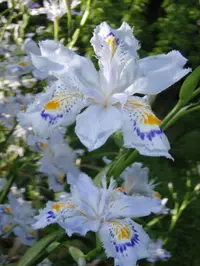
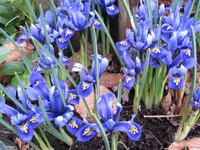
Fringed iris, Iris japonica, is a rhizomatous perennial grown mainly for its delicate, fringed flowers and attractive, strap-like evergreen foliage. It forms low, spreading clumps that work well as a groundcover in mild climates or as a container accent. Native to woodland and shaded slopes in China and Japan, it prefers sheltered spots with filtered light and consistent moisture. Flowers appear in soft shades of lavender, blue, or white, often with yellow and purple markings. Its moderate vigor and tolerance of partial shade make it relatively straightforward to care for fringed iris when soil is well-drained yet never completely dry.

Care Difficulty
Moderate Care

Light Preference
Partial Shade

Water Requirements
Moderate Water

Temperature Preference
Warm Climate

Hardiness Zone
7–9

Soil Texture
Loamy, Silty, Organic-rich

Soil pH
Acidic (5.5–6.5), Slightly acidic (6.5–7.0)

Soil Drainage
Moist but well-drained

Fertilization
Light (every 4–6 weeks)
Scan your plant to receive care tips personalized for your specific plant
Available on iOS and Android
Iris japonica prefers bright, gentle light similar to an open woodland edge.
Iris japonica prefers consistently moist but not waterlogged soil.
This iris grows best in mild, frost-tolerant conditions with moderate summer heat.
Iris japonica prefers moderate humidity and copes with typical indoor levels if not too dry.
Iris japonica grows best in moist, airy soil that drains freely yet does not dry out too fast.
This species is suitable for container growing, especially on patios or shaded balconies.
Iris japonica benefits from modest, well-timed feeding to support foliage and flowering.
Pruning Iris japonica is mainly light cleanup to maintain a tidy clump and encourage fresh growth.
Division and transplanting are more important than repotting for maintaining healthy clumps of Iris japonica in gardens.
Division is the standard method for increasing Iris japonica while keeping plants true to type.
Iris japonica is moderately cold hardy but benefits from simple winter precautions in colder climates.

Plant Health Check
Not sure what's wrong with your plant? Check your plant's health inside the app.
This species is native to mild, humid woodlands in China and Japan, where it forms evergreen clumps that persist through winter rather than dying back like many bearded irises.
Iris japonica spreads by shallow, branching rhizomes that knit together into dense groundcover, helping stabilize soil on slopes and in shaded gardens.
The flowers show both frilled petal edges and a raised, comb-like crest on the falls, a combination that is characteristic of the crested iris group and gives the plant its common name, fringed iris.

In traditional Japanese gardens, Iris japonica has long been used to create soft, semi-shaded understory layers along paths and under trees, valued for the way its pale, finely fringed spring flowers contrast with dark evergreen foliage and stone features.
Lack of flowers often comes from too little light, overcrowded clumps, or depleted soil nutrients. Divide congested rhizomes every few years and top-dress with a balanced, slow-release fertilizer to support bud formation the following season.
Keep your plants happy and healthy with plant identification, disease detection, and easy care guidance.