Rhizome sun exposure
When planting, leave the top of each rhizome slightly exposed to light and air to reduce rot risk and improve flowering in Iris lutescens clumps.

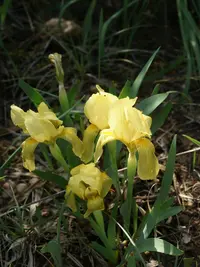
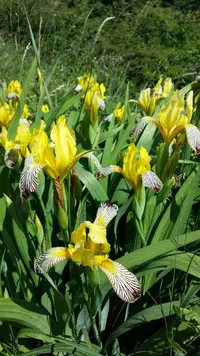
Crimean iris (Iris lutescens) is a small, rhizomatous perennial native to rocky slopes and dry grasslands around the Mediterranean, especially in southern Europe. It forms compact clumps of narrow, sword-like leaves and short flower stalks.
The plant produces relatively large, bearded flowers in spring, often in soft yellows, purples, or bicolors, which stand out against its low foliage. Its natural adaptation to dry, stony habitats makes it relatively undemanding if drainage is good.
Iris lutescens suits rock gardens, sunny borders, or troughs where soil does not stay wet for long. Gardeners who want to learn how to care for Crimean iris should focus on providing full sun, moderate moisture, and light, well-drained soil.

Care Difficulty
Moderate Care

Light Preference
Full Sun

Water Requirements
Low Water

Temperature Preference
Cold Hardy

Hardiness Zone
6–9

Soil Texture
Sandy, Loamy, Rocky

Soil pH
Slightly acidic (6.5–7.0), Slightly alkaline (7.0–7.5)

Soil Drainage
Well-drained

Fertilization
Minimal (feed rarely)
Scan your plant to receive care tips personalized for your specific plant
Available on iOS and Android
This compact iris thrives in bright, open sites with long daily sun exposure.
Iris lutescens prefers slightly dry conditions and is sensitive to prolonged wet soil.
This species is adapted to mild, temperate climates with cool winters and warm, dry summers.
Humidity is not a critical factor for Iris lutescens, which thrives in relatively dry air.
Iris lutescens prefers well-drained, mineral-rich soil that stays on the drier side between waterings.
This species can grow in containers if the pot and substrate prevent standing moisture around the rhizomes.
Iris lutescens prefers lean soil but benefits from light feeding in poor or heavily used garden beds.
Iris lutescens benefits from light, timed pruning to maintain health and flowering performance.
This species is usually grown in the ground, so transplanting clumps is more common than container repotting.
Iris lutescens is most reliably propagated by division of rhizomes rather than from seed for garden use.
This iris is generally cold hardy and needs little winter care in most temperate gardens.

Plant Health Check
Not sure what's wrong with your plant? Check your plant's health inside the app.
This dwarf iris naturally occurs on dry, rocky limestone slopes in the western Mediterranean, especially in southern France, Italy, and the Balkans, where it is adapted to shallow, nutrient-poor soils and intense sun.
Unlike many taller bearded irises that die back completely, Iris lutescens often keeps short, stiff, evergreen leaves through mild winters in its native climate, forming dense, low clumps only about 10–25 cm tall.
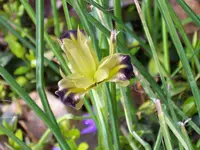
Wild populations show notable flower color variation, from pale yellow and cream to violet, purple, and bluish tones, and this natural diversity has been used in breeding compact ornamental cultivars.

Iris lutescens is an important component of several European Natura 2000 habitats, and in some regions it is legally protected because its native dry grassland and garrigue ecosystems have been reduced by land-use change, making local populations of this species conservation-relevant.
Lack of flowers often comes from too much shade, overcrowded rhizomes, or nutrient‑rich, heavy soil. Ensure good light, divide clumps every few years, and avoid high‑nitrogen fertilizer to support consistent flowering.
Keep your plants happy and healthy with plant identification, disease detection, and easy care guidance.