Barbados nut Care (Jatropha curcas)

Also known as: Physic Nut, Bed Bug Plant, Big-Purge Nut, Big-Purge Nut Seed, Black Vomit Nut, Black Vomit Nut Seed, Brazilian Stinging Nut, Cuban Physic Nut, Hell Oil, Physic Nut Tree, Pinhoen oil, Purgeerboonjie, Purging Nut, Purging Nut Tree
Barbados nut

About Barbados nut

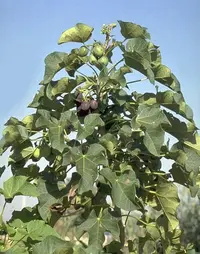
Barbados nut, Jatropha curcas, is a woody shrub or small tree grown mainly in tropical and subtropical climates. It has thick, green, lobed leaves and produces small yellowish flowers followed by oval seed pods.

This species is native to Central America but is now naturalized in many warm regions worldwide, often used for hedging, erosion control, and oil-bearing seeds. It is generally hardy and drought-tolerant once established, which can make it easier to manage in dry areas.

To care for Barbados nut, provide strong light, well-drained soil, and avoid waterlogged conditions, as the roots dislike standing moisture.

Main Plant Requirements

Care Difficulty

Moderate Care

Light Preference

Full Sun

Water Requirements

Low Water

Temperature Preference

Tropical / Frost Sensitive

Hardiness Zone

9–11

Soil Texture

Sandy, Loamy, Rocky

Soil pH

Slightly acidic (6.5–7.0), Slightly alkaline (7.0–7.5)

Soil Drainage

Well-drained

Fertilization

Minimal (feed rarely)

Get Personalized Care Plan

Scan your plant to receive care tips personalized for your specific plant

Available on iOS and Android

How to Care for the Barbados nut

This sun-loving shrub needs strong light to flower and set seed well.

  • Provide 6–8 hours of direct sun daily; full sun is ideal, though light afternoon shade helps in very hot inland climates.
  • Young Barbados nut plants tolerate light partial shade, but too much shade causes lanky growth and fewer flowers.
  • In summer, monitor for leaf scorch in exposed, reflective sites; in winter, ensure at least 4–5 hours of unobstructed sun to maintain vigor.

This drought-tolerant species prefers deep, infrequent watering once established.

  • Outdoors in well-drained soil, water only when the top 4–6 cm feels dry and leaves start to lose some gloss or slightly droop.
  • Reduce watering in cool seasons when growth slows; in warm active growth, soak the root zone, then allow the soil to dry between waterings.
  • Jatropha curcas reacts to overwatering with yellowing leaves and stem softening; underwatering causes early leaf drop but the woody stems usually survive.

This plant prefers warm, frost-free conditions for reliable growth and flowering.

  • Optimal growth occurs around 70–90°F (21–32°C); it continues to grow in hotter climates if soil moisture is adequate and roots are mulched.
  • The shrub tolerates brief drops to about 40°F (4°C), but foliage damage appears near this level and growth stalls below 60°F (16°C).
  • Jatropha curcas is very sensitive to frost; repeated exposure below 32°F (0°C) can kill young plants, so protect or replant in spring in cooler regions.

This drought-tolerant shrub handles a wide humidity range and rarely needs special humidity management.

  • Target 30–60% relative humidity; levels common in most homes and dry outdoor climates are usually adequate for Barbados nut.
  • Mild humidity stress shows as browning leaf edges and faster leaf drop, especially during heat combined with strong wind.
  • If air is extremely dry and hot, group plants, use a shallow pebble tray with water nearby, or provide a slight windbreak outdoors.

This species prefers mineral, sharply drained soil and is very sensitive to waterlogging.

  • Use a sandy or gravelly mix with low to moderate organic matter, such as 50–70% coarse sand or grit blended with cactus potting mix.
  • Ensure rapid drainage; excess water should run through within seconds, preventing roots of Jatropha curcas from sitting in saturated pockets.
  • Aim for slightly acidic to neutral pH around 6.0–7.5; avoid strongly acidic or saline soil that restricts nutrient uptake and root health.
  • Improve aeration and drainage by adding coarse perlite, pumice, or small gravel, and avoid dense clay or peat-heavy mixes that compact easily.

This species adapts well to container growing when the pot is prepared for its woody root system and top-heavy canopy.

  • Choose a wide, heavy container that resists tipping, as the woody stems and upper growth can make the plant top-heavy in wind.
  • Select a pot depth that allows a firm anchor for the main taproot while still leaving room for lateral roots to spread outward.
  • Use a fast-draining mix that dries quickly in the upper layer so the root collar stays dry even when deeper substrate retains some moisture.

Jatropha curcas benefits from moderate feeding to support flowering and steady growth.

  • Use a balanced NPK fertilizer or well-rotted compost for Barbados nut during active growth.
  • Feed every 4–6 weeks in spring and summer, avoiding very hot, drought-stressed periods.
  • Apply at half the label strength to prevent salt buildup and root burn.
  • Reduce or stop feeding in fall and winter when growth slows or plants are deciduous.

Thoughtful pruning helps Jatropha curcas maintain a strong framework and good flowering.

  • Prune in late winter or early spring before strong new growth begins.
  • Remove dead, diseased, crossing, or inward-growing branches to improve airflow and light penetration.
  • Shorten overly long shoots to control size and encourage a bushier crown.
  • Use clean, sharp bypass pruners and make cuts just above outward-facing buds.

This species is more often transplanted outdoors than kept as a long-term container plant.

  • Transplant young plants in spring once frost risk has passed and soil is warming.
  • Look for roots circling the pot, slow growth, or frequent wilting as signs a container plant needs a larger space.
  • Shift into a hole or pot only 1–2 sizes larger, keeping the root ball intact to limit shock.
  • Water thoroughly after transplanting, then keep soil slightly moist and shaded for 3–5 days to reduce stress.

Jatropha curcas is commonly propagated from semi-hardwood cuttings or seeds.

  • Take 10–20 cm semi-hardwood stem cuttings in late spring or early summer.
  • Allow cut surfaces to dry briefly, then plant in a fast-draining mix under bright, indirect light.
  • Maintain 70–80°F warmth and lightly moist, not wet, substrate to encourage rooting.
  • For seeds, sow fresh, viable seed in warm, well-drained soil and keep evenly moist until germination.

This tropical species is frost-sensitive and needs specific winter management in cool climates.

  • In USDA zones below 10, grow in containers and move indoors before temperatures drop near 40°F.
  • Outdoors in mild climates, expect partial or full leaf drop as temperatures cool.
  • Mulch the root zone with 5–8 cm of organic material to buffer brief cool spells and moisture swings.

Care Tips

Use sturdy staking

Install a single strong stake or short trellis when the plant is young, tying the main stem loosely with soft ties so wind does not snap the brittle wood as it gains height.

Control seed spread

Remove developing seed pods before they fully mature and dry if you want to prevent unwanted self-sowing, since the capsules can eject seeds several meters away when they split.

Dry-handling precautions

Wear gloves and avoid touching eyes or mouth when pruning or repotting, and let cut surfaces air-dry before handling further, because the plant’s milky sap is irritating and mildly toxic.

Root zone warming

In cooler regions, use dark mulch or place containers on warm, sunlit hardscape to increase soil temperature around the roots, which supports faster recovery and growth in spring.

Wind exposure management

Site plants where they receive air movement but are shielded from strong prevailing winds, or group them with sturdier shrubs as a windbreak, to reduce branch breakage and leaf shredding when growing Barbados nut.

Common Pests and Diseases

Jatropha leaf miner

This pest creates serpentine tunnels inside young leaves, leading to distortion, browning, and premature leaf drop. Symptoms include thin, winding trails that turn pale, then brown as tissue dies.

Solution

Remove and destroy mined leaves to lower larval numbers, then use a targeted systemic insecticide or spinosad-based spray if damage continues. Avoid over-fertilizing, as very soft new growth is more attractive and vulnerable to miners.

Jatropha mosaic virus

This disease causes yellow mosaic patterns, leaf curling, and deformation, which reduce plant vigor and seed yield. Symptoms include irregular yellow patches on leaves while veins often remain green.

Solution

Remove and destroy infected plants or heavily affected branches to prevent spread, and control whiteflies and other sap-sucking vectors with horticultural oil or insecticidal soap. Avoid using cuttings or seed from symptomatic plants and disinfect tools between plants.

Scutellonema nematodes

This pest attacks roots, leading to stunted growth, yellowing foliage, and poor drought tolerance, often without obvious above-ground symptoms until infestation is advanced. Symptoms include weak plants that do not respond well to fertilizer or watering adjustments.

Solution

Rotate Jatropha with non-host crops, solarize soil before planting where feasible, and use clean, nematode-free planting material. Incorporating organic matter and beneficial microbes can improve root health and reduce nematode impact over time, which is important for long-term Jatropha curcas plant care in the same soil.

Powdery mildew

This disease appears as white, powdery patches on leaves and young stems, which can lead to yellowing and premature leaf drop in humid, shaded conditions. Symptoms include a dusty coating that spreads over the leaf surface.

Solution

Improve air circulation, avoid overhead watering, and prune excess, crowded growth to reduce humidity around foliage. At first signs, remove heavily infected leaves and apply a sulfur, potassium bicarbonate, or neem oil spray labeled for powdery mildew, repeating as needed according to label directions.

Leaf spot complex

This disease group produces small, dark or tan spots with possible yellow halos on leaves, which may merge into larger necrotic areas and cause early defoliation under wet conditions. Symptoms include more severe spotting on older leaves and in crowded, poorly ventilated plantings.

Solution

Collect and dispose of fallen, spotted leaves and avoid wetting foliage late in the day to limit spread. If spotting persists, apply a copper-based or chlorothalonil fungicide labeled for ornamental shrubs, and space plants to allow better airflow and faster leaf drying.

Interesting Facts

Toxic yet oil‑rich seeds

The seeds are highly toxic due to phorbol esters but contain 30–40% oil that has been studied as a non-edible feedstock for biodiesel production. This dual nature makes the plant important in bioenergy research but unsuitable for food or feed.

Drought-resilient shrub

This species forms a deep root system and sheds leaves during severe drought, which helps it survive in semi-arid and degraded soils where many crops fail. Despite this resilience, seed yield still drops strongly when water availability is low.

Natural living fences

Farmers in tropical and subtropical regions often plant this species closely as a living fence around fields and homesteads. Its toxicity discourages browsing by livestock, while the dense branching forms an effective physical barrier.

Botan icon

Did you know?

Jatropha curcas was spread globally from Mesoamerica by Portuguese traders from the 16th century onward, and genetic studies now show that most Old World populations represent a narrow subset of the original Central American genetic diversity.

FAQs about Barbados nut

Lack of flowers usually comes from insufficient light, nutrient‑poor soil, or pruning at the wrong time. Ensure strong sun, avoid heavy nitrogen fertilization, and prune lightly after flowering so new wood can form flower buds.

Grow Healthy Plants with Botan Care

Keep your plants happy and healthy with plant identification, disease detection, and easy care guidance.

Botan plant care app — identify plants on mobile

Explore More Plants