Early spring cleanup
Cut back old, papery stems at ground level in late winter or very early spring so new shoots emerge cleanly and are easier to monitor for slug damage.

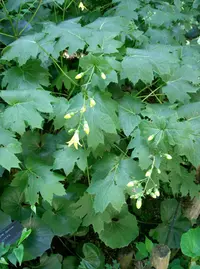
Yellow waxbells, Kirengeshoma palmata, is a hardy perennial grown mainly for its waxy yellow, bell-shaped flowers and bold, maple-like foliage. It forms a clump and slowly spreads, creating an elegant, layered look in shaded borders.
This species comes from cool, woodland areas in Japan and Korea, so it naturally prefers dappled light, consistent moisture, and humus-rich, well-drained soil. Its preference for cool, sheltered conditions makes it a good choice for temperate gardens with reliable moisture.
Gardeners who care for Yellow waxbells usually find it moderately easy if those basic shade and moisture needs are met. Once established, it is long-lived and offers late-summer interest when many other shade perennials have finished flowering.

Care Difficulty
Moderate Care

Light Preference
Partial Shade

Water Requirements
Regular Water

Temperature Preference
Cold Hardy

Hardiness Zone
5–8

Soil Texture
Loamy, Silty, Organic-rich

Soil pH
Acidic (5.5–6.5), Slightly acidic (6.5–7.0)

Soil Drainage
Moist but well-drained

Fertilization
Light (every 4–6 weeks)
Scan your plant to receive care tips personalized for your specific plant
Available on iOS and Android
Kirengeshoma palmata grows best in cool, woodland-style light rather than strong direct sun.
This woodland perennial prefers evenly moist, cool soil that never stays waterlogged.
This hardy shade perennial thrives in cool to mild outdoor conditions with distinct seasons.
This woodland perennial prefers moderate, steady humidity and copes reasonably well with typical outdoor conditions.
This plant thrives in cool, moist, humus-rich soil that stays evenly damp but never waterlogged.
This species can grow in containers if the pot mimics a cool, moist, shaded woodland root zone.
Yellow waxbells benefit from modest, consistent feeding in humus-rich soil during the growing season.
Pruning needs for Kirengeshoma palmata are light and mostly focused on cleanup and maintaining a tidy clump.
This plant is usually grown in the ground, so focus on careful transplanting rather than frequent repotting.
Kirengeshoma palmata is most commonly propagated by division, with seed used mainly by patient or advanced growers.
This species is generally cold hardy in temperate gardens and needs only modest winter care once established.

Plant Health Check
Not sure what's wrong with your plant? Check your plant's health inside the app.
This species flowers unusually late for a woodland perennial, often from late summer into early fall, providing nectar and pollen when many other shade plants have finished.
The plant is naturally found in cool, moist, deciduous mountain forests of Japan and the Korean Peninsula, where it grows in humus-rich soils under partial canopy shade.
Its large, deeply lobed leaves are described as palmate because the veins spread from a central point, somewhat like a hand, creating a bold texture in shaded habitats.

The genus Kirengeshoma is considered taxonomically small and unusual, with K. palmata being one of only two recognized species, which makes this plant a relatively rare and distinctive member of temperate woodland floras.
This species performs best outdoors in cool, shaded garden beds with consistently moist, humus-rich soil. Indoors, light and humidity are usually inadequate long term, so containers are better kept outside in a sheltered, shady spot most of the year.
Keep your plants happy and healthy with plant identification, disease detection, and easy care guidance.