goldenrain tree Care (Koelreuteria bipinnata)

Also known as: Chinese flame tree, Bougainvillea golden-rain tree
goldenrain tree

About goldenrain tree

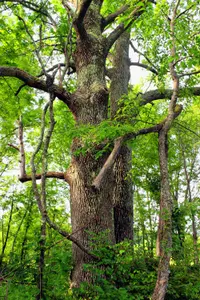
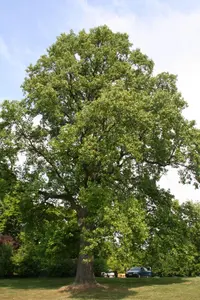
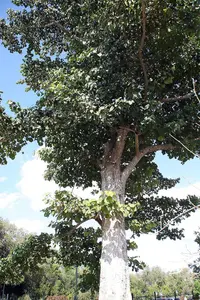
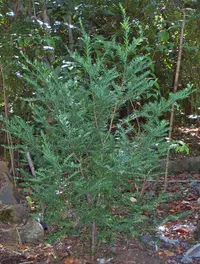
The goldenrain tree, Koelreuteria bipinnata, is a small to medium deciduous tree valued for its airy foliage, yellow summer flowers, and papery lantern-like seed pods. It forms a rounded crown and a relatively open canopy, giving light shade rather than deep darkness under the branches.

This species originates from East Asia but is widely planted in warm-temperate regions as an ornamental street or garden tree. It is generally considered easy to grow, as it tolerates urban pollution, moderate drought once established, and a range of well-drained soils.

Understanding how to care for goldenrain tree starts with providing full sun, reasonably fertile soil, and avoiding sites that stay waterlogged for long periods.

Main Plant Requirements

Care Difficulty

Easy Care

Light Preference

Full Sun

Water Requirements

Moderate Water

Temperature Preference

Warm Climate

Hardiness Zone

7–9

Soil Texture

Sandy, Loamy, Clay

Soil pH

Slightly acidic (6.5–7.0), Slightly alkaline (7.0–7.5)

Soil Drainage

Well-drained

Fertilization

Minimal (feed rarely)

Get Personalized Care Plan

Scan your plant to receive care tips personalized for your specific plant

Available on iOS and Android

How to Care for the goldenrain tree

This deciduous tree prefers bright, open conditions to form a full crown and abundant flowers.

  • Provide 6–8 hours of direct sun daily; light, open exposure promotes strong flowering and dense branching.
  • Young trees tolerate light afternoon shade in hotter regions, or plant where they receive morning sun and dappled afternoon light to reduce leaf scorch risk.
  • In shade below 4–5 hours of sun, Koelreuteria bipinnata develops thinner canopies, fewer flower panicles, and more elongated, weak growth.

This species prefers deep, infrequent watering once established, supported by well-drained soil.

  • Water newly planted trees when the top 5–8 cm of soil feels dry, applying a slow, deep soak to reach the full root zone.
  • Reduce frequency as roots establish; in most climates, mature trees only need supplemental water during extended dry periods or visible leaf wilt.
  • Ensure soil drains freely; persistent soggy conditions, yellowing leaves, or dieback tips indicate overwatering, while crisp leaf edges and drooping foliage suggest drought stress for Koelreuteria bipinnata.

This ornamental tree suits warm-temperate climates with moderate winters and hot summers.

  • Optimal growth occurs around 65–85°F (18–29°C), with vigorous shoot and flower development during warm, sunny periods.
  • Mature trees tolerate winter lows near 10–15°F (-12–-9°C); younger specimens benefit from protection in colder zones to prevent bark and bud damage.
  • Heat tolerance is high up to about 100°F (38°C) if roots are mulched and soil moisture is stable, but prolonged hard freezes can kill young wood and reduce flowering the following season.

This species tolerates a wide humidity range and usually does not need special air moisture management outdoors.

This tree prefers moderately fertile, well-structured soil that drains freely and does not stay waterlogged.

  • Use loamy or sandy-loam soil with some organic matter such as compost to support steady growth.
  • Ensure sharp drainage by avoiding heavy, compacted clay; incorporate coarse sand or fine gravel if the site is marginal.
  • Aim for slightly acidic to neutral pH, roughly 6.0–7.5, which suits Koelreuteria bipinnata root function and nutrient uptake.
  • Avoid low-lying spots where water collects, since prolonged saturation encourages root decline and trunk-base rot.

This species can be grown in containers when young, mainly for patios or temporary placement.

  • Choose a deep, heavy pot to balance the increasingly top-heavy canopy and reduce tipping in wind.
  • Use a coarse, fast-draining mix, such as 2 parts loam with 1 part compost and 1 part grit or perlite, to prevent waterlogging.
  • Favor thick-walled terracotta or concrete containers in hot climates, as they buffer root temperatures and limit rapid moisture swings.

Koelreuteria bipinnata benefits from modest feeding but many established trees grow acceptably in average garden soil.

  • Apply a balanced slow-release fertilizer (such as 10-10-10) once in early spring to support new growth and flowering.
  • Use compost or well-rotted manure as a light top-dressing around the drip line, keeping material away from the trunk.
  • Avoid overfeeding; use about half the label rate for ornamental trees, especially in fertile or amended soils.
  • Do not fertilize in late fall or winter, as this can stimulate tender growth that is vulnerable to cold.

Pruning helps maintain structure, safety, and flowering performance in Koelreuteria bipinnata.

  • Carry out main pruning in late winter or very early spring while the tree is dormant and leafless.
  • Remove dead, diseased, crossing, or storm-damaged branches with clean, sharp bypass pruners or a pruning saw.
  • Thin congested interior branches to improve light penetration and airflow, which supports healthier canopy development.
  • Limit cuts to smaller branches where possible to preserve natural goldenrain tree form and reduce decay risk.

This species is usually grown in the ground, so focus on correct transplanting of young trees rather than long-term container culture.

  • Transplant in late winter or early spring before bud break, when soil is workable and temperatures are cool.
  • Look for roots circling a nursery container or slow, stunted growth as signs the plant is ready to move into open ground.
  • Dig a wide, shallow planting hole, gently loosen circling roots, and set the tree at the same soil depth as in the pot.
  • Water deeply after planting and keep soil evenly moist for the first growing season to reduce transplant shock.

Koelreuteria bipinnata is most commonly propagated from seed, with cuttings used less often for specific selections.

  • Collect ripe seed pods in late summer to early fall, then dry and extract seeds for storage or immediate sowing.
  • Provide a period of cold stratification at 34–41°F for 6–8 weeks to break seed dormancy and improve germination.
  • Sow seeds in spring in a free-draining, slightly sandy mix, keeping the medium evenly moist and in bright light.
  • Semi-hardwood cuttings taken in mid to late summer can root in warm, humid conditions with a rooting hormone, though success is variable.

Mature Koelreuteria bipinnata trees are generally hardy in mild to moderate winters and need limited special care.

  • In regions around USDA zones 7–9, established trees usually tolerate normal winter conditions without damage.
  • Apply a 5–8 cm mulch layer over the root zone in late fall, keeping it a few cm away from the trunk to reduce rot risk.
  • Young or container-grown trees in colder areas can be moved to a sheltered site or wrapped at the root zone to reduce freeze-thaw stress.

Care Tips

Early canopy training

In the first 3–5 years, select 1 strong central leader and 4–6 evenly spaced lateral branches, removing competing leaders and crossing shoots annually to build a stable, wind-resistant canopy.

Storm-resilient structure

In windy regions, shorten long, whippy branches by 15–25% in late winter to reduce leverage and lessen the chance of storm damage to this relatively brittle-wooded tree.

Seed pod management

If seedling spread or litter is a concern, remove most flower clusters just as they fade, before pods form, leaving a few only where you want ornamental display.

Root zone protection

Maintain a 5–10 cm mulch ring out to at least the drip line and keep turf and string trimmers away from the trunk to prevent bark injury that can lead to decay.

Heat and drought acclimation

For young trees in hot-summer regions, gradually extend the interval between deep waterings over the first 2–3 growing seasons so the root system adapts to drier conditions and makes caring for goldenrain tree less labor-intensive long term.

Common Pests and Diseases

Verticillium wilt

This disease causes gradual branch dieback, sparse foliage, and yellowing leaves that may wilt on one side of the tree first. Symptoms include brown streaks in the sapwood just under the bark on affected branches.

Solution

Prune out and destroy affected branches well back into healthy wood, sterilizing tools between cuts, and avoid water stress by providing deep but infrequent irrigation. Do not fertilize heavily with nitrogen, and if decline is severe, consider replacing the tree with a species known to be resistant to verticillium rather than attempting aggressive chemical control.

Armillaria root rot

This disease leads to chronic decline, reduced leaf size, early fall color, and canopy thinning, often in compacted or poorly drained soils. Symptoms include white fungal growth under the bark at the base and clusters of honey-colored mushrooms near the trunk in wet seasons.

Solution

Remove severely affected trees, including as much of the major roots and stump as possible, and improve soil drainage and aeration before replanting in the area. Choose non-susceptible replacement species or plant future goldenrain trees in a new location with well-drained soil and avoid overirrigation to limit conditions favorable to Armillaria.

leaf spot

This disease produces small brown to purplish spots on foliage that can merge into larger blotches, leading to premature leaf drop in wet, humid periods. Symptoms include more severe spotting on lower inner branches where airflow is poor.

Solution

Rake and discard fallen leaves, thin crowded branches to improve air circulation, and water at the soil level instead of over the canopy. In landscapes with a history of severe leaf spot, a copper or chlorothalonil-based fungicide applied at bud break and repeated per label directions during wet springs can help protect new foliage.

scale insects

These insects feed on sap and appear as small, rounded or oval bumps on twigs and branches, sometimes accompanied by sooty mold growing on their sticky honeydew. This pest can cause twig dieback and general loss of vigor if populations are heavy.

Solution

Prune out and dispose of heavily infested twigs, and encourage natural predators such as lady beetles by avoiding broad-spectrum insecticides. For significant infestations, apply a horticultural oil spray during the dormant season to smother overwintering scales, following label directions for concentration and temperature limits.

boring insects

These insects tunnel into trunks and larger branches, leaving small round or oval exit holes and sometimes frass, which is sawdust-like material pushed out of the tunnels. Symptoms include branch dieback, sudden wilting, and structural weakness in stressed trees, especially those in hot, dry urban sites.

Solution

Keep the tree healthy with proper watering, mulching, and avoidance of trunk wounds to reduce susceptibility, and promptly prune and destroy infested branches to remove larvae before they complete development. In high-pressure areas, a certified arborist may recommend a targeted systemic insecticide timed to adult flight periods, combined with improved site conditions as the primary long-term strategy for growing goldenrain tree successfully.

Interesting Facts

Distinct bladder-like pods

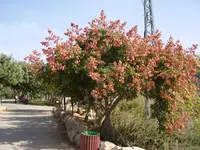
This species is known for its inflated, papery, lantern-shaped fruit capsules that turn from green to pink and then straw-colored, each containing several hard, black, pea-sized seeds.

Later flowering season

Compared with many ornamental trees, this species typically flowers later in summer, extending seasonal interest with loose panicles of yellow blooms after many spring-flowering trees have finished.

Tolerance of urban stress

It has been widely used as a street and parking-lot tree in warm regions because it tolerates air pollution, compacted soils, reflected heat, and short dry periods better than many small ornamental trees.

Botan icon

Did you know?

Koelreuteria bipinnata is one of the few ornamental trees that combines showy late-summer flowers with conspicuous, lantern-like fruit that often remain attractive well into fall, creating a long multi-stage display that shifts from yellow flowers to pink and finally tan capsules on the same tree.

FAQs about goldenrain tree

Lack of flowers often comes from insufficient sunlight, heavy or poorly drained soil, excess nitrogen fertilizer, or very young age. Prune only lightly after flowering, since removing branch tips can eliminate next year’s flower buds.

Grow Healthy Plants with Botan Care

Keep your plants happy and healthy with plant identification, disease detection, and easy care guidance.

Botan plant care app — identify plants on mobile

Explore More Plants