Establish strong leader
During the first 3–5 years, select a single straight central stem and remove competing upright branches in late winter to build a stable main leader and reduce future storm breakage.

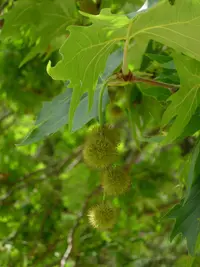
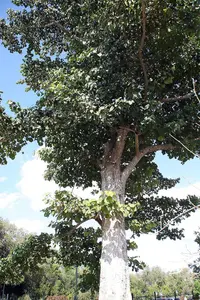
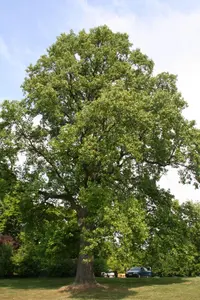
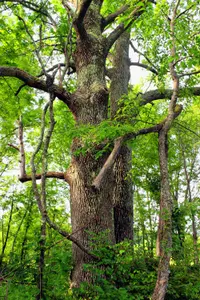
Oriental plane, Platanus orientalis, is a large, long-lived deciduous tree valued for its broad crown and attractive, mottled bark. It develops deeply lobed, maple-like leaves that create dense summer shade.
This species occurs naturally from southeastern Europe through the eastern Mediterranean to western Asia, often along rivers and in urban parks. It tolerates air pollution, pruning, and a range of soils, which makes it a common city tree.
Its strong growth, adaptability, and relative pest resistance make it straightforward to establish in suitable climates. Understanding how to care for Oriental Plane mainly involves providing enough space, light, and consistent soil moisture during its establishment period.

Care Difficulty
Moderate Care

Light Preference
Full Sun

Water Requirements
Moderate Water

Temperature Preference
Cold Hardy

Hardiness Zone
7–9

Soil Texture
Sandy, Loamy, Clay

Soil pH
Slightly acidic (6.5–7.0), Slightly alkaline (7.0–7.5)

Soil Drainage
Moist but well-drained

Fertilization
Minimal (feed rarely)
Scan your plant to receive care tips personalized for your specific plant
Available on iOS and Android
This large deciduous tree needs abundant direct light for strong growth and a full crown.
This species prefers consistently moist but not waterlogged soil, especially while young and establishing roots.
This hardy tree handles a wide temperature range, with best growth in mild to warm conditions.
This species is humidity-tolerant and does not require special atmospheric moisture management outdoors.
This tree prefers deep, moist, well-drained mineral soils that stay evenly damp but not waterlogged.
This species is only moderately suitable for long-term container growing and is best kept in very large, stable tubs when container-grown.
This large, fast-growing tree benefits from modest, targeted nutrition in managed landscapes.
Thoughtful structural pruning keeps Platanus orientalis safe, healthy, and manageable in urban or garden settings.
This species is usually field-grown and transplanted rather than kept long term in containers.
Reproduction of this tree is mainly by seed in forestry and landscape production, with some use of cuttings in nurseries.
Mature trees are cold hardy in most temperate climates and usually need minimal winter care once established.

Plant Health Check
Not sure what's wrong with your plant? Check your plant's health inside the app.
Platanus orientalis readily hybridizes with the North American Platanus occidentalis, and this cross produced Platanus × acerifolia, the widely planted London plane that lines many city streets across Europe and North America.
This species has been planted as a shade tree in the eastern Mediterranean since classical antiquity, and was mentioned by writers such as Theophrastus and Plato in descriptions of shaded meeting places and philosophical gatherings.
In its native range from the Balkans to western Himalayas, this tree naturally grows along riverbanks and streams, forming gallery forests that help stabilize soil and moderate local microclimates.

Individual Platanus orientalis trees can live for many centuries, and some famous specimens in Greece and Turkey are traditionally claimed to be more than 500 years old, illustrating its potential for exceptional longevity under favorable conditions.
This tree grows relatively quickly, often adding 30–60 cm in height per year under good conditions. Growth is faster in deep, moist, fertile soil and full sun, and slows in compacted, dry, or nutrient-poor sites.
Keep your plants happy and healthy with plant identification, disease detection, and easy care guidance.