tacked milkcap Care (Lactarius trivialis)

tacked milkcap

About tacked milkcap

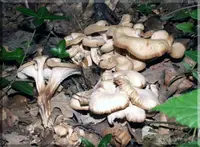
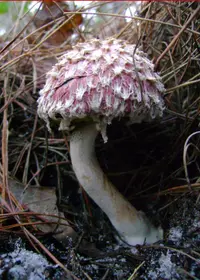
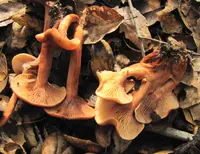
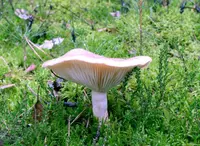
Lactarius trivialis, commonly called tacked milkcap, is a wild ectomycorrhizal mushroom that forms symbiotic partnerships with trees, especially in boreal and temperate forests. It is not a houseplant but a forest fungus that appears from the ground, with a smooth, often slimy cap in shades of lilac, brown, or gray and closely spaced gills that exude a milky latex when damaged.

This species occurs mainly in northern Europe and parts of Asia, favoring moist, cool, nutrient-poor woodland soils. It depends on living tree roots for nutrition, so attempts to care for tacked milkcap in typical garden or indoor settings are usually unsuccessful.

For anyone trying to grow Lactarius trivialis, it requires undisturbed soil, consistent moisture, and suitable host trees, conditions that are difficult to reproduce in controlled environments.

Main Plant Requirements

Care Difficulty

Hard Care

Light Preference

Partial Shade

Water Requirements

Keep Soil Moist

Temperature Preference

Cool Climate

Hardiness Zone

Unknown

Soil Texture

Loamy, Peaty, Organic-rich

Soil pH

Acidic (5.5–6.5)

Soil Drainage

Moist but well-drained

Fertilization

Minimal (feed rarely)

Get Personalized Care Plan

Scan your plant to receive care tips personalized for your specific plant

Available on iOS and Android

How to Care for the tacked milkcap

This mycorrhizal mushroom prefers cool, subdued forest light rather than direct sun exposure.

  • Provide bright shade or dappled light under trees, with no more than 1–2 hours of weak morning sun and no strong afternoon sun.
  • Choose spots with 70–90% canopy cover, similar to moist conifer or mixed woodland, to support the host trees and the tacked milkcap mycelium.
  • Avoid full sun, which dries the upper soil layer and leaf litter, reducing fruiting, and note that denser shade in midsummer often brings better autumn production.

This fungus depends on consistently moist, not waterlogged, soil around its tree partners.

  • Aim for forest-like moisture where the top 2–5 cm of soil under leaf litter feels slightly damp most days but never soupy.
  • Increase monitoring during dry spells; if soil and litter are dry and crumbly, nearby vegetation wilting, or moss turning pale, sustained fruiting of Lactarius trivialis becomes unlikely.
  • Avoid standing water or compacted, poorly drained sites, which limit oxygen around roots and mycelium and can reduce both tree vigor and mushroom yield.

This species fruits best in cool to mild conditions typical of northern and boreal forests.

  • Optimal fruiting usually occurs around 50–64°F (10–18°C), especially with moist soil and stable, cool nights.
  • Mycelium in the soil tolerates a broad annual range near host trees, roughly 32–77°F (0–25°C), provided temperature shifts are gradual.
  • Fruiting bodies are sensitive to hard frost below about 28°F (-2°C) and to hot, dry spells above 77–82°F (25–28°C), which quickly dry caps and shorten their lifespan.

This ectomycorrhizal fungus fruits best in consistently moist, humid forest conditions rather than dry, exposed sites.

  • Aim for ambient humidity around 60–80% in fruiting areas, supported by naturally moist leaf litter and shaded locations.
  • Dry air or rapidly drying litter leads to small, cracked, or aborted caps and fewer fruiting bodies.
  • Increase effective humidity by maintaining a thick, damp organic layer, reducing wind exposure, and avoiding direct sun that rapidly evaporates surface moisture.

This species relies on specific forest soils and host trees rather than conventional potting soil conditions.

  • Lactarius trivialis typically fruits in moist, humus-rich, loamy to sandy forest soils with abundant decaying leaf litter and fine roots.
  • Soil must drain freely but stay evenly moist; avoid compacted, waterlogged, or heavily disturbed ground that limits gas exchange around roots and fungal hyphae.
  • Slightly acidic conditions around pH 4.5–6.0 favor mycorrhizal formation; avoid liming or adding alkaline materials that raise pH too much.
  • To encourage Lactarius trivialis care outdoors, maintain an undisturbed organic layer using leaf litter, fine bark, and minimal tilling so fungal networks remain intact.

This forest ectomycorrhizal fungus is not realistically suitable for container growing because it depends on complex root partnerships and stable soil ecology.

This ectomycorrhizal fungus relies mainly on its tree hosts for nutrition, so tacked milkcap generally does not need direct fertilization.

Lactarius trivialis does not require pruning, as it is a wild mushroom forming seasonal fruiting bodies rather than a plant with persistent stems or foliage.

This species is not suitable for normal repotting, as Lactarius trivialis depends on living tree roots in soil rather than container culture.

  • Avoid attempting container growth; it forms ectomycorrhizae with compatible trees such as birch or spruce in the ground.
  • Transplanting mycelium is unreliable and often unsuccessful, as the fungus needs stable soil structure and established roots.
  • If moving host trees, accept that the fungal partner may not reestablish in the new location.

Propagation of Lactarius trivialis by home growers is difficult and rarely attempted successfully, because it requires a complex partnership with host tree roots.

This cold-hardy woodland fungus needs no specific winter care, as its mycelium naturally survives freezing conditions in the soil.

Care Tips

Host tree selection

Establish the fungus near suitable mycorrhizal partners such as birch, spruce, or pine, as Lactarius trivialis relies on root association with these trees for nutrient exchange and successful fruiting.

Minimal soil disturbance

Avoid digging, rototilling, or heavy raking in the inoculated area once mycelium is established, since disturbance can break up the fungal network and sharply reduce future mushroom production.

Organic mulch management

Maintain a 2–5 cm layer of loose leaf litter or soft needle mulch around the host trees to mimic natural forest duff, but avoid thick, compacted layers that can become anaerobic and inhibit mycelial growth.

Moisture-buffering surface

Use coarse wood chips or partially decomposed bark as a top dressing around the host root zone to buffer moisture and temperature swings, keeping the upper soil profile favorable for fruit body formation during the season.

Gentle harvest technique

When harvesting, gently twist or cut the mushrooms at the base rather than pulling them out, and avoid trampling the surrounding area, which helps preserve the underlying mycelium and supports more consistent yields when growing tacked milkcap.

Common Pests and Diseases

Mycophagous springtails

These insects feed on fungal tissues, grazing on caps and gills of mushrooms and leaving pitted or scarred surfaces. This pest is often associated with moist, organic substrates used to fruit Lactarius trivialis.

Solution

Limit excess surface moisture, remove heavily damaged fruiting bodies, and improve air movement around the cropping area; in small indoor setups, gently flood and drain the substrate surface to flush springtails, and use fine physical barriers or sticky traps to reduce incoming adults without disturbing the fungal mycelium.

Fungus gnat larvae

These insects thrive in damp cultivation substrates and chew on developing primordia and stems, which can stunt or deform fruiting bodies. Symptoms include weak, collapsing mushrooms and visible small black gnats flying near the substrate.

Solution

Allow the surface layer of the substrate to dry slightly between mistings, use yellow sticky traps to reduce adult populations, and cover the substrate with a breathable barrier such as fine mesh or a thin inert top layer so adults cannot lay eggs close to the mycelium.

Mucor mold contamination

This disease appears as fast-growing, fluffy gray or white mold patches that overrun casing or substrate surfaces, competing with the Lactarius trivialis mycelium. Symptoms include stalled or reduced mushroom formation in contaminated zones.

Solution

Promptly remove or cut out infected sections of casing or substrate with clean tools, reduce excessive moisture and standing condensation, and maintain good air exchange; for future cycles, pasteurize or properly prepare substrates and tools to reduce spore loads during set-up of growing tacked milkcap.

Green Trichoderma mold

This disease starts as white mycelial patches that quickly turn bright green as spores form, aggressively outcompeting the mushroom mycelium. Symptoms include sudden dieback of Lactarius growth in affected areas and a powdery green surface on substrate or casing.

Solution

Isolate and discard heavily contaminated blocks or trays, remove small early patches with a margin of clean substrate, and adjust conditions by lowering excess humidity, improving fresh air exchange, and using only clean, well-prepared substrates to prevent introduction of Trichoderma spores.

Interesting Facts

Characteristic milk color change

When the gills are damaged, the mushroom exudes a pale, watery latex that slowly turns grayish or olive when exposed to air, helping distinguish it from closely related milkcap species that have white or vividly colored latex.

Preference for wet lowlands

This species is strongly associated with moist, often boggy or swampy coniferous and mixed forests in northern Europe, where it fruits in damp mossy ground and along the edges of wet depressions.

Variable cap coloration

The cap shows a wide range of colors from lilac-gray or brownish-violet in younger specimens to more brown, yellow-brown, or ochre shades with age, often retaining diffuse concentric zoning that helps with field identification.

Botan icon

Did you know?

Lactarius trivialis is ectomycorrhizal, forming a mutualistic root partnership mainly with spruce and pine, where fungal hyphae envelop the tree roots and enhance water and mineral uptake in exchange for carbohydrates produced by the tree.

FAQs about tacked milkcap

Yes, this mushroom is considered edible in many regions, though quality is rated from mediocre to good. Always confirm identification with an expert, cook thoroughly, and avoid specimens from polluted or roadside areas due to possible contamination.

Grow Healthy Plants with Botan Care

Keep your plants happy and healthy with plant identification, disease detection, and easy care guidance.


Botan plant care app — identify plants on mobile

Explore More Plants