Wind-hardening seedlings
If started in containers, expose young plants gradually to increasing wind over 2–3 weeks to build strong trunks and reduce breakage once transplanted to open, exposed sites.

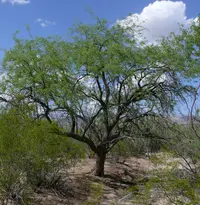
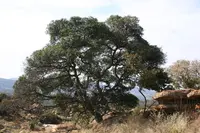
Velvet mesquite (Prosopis velutina) is a drought-adapted deciduous tree native to desert regions of the southwestern United States and northern Mexico. It often forms a broad, spreading canopy with fine, feathery leaves and a dark, furrowed trunk. In the landscape, it is valued for light, filtered shade and its ability to tolerate very dry conditions once established. Small, fragrant yellow flower spikes are followed by seed pods that feed wildlife. This species thrives in full sun, lean or rocky soils, and low to moderate moisture, which makes it suitable for xeriscapes. Understanding how to care for velvet mesquite mainly involves respecting its preference for strong light and good drainage.

Care Difficulty
Easy Care

Light Preference
Full Sun

Water Requirements
Low Water

Temperature Preference
Warm Climate

Hardiness Zone
8–11

Soil Texture
Sandy, Loamy, Rocky

Soil pH
Slightly acidic (6.5–7.0), Slightly alkaline (7.0–7.5)

Soil Drainage
Well-drained

Fertilization
Minimal (feed rarely)
Scan your plant to receive care tips personalized for your specific plant
Available on iOS and Android
This desert tree thrives in strong sunlight but adapts to some shade once established.
This species is highly drought-tolerant and prefers infrequent, deep watering once established.
This desert native handles wide temperature swings but has limits to cold and frost exposure.
This desert tree tolerates very low humidity and usually does not need special humidity management.
This species prefers very well-drained, lean soil that mimics arid desert conditions.
This species can be grown in containers when young or kept small, but requires careful attention to root space and stability.
Desert-adapted Prosopis velutina usually needs little or no fertilizer in the ground, especially in native or lean soils.
Pruning Prosopis velutina focuses on safety, structure, and clearance rather than frequent shaping.
Young velvet mesquite transplants best when small, as older trees develop deep, sensitive taproots.
Prosopis velutina is most often propagated from seed, which allows production of many drought-adapted seedlings.
Prosopis velutina is fairly cold hardy in arid regions and usually needs minimal winter care once established.

Plant Health Check
Not sure what's wrong with your plant? Check your plant's health inside the app.
The foliage is covered in fine hairs that give the leaves a velvety feel and reduce water loss, an adaptation to the hot, arid Sonoran Desert where the species is native.
This species forms root nodules with symbiotic bacteria that convert atmospheric nitrogen into plant-usable forms, enriching poor desert soils and supporting surrounding plant communities.
Its sweet, protein-rich pods are eaten by native wildlife and have long been ground into flour by Indigenous peoples of the Southwest for use in traditional foods.

Large, old velvet mesquite trees often develop deep taproots that can extend many meters down to reach groundwater, allowing the tree to stay green and physiologically active through prolonged drought when many neighboring plants have gone dormant.
Yes. Collect mature brown pods, dry them, then scarify seeds by nicking the coat or soaking in hot (not boiling) water. Sow in deep pots with well-drained soil. Warm conditions and patience are important when growing velvet mesquite from seed.
Keep your plants happy and healthy with plant identification, disease detection, and easy care guidance.